
Showing posts with label James T. Ramsey. Show all posts

Wednesday, May 12, 2010

Disastrous Stewardship 2: The Weinberg firing

My historical research has been driven by a desire to understand the past. Not an abstract past, but events which I in some way witnessed. Much of the past is beyond knowing, thus some and perhaps many of the questions that I ask are beyond knowing as well. The central problems of my historical studies concern the scientific careers of two men, my father C.J. Barton, and Alvin Weinberg. My interest in my father's career undoubtedly is linked to some of my personal concerns that streatch back to my childhood. Researching my father's career is a way to maintain a link to someone whom I loved even though he is no longer with us.

My interest in Alvin Weinberg career also is linked to my past. Weinberg's son David was a childhood friend, and I was fond of David and of David's mother Marge Weinberg. My central focus on Weinberg has been on his firing as ORNL Director in 1972. Who is it that this prominent scientist, this brilliant reactor designer who held the original patent on the predominant form of 20th century reactor, this science advisor to presidents, this able science administrator, this serious thinker about the role of science in contemporary society, was fired from his position as director of Oak Ridge National Laboratory?

It is clear that a clique centering around Congressman Chet Holifield, and including AEC Commissioner James T. Ramsey, AEC reactor research director Milton Shaw, and Admiral Hyman Rickover exercised great control over the United States Atomic Energy Commission during the 1960's and early 1970's. Arguably Holifield used his status as a member of the Joint Congressional Committee on Atomic Energy to exercise great and even unconstitutional control over the AEC.

The relationship between members of the Holifield clique and AEC Chairman Glen Seaborg should receive further clarification, but it would seem that Seaborg, although he does not seem to have opposed the Holifield clique, was not a member. Seaborg's goals were apparently consistent with those of the Hoifield clique, and Shaw appears to received his marching orders on fast breeder reactors from Seaborg, without a Holifield veto.

Weinberg discussed his firing:
I found myself increasingly at odds with the reactor division of the AEC.
Weinberg explained the background of the problem, The Nixon administration had made the LMFBR a center piece of the American nuclear program. Shaw was committed to the Nixon Administration goal, andShaw was a ruthless administrator who permitted no opposition to his goals. Shaw did not trust Weinberg or the conclusions of ORNL scientists, Weinberg was on the wrong side of the dispute about reactor safety, and Shaw and his patron Chet Hollifield appeared to have believed that Weinberg was fishing for funding for unneeded research. Holifield personally announced to Weinberg
I think it is time you leave nuclear energy.
Weinberg clearly believes that Shaw and AEC Commissioner James T. Ramsey play roles in the decision.

Weinberg does not mention either Rickover or Glen Seaborg in his accounts of his firing. if Rickover and or Seaborg were involved in the Weinberg firing it would have been from behind the scenes. But it was at the very least the case that neither Rickover nor Seaborg broke ranks to defend Weinberg. At best, both acquiesced by silence to Weinberg's firing. Both should have known better and acted better.

(I should note however that I have revised my view of Rickover's role in the Weinberg firing. Originally, I viewed Rickover as Milton Shaw's primary patron in the AEC. But Shaw appears to have faithfully carried out Holifield's wishes, and Weinberg's firing was clearly in accord with Holifield's wish. In the absence of stronger evidence, my earlier charge against Rickover must be regarded as not proven, although i should not be considered as offering a definitive word on the issue. More research would be required.)

Weinberg's firing must be considered a product of the Holifield - Shaw - Ramsey relationship. That relationship must now be seen as having damaged the prospects of nuclear energy in the United States. It also lead to the premature termination of nuclear research, and the exclusion of a very promising line of reactor development that could potentially solved the problems of nuclear energy that critics found so objectionable.

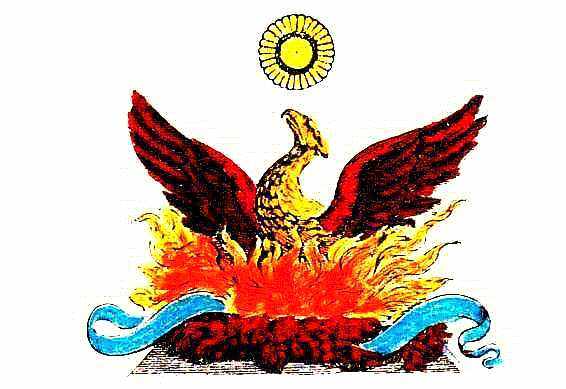
The Weinberg firing was not an insignificant event as Weinberg himself understood. It marked the end of "the first nuclear era," as Weinberg himself well understood. It marked the end of the promise of nuclear power foreseen by the visionaries of the Manhattan Project's New Piles Committee in 1944-45. ORNL under Weinberg had had been the primary keeper of the New Piles Committee vision. Holifield, Shaw and Ramsey attempted to destroy the vision, and would have destroyed ORNL if necessary to achieve that goal. They did destroy ORNL's capacity to cary out the vision, but they did not destroy the memory of the vision, and the memory of what ORNL under Weinberg was able to accomplish. The memory is still with us. The phoenix arrises from the ashes.
Monday, May 10, 2010

Disastrous Stewardship: Hollifeld


Even well intentioned policies can fail to accomplish lofty goals because the personal demons that drive them into political careers may not be consistent with the lofty ends of policies which they advocate. Contradictions are a part of the human condition, and stories which point them out should be viewed as cautionary tales.
At the end of World War II, the World War II establishment, referred to as the Manhattan Engineering District, became an anachronism. Administratively the Manhattan Project was subordinated to the United States Army, and the District's head administrator was a Major General, Leslie Groves. Even Groves believed that management of the US atomic energy program should be shifted to civilian control. However, Groves favored the May-Johnson bill which while creating a facade of civilian control over the US atomic energy program, still left a considerable measure of military control in place. However there was considerable Congressional support for greater civilian control than provided by the May-Johnson bill. There was wide agreement on this, and through the Atomic Energy Act of 1946, the United States Congress acted to put the American Nuclear program under civilian, rather than military control. Congress in voting for this act, was lead in no small measure by Liberal California Congressman, Chester "Chet" Hollifield. The Act called for,
A program for the control of scientific and technical information which will permit the dissemination of such information to encourage scientific progress, and for the sharing on a reciprocal basis of information concerning the practical industrial application of atomic energy as soon as effective and enforceable safeguards against its use for destructive purposes can be devised;

and added
the dissemination of scientific and technical information relating to atomic energy should be permitted and encouraged so as to provide that same interchange of ideas and criticisms which is essential to scientific progress,

But the act contained a fairly long and detailed account of what was called restricted data, which could include
any document, writing, sketch, photograph, plan, model, instrument, appliance, note or information involving or incorporating restricted data-

Defined so broadly, even gossip wich touched on a restricted matter could be considered a violation of restrictions. The act further defined
The term "restricted data"...means all data concerning the manufacture or uti1ization...the use of fissionable material in the production of power...

The Act established a civilian Atomic Energy Commission that was to manage both military and Civilian aspects of Atomic Energy. The AEC was established as a part of the Executive Branch of the Government. The Joint Congressional Committee on Atomic Energy (JCAE) was also established in 1946 with the purpose of preparing legislation for related to atomic energy to Congress. The committee was unusual in that the House of Representatives and the Senate traditionally formed separate committees, and each body was also traditionally jealous of its purgatives. The joint committee was empowered to receive restricted information from the AEC, and to restrict information about its own deliberations. This meant that the committee did not need to worry about public knowledge of

Holifield was to remain a fixture on the Joint committee from 1946 until he left congress in 1974. He was a champion of the use of atomic energy in the generation of electricity throughout his career, and he was determined to use his position on the joint committee to further that cause.

Holifield is often described as the Joint Committee Chaiman. In fact he was chairman on three separate occasions, but the chairmanship rotated. But among Joint committee members, Holifield was the best informed about issues at the AEC and nucear policy matters. Holifield also appears to have exercised control over the joint committee staff.

The joint committee had very considerable power in the development of nuclear technology for military purposes. This power could and was exercised to disrupt the usual military chain of command and give military officers power and influence. The most conspicuous example was that of Hyman Rickover. Holifield was in a position to operate as Rickover's political patron. Not only was Holifield a member of the joint committee, but he was also a member of the House Military Operation Subcommittee. Rickover was both Director of the Naval Reactors Branch in the Bureau of Ship and Chief of the Naval Reactors Branch, Division of Reactor Development of the U.S. Atomic Energy Commission.

Any patronage relationship operates in both directions, the patron supplies support to his client's aspirations, while the client can be counted on to support the patron's overall exercise of power. Thus Rickover was a very powerful ally of Holifield, who owed much of his power to Holifield's support. In addition to their power relationship, Rickover and Holifield also shared a vision of a nuclear future, with reactor produced electricity. Neither could be said to have a horse in the breeder race, although Rickover did show an interest in a breeding project involving thorium in a light water reactor. Rickover took something of a conservative view of nuclear power. He appears to have regarded most of the problems of nuclear power as having been solved by his team. Since Holifield was anxious to move nuclear power technology forward, he was willing to accept the Rickover-Shaw view of nuclear safety. Milton Shaw was a protegee of Rickover, and while I have as of yet been unable to document Rickover and Holifield's role in Shaw's appointment to the AEC, it is not a big leap that they did play a significant role. Shaw had risen to prominence in Rickover's team, and he was indoctrinated in the Rickover system. Shaw appears to have been a central member of Holifield's AEC regime, and does not appear to have ever offered resistance to Holifield's wishes. It is not clear to what extent Shaw was Rickover's client in his AEC role, but Shaw acted in areas in which Rickover had no direct interest, although Rickover most likely had views. Alvin Weinberg suggested that Milton Shaw acted on orders, but Weinberg offered no hint about whom gave Shaw orders.

There is one final member of the Holifield AEC team, James T Ramsey who was nominated by President Kennedy in 1992 to serve as an AEC Commissioner. Ramsey came from the Joint Congressional Committee staff, and was a friend of Holifield. In practice Ramsey was responsible for coordination between the AEC and the Joint Committee. It is probably not unfair to describe Ramsey as another Holifield client, and one who had been seconded from the Joint Committee. to the AEC, and that he acted as Holifield's personal agent on the AEC.

The Joint Committee's power over the AEC lay in its role in the appropriation process. Through appropriations, the Joint Committee had the ability to veto AEC projects and policies that it did not like. In theory the AEC was part of the Executive Branch of the Government, but until the end of the first Nixon administration, the AEC in many respects was administered more as if it were under Congressional rather than Executive control. Between 1972 and 1974, the Nixon Administration moved to break up Holifield's power over the AEC. Ramsey was not reappointed to the AEC, Rickover had had his wings - or perhaps more appropriately his fins - clipped. Newly appointed AEC chairman Dixie Lee Ray out maneuvered Milton Shaw by stripping him of authority over nuclear safety, and Shaw resigned. Finally at the end of 1974, Holifield, his power over the AEC spent, resigned from Congress.

When the Atomic Energy Act was under consideration in 1946 its was intended to shift control of atomic energy from the United States Military to Civilian leadership. But as it eventually emerged, the attempt to demilitarize atomic energy weakened the role of science and scientists in the development of American atomic energy policy, and handed Congress unique and constitutionally questionable powers in the field of atomic energy. In practice power over the American nuclear establishment and national policy devolved to a small circle surrounding Congressman Chet Holifield. My view is that the control over United States nuclear policy by this small group was a disastrous failure, that it ignored the advice of the scientific community in its pursuit of private goals. That the consequence of their attitude toward scientists was to jeopardized the reputation of nuclear power as a socially acceptable form of energy. In addition the decisions of the Holifield clique tended to inhabit the emergence of advanced nuclear technology that could solve the problems that lead to public concern about nuclear power. The Holifield clique's attitude toward proposed efforts to promote the evolution of nuclear technology had the effect of further eroding public confidence in science.

Followers

Blog Archive

Some neat videos

Nuclear Advocacy Webring
Ring Owner: Nuclear is Our Future Site: Nuclear is Our Future
Free Site Ring from Bravenet Free Site Ring from Bravenet Free Site Ring from Bravenet Free Site Ring from Bravenet Free Site Ring from Bravenet
Get Your Free Web Ring
by Bravenet.com
Dr. Joe Bonometti speaking on thorium/LFTR technology at Georgia Tech David LeBlanc on LFTR/MSR technology Robert Hargraves on AIM High