| Floor Remarks of U.S. Senator Lamar Alexander (R-TN) Energy Bill |
| June 12th, 2007 - Mr. President, I thank the Senator from Colorado for his courtesy in arranging for me to speak next. The Senator from Colorado and I and the Senator from New Mexico, Mr. Bingaman, who is here, the chairman of the Energy Committee, Senator Domenici, the ranking member, and Senator Lieberman, who has already spoken, were at breakfast this morning at our usual Tuesday morning bipartisan breakfast. And Senator Bingaman expressed the hope, as I am sure he will on the Senate floor when he speaks, that we can make the kind of progress this year that we made 2 years ago on the Energy bill. And I hope so too. He talked about how difficult it was and how impressive it was for four committees, plus the Finance Committee, all to make a contribution and how we might be able to make progress with alternative fuels, with energy efficiency. The more we learn about energy efficiency, such as with appliances and lighting, and the more we can do in accelerating research on how to recapture carbon, the better off we will be. Earlier this morning, Senator Lieberman of Connecticut said in that spirit of bipartisanship that he hoped one amendment would not be added to this bill, and that would be an amendment calling for the drilling for oil in the Alaska wildlife area. That is a controversial piece of legislation. I want to make a similar suggestion in the spirit of bipartisanship. I note my friend from New Mexico is on the Senate floor, and I hope the Senate would not agree to and maybe we would not even have to debate, the amendment that Senator Bingaman offered before in the last Congress and which he plans to offer again which would require a 15-percent so-called renewable portfolio standard in every State. I wish to spend a few minutes this morning talking about why I believe it is important that we not adopt that amendment. I am reminded of a story about a Tennessee mountaineer who was convicted of murder, and the judge sentenced him and told him his choice was to be hanged or be shot. The defendant thought a minute and said: May I ask a question, judge? The judge said: Of course. My question is, Do I have another choice? Mr. President, we Tennesseans feel the same way about Senator Bingaman's proposed renewable portfolio standard which would require us to make 15 percent of our electricity from renewable fuels, mostly wind power. That would raise our taxes, it would raise our electric rates, it would run away jobs, and it would ruin our mountaintops. That is not the kind of choice we like to have. Forcing Tennesseans to build 40-story wind turbines on our pristine mountaintops or pay billions of dollars in penalty taxes to the Federal Government amounts to a judge giving a defendant the choice of being hanged or shot. In Tennessee, the wind simply doesn't blow enough to produce much electric power. Residential homeowners cannot afford these new taxes, industries will take their jobs to States with cheaper power, and tourists will spend their dollars where they can see the mountaintops instead of giant wind turbines. There is, in this case, a better choice, fortunately, and that choice is for clean, reasonably priced energy in the Tennessee Valley from conservation and efficiency, from nuclear reactors -- a new one of which just opened within the last few weeks in our region by TVA -- and by clean coal. Because of its nuclear and hydro plants, Tennessee is already on the honor roll, ranking 16th among States in production of carbon-free electricity. But we are one of 27 States that would not meet the standards under Senator Bingaman's amendment, which he expects to offer during this debate. This is real money. The Tennessee Valley Authority suggests that by the last year that this new standard is in effect, it would cost Tennesseans at least 410 million new dollars a year. What could we do with that kind of money? If the goal were clean air, we could give away 205 million in $2 fluorescent lightbulbs per year, producing energy savings equal to the combined output of almost two of the three units of TVA's Browns Ferry nuclear plant. In other words, the $410 million could buy enough fluorescent lightbulbs to equal two nuclear reactors. Or the $410 million would be the equivalent of 3,700 megawatt wind turbines that would span a 550-mile ridge line, more than twice the distance from Bristol in the northeast part of Tennessee to Chattanooga, which is about the only place in Tennessee that wind power could actually go, along those ridgetops. Or with $410 million, we could pay the $100 per month electric bill for Tennessee's 2.5 million residential TVA customers for 1 1/2 months each year. Or if the goal is simply clean air, it would be better, I respectfully submit, to spend the $410 million purchasing one new scrubber each 9 months to clean emissions from TVA's coal-fired powerplants. I strongly back renewable power wherever it makes sense. In our State, I have worked hard to expand solar energy. The solar energy industry gave me an award last year for that work. I was the principal sponsor of the tax credit for homeowners to put solar panels on their homes. I have worked with the Tennessee Farm Bureau to encourage the use of biomass as a renewable energy. But this -- and I will try to be a little bit more specific in the next 10 or 12 minutes -- this proposal amounts to a wind portfolio standard which simply does not fit the Tennessee Valley nor, I submit, any other part of our region. It simply does not work in the Southeast. Why is there a wind portfolio standard? There are other forms of renewable energy, of course, but they don't all fit in the definition, nor do all types of clean, carbon-free energy fit within the definition. Seventy percent of our carbon-free electricity in America comes from nuclear power. About 33 percent of TVA's power is carbon-free nuclear power. That doesn't count within the Bingaman definition. Neither does the existing 7 percent of clean, completely clean power that comes from hydro, from dams. That makes about 40 percent of TVA’s electricity carbon, sulfur, mercury, and nitrogen free, ranking it 16th among all the States in terms of producing carbon-free energy. As I said, Tennessee is on the honor roll. Yet we Tennesseans would still be subjected either to these taxes or putting these wind turbines along our scenic mountains, which I will discuss. According to the Energy Information Agency assessment of the Bingaman proposal, 4 years ago, wind and, to a lesser extent, biomass are projected to be the most important renewable resources stimulated by the renewable portfolio standard. There is some other evidence that biomass will be stimulated, but I think it is a fair comment to say that this is mostly a wind portfolio standard. And my argument is, that may be fine in North Dakota -- which the Senator from North Dakota says is the Saudi Arabia of wind -- maybe it works there, and maybe North Dakotans want to see the wind turbines there, but it doesn't work in Tennessee and in most of the Southeast because the wind simply doesn't blow enough to produce much electricity. The National Academy of Sciences says 93 percent of potential wind energy capacity occurs west of the Mississippi River. We can see on this chart that in this white area, that is where there is the least amount of wind. There may be plenty of it somewhere else but not in Tennessee and not in the South. There is only one wind farm in this entire southeastern part of the United States. That is a TVA wind farm on Buffalo Mountain, which I will show in just a moment. TVA had hoped that the wind on Buffalo Mountain would blow to produce electricity about 35 to 38 percent of the time. They have been disappointed that it only blows about 19 to 24 percent of the time. And in August, when we are sitting on the porches sweating, perspiring, and wanting our fans on and air-conditioning on, the winds on the only wind farm in the southeast – Buffalo Mountain – blew just 7 percent of the time. That is not an estimate. That is an actual count from TVA and the wind farm. So the only places in the southeast region, if we can go to the next chart, that have wind resources are the ridges and the crests. Maybe unlike Iowa and North Dakota where they can have large wind farms, maybe even in Colorado they can have large wind farms, but in Tennessee, the only places that wind possibly works are on the ridges and the crests. In addition to being the places with the most wind, the ridges and the crests are also in the most visited national park in the United States, the Great Smoky Mountains National Park. Those are the highest mountains in the Eastern United States. They run up through Pennsylvania as well. They are the Great Smoky Mountains and the mountains around them. They are the reason most of us live in those areas. It is quite a sight to see when you put wind turbines on top of those mountains. It is a sight that I would rather not see. Here is West Virginia, which is north of the southeastern part of the United States. Basically it cuts off the whole tops of those mountains. In my opinion, it makes strip mining look like a decorative art. These are 400- or 300-feet turbines. These are not your grandmother's windmills. They are white and large and have flashing red lights on top of them. You can see them for 10, 12, 14 miles away. Then, since they are on remote ridgetops, they have to dig large power lines down through whomever's backyard to get there. It is quite a dislocation in the scenery. So one would think there would have to be a big payoff before we would take some of the most beautiful parts of the United States and basically ruin the mountaintops. Here is what it looks like in Tennessee. You can get a little sense of how big these turbines are. In Tennessee, we like football and we can put things in perspective, sometimes putting things in football terms. Each of these wind turbines is twice as tall as the skyboxes at Neyland Stadium, which is the second largest football stadium in the United States. Penn State has one, I guess, about the same size. These rotor blades, which go round and round, stretch from the 10-yard line to the 10-yard line. I can see these turbines from the Pellissippi Parkway in Tennessee from about 14 miles away. This is at about 3,500 feet. These are some of our most beautiful vistas in Tennessee. The problem is, even here, which ought to be a prime spot -- this is the reason TVA put the turbines here -- it didn't work very well. It was a disappointment. As I mentioned, in August, the wind turbines only operated 7 percent of the time. Wind tends to be strongest during the winter months and at dawn and dusk, but demand for electricity is highest during the summer and during the day. Basically, when we need the wind, it doesn't blow. And a point that many people often miss is that you can't store it. Unlike more conventional forms of power, you use it or you lose it. So it is of minimal help. Also, it is more expensive. I have a chart showing the expense. Let's take nuclear power which produces 70 percent of the carbon-free electricity in the United States today, and wind, which is also carbon free. Actually, both are completely free of carbon, sulfur, mercury, and nitrogen, which are the problems for clean air in the Tennessee region. Let's compare a 1,000-watt nuclear plant reactor and a 1,000-megawatt capacity wind farm. The 1,000-megawatts is about the size of a new nuclear reactor. The new Browns Ferry plant in Tennessee that opened the other day is 1,280 megawatts. This column is the number of hours per year for both nuclear and wind. And this second column is the capacity factor. In plain English, this is how much they operate. For TVA, its nuclear powerplants, which produce about one-third of our electricity and most of our carbon-free electricity, the nuclear powerplants operate 92 percent of the time. The wind turbines operate, at best, 24 percent of the time in the Southeast, in the area we know about. Remember, there is only one wind farm in the Southeast. We have it, and that is what it does. The cost of electricity is up to twice as much for wind over nuclear. That is what people in the utility industry call the all-in cost -- that is, including the cost of building the facility and the cost of operating the facility. So the brief analysis is that wind is more expensive, on a per unit energy generated basis, and produces much less energy than nuclear power, for example. In addition to that, if we build the wind turbines, we still have to build and operate the nuclear powerplant because, as we pointed out, the wind turbines only operate about 22 percent of the time. My hope would be that we would not have a one-size-fits-all national mandate on States that are seeking to create clean energy. Tennessee wants to do its part. As I said, nuclear power creates 70 percent of the carbon-free energy in the United States. It produces 33 percent of the carbon-free energy in the Tennessee Valley through TVA, and TVA just opened a new reactor and they are planning more. Why would we impose on a State which is already leading the country in terms of helping to produce clean energy, carbon-free energy -- why would we impose a mandate on that State that would raise its rates or impose new taxes and drive away jobs from industries that cannot afford to pay the higher rates and at the same time put on our mountain tops, from Bristol to Chattanooga, these huge wind machines that destroy the view? We have 10 million people every year who come to Great Smoky Mountains National Park, nearly three times as many as come to Yellowstone. They come to see the mountains; they don't come to see the wind turbines. I guarantee, if we continue to provide incentives and mandates to put up these 300-, 400-, 500-foot-tall wind turbines with red flashing lights, that is all the visitors will see when they come to Tennessee. They will not be able to see anything else. I am eager to work with Senators Bingaman and Domenici on the Energy bill. I had the pleasure, the last 4 years, of serving with them on that committee. I admire the way they work together. They made a point 2 years ago of saying that when we go too far in either direction, we will pull back a little bit so we can make sure we have a good, strong bill. I believe the bill in 2005 was underestimated. I believe the bill produced in 2005, produced by Senators Domenici and Bingaman and the Senate working with the House, literally set America on a different course in terms of producing large amounts of reliable, affordable, clean energy. It helped us do that in a way that would keep the costs of natural gas down, which was very important to us at that time and still is today. I ask unanimous consent to have printed in the Record a letter from the Southeastern Association of Regulatory Utility Commissioners expressing the same views I have just expressed, that such a mandate would cause us to end up paying higher electric prices with nothing to show for it. I ask unanimous consent that it be printed in the Record following my remarks. Finally, I would like to reiterate what we could better do with the money. I see the Senator from North Dakota here. I mentioned a little earlier that he has said North Dakota is the Saudi Arabia of wind, and I admire North Dakota for that, I admire him for his outspoken advocacy of that, and I hope all the giant wind machines go to North Dakota. That is where I would like them to be, just not in Tennessee -- not just because of how they look but because in our neck of the woods they do not work. They raise our taxes, or they raise our rates, or they destroy our mountains, or they run away jobs from industries and tourists who do not want to be part of that. I would rather see us look for better ways to spend those dollars. As I suggested earlier, we could take the same amount of money we would be taxed, if we choose not to build these, by providing 205 million $2 light bulbs, which would be the equivalent energy savings of almost 2 nuclear reactors, or it would be the equivalent of 3,700 of these wind turbines, which would run along the ridge tops from Bristol to Chattanooga, or it would pay the monthly electric bill for Tennessee’s 2.5 million TVA residential customers, every Tennessee residential customer, for a month and a half, or it would put a new scrubber on TVA's coal-fired powerplants every 9 month period. I am afraid this is an idea looking for a problem to solve. It may solve it in North Dakota, it might solve it in New Mexico and perhaps it does in Colorado, but it does not in Tennessee. It raises our taxes, raises our rates, ruins our mountains, and it sends jobs away, runs them away. I hope, in a spirit of bipartisanship, perhaps the Senator from New Mexico, one of our most thoughtful Senators, the leader of this debate, will decide there are other things we can focus on rather than a one-size-fits-all mandate which may work in some States but does not in my State. |
Showing posts with label Lamar Alexander. Show all posts
Showing posts with label Lamar Alexander. Show all posts
Monday, February 11, 2008
Lamar Alexander on wind (II)

Lamar Alexander on wind (I)
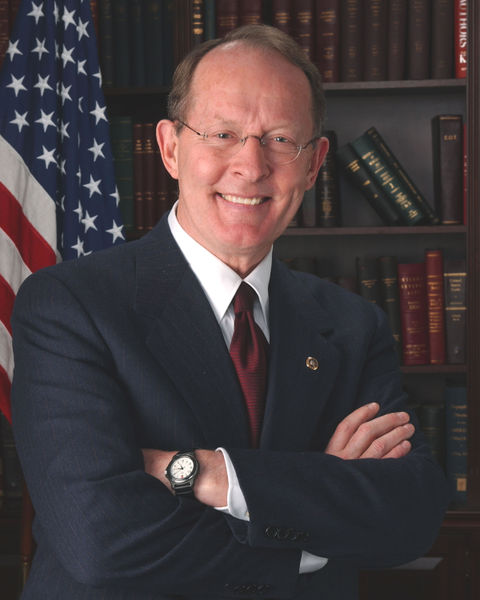 Introduction: I am not a great fan of Senator Lamar Alexander of Tennessee. His ambitions clearly exceed his abilities. About the best that could be said about his abilities is that he would have made a better president than George W. Bush. Alexander is, however, intelligent and when he applies his intelligence to identifying and solving problems, he sometimes comes up with interesting results. He sees clearly that there are problems associated with wind generation. Alexander, like me, grew up in East Tennessee, an area of exceptional natural beauty. Unfortunately many of the best wind resources in East Tennessee, are located in some vary beautiful areas. Paradoxically Alexanders concerns are environmental, even though environmentalists have denounced his proposed legislation protecting the environment form adverse impact by wind generation. This speech sugest that wind generated electricity has environmental costs.
Speech by senator Lamar Alexander on Windmill Legislation Introduction
May 13th, 2005 - I am here today to introduce - along with the senior senator from Virginia, Senator John Warner - the Environmentally Responsible Wind Power Act of 2005.
Our legislation provides for local authorities to be notified and have a role in the approval of the siting of tens of thousands of massive wind turbines that will be built in America under current policies. It also ensures that the federal government does not subsidize the building of these windmills - which are usually taller than a football field is long - within 20 miles of a military base or a highly scenic location, such as a national park or offshore.
Senator Warner and I introduce our legislation today because next week the Senate Energy Committee is scheduled to begin markup of one of the most important pieces of legislation of this session, an energy bill. The Energy Committee’s work -combined with the work of the Environment and Public Works Committee and the Finance Committee - should this year produce a clean energy bill that will, over time, lower prices of natural gas and oil and reduce our dependence on overseas oil.
This will be legislation for American blue collar workers, for farmers and for homeowners. It is urgently needed. Natural gas prices are the highest in the industrialized world. Gasoline prices are at record levels. We cannot keep our jobs and our standard of living if we do not put in place policies that will provide our country with new steps toward conservation and an adequate supply of low cost, reliable, clean, American-produced energy. Senator Warner and I both intend to be in the middle of this discussion. He is a senior member of the Environment and Public Works Committee. I am chairman of the Energy Subcommittee.
I am grateful for and am greatly encouraged by the leadership of the Energy Committee Chairman, Senator Domenici, and the ranking Democrat, Senator Bingaman, and the committee staffs, who have worked especially hard to create a framework for a more aggressive, bipartisan piece of legislation.
One part of our energy debate will be about wind power, which is the subject of our legislation today. This is because several of our colleagues have proposed something called a Renewable Portfolio Standard, or RPS, which would require power companies to produce 10 percent of all their electricity from renewable sources by 2025. These renewable sources are wind, hydro, solar, geothermal and biomass. Today these renewable sources produce about 9 percent of U.S. electricity needs. This RPS is not to be confused with a Renewable Fuel Standard - which is a requirement that gasoline contain a certain percentage of ethanol. A Renewable Fuel Standard is entirely different from a Renewable Portfolio Standard and may well be part of the final legislation.
It is important for our colleagues to know that a Renewable Portfolio Standard or RPS is all about wind. There are very few opportunities to build new dams and expand hydro power, which produces 7 of the 9 percent of renewable power we use today. Of the remaining 2 percent of renewal power sources, current subsidies aren’t enough to increase solar power by very much. More research and development is needed to make biomass more efficient. And there is limited availability of geothermal power, that is, drawing power from water that is heated underground.
Which leaves wind power. Experts agree that the bottom line is that a requirement that electric companies produce 10 percent of their electricity from renewable energy, if it could be achieved at all, would mean that about 70 percent of the increase would come from wind. In other words, we would go from producing about 1 percent of our electricity from wind to 7 or 8 percent.
Testimony before our Energy Committee and most other sources suggest that to produce this much wind energy in the United States could require building more than 100,000 of new, massive wind turbines. We have less than 7,000 such windmills in the U.S. today, with the largest number in Texas and California.
Testimony also indicated that, even without the RPS, if Congress continues its sustained generous subsidy for wind production for the next 10 years, it will guarantee that the U.S. has about 100,000 of these windmills by 2025. According to the Treasury Department, this wind subsidy, if renewed each year for the next five years, would reimburse wind investors for 25 percent of the cost of wind production and cost taxpayers $3.7 billion over those 5 years. General Electric Wind, one of the largest manufacturers of wind turbines, has experienced a 500 percent growth in its wind business this year due to the renewal of the wind production tax credit last year.
I want to make sure that my colleagues know that there are serious questions about how much relying on wind power will raise the cost of electricity, questions about whether there are better ways to spend $3.7 billion in support of clean energy, questions about whether wind even produces the amount of energy that is claimed. My studies suggest that at a time when American needs large amounts of low-cost reliable power, wind produces puny amounts of high-cost unreliable power. We need lower prices; wind power raises prices. We will have an opportunity in our debates and further hearings to examine these questions.
But the legislation we offer today is about a different question: the siting of 100,000 of these massive machines.
The idea of windmills conjures up pleasant images - of Holland and tulips, of rural America with windmill blades slowly turning, pumping water at the farm well. My grandparents had such a windmill at their well pump. That was back before rural electrification.
But the windmills we are talking about today are not your grandmother’s windmills.
Each one is typically 100 yards tall, two stories taller than the Stature of Liberty, taller than a football field is long.
These windmills are wider than a 747 jumbo jet.
Their rotor blades turn at 100 miles per hour.
These towers and their flashing red lights can be seen from more than 25 miles away.
Their noise can be heard from up to a half mile away. It is a thumping and swishing sound. It has been described by residents that are unhappy with the noise as sounding like a brick wrapped in a towel tumbling in a clothes drier on a perpetual basis.
These windmills produce very little power since they only operate when the wind blows enough or doesn’t blow too much, so they are usually placed in large wind farms covering huge amounts of land.
As an example, if the Congress ordered electric companies to build 10 percent of their power from renewable energy - which as we have said, has to be mostly wind - and if we renew the current subsidy each year, by the year 2025, my state of Tennessee would have at least 1,700 windmills, which would cover land almost equal to two times the size of the city of Knoxville.
If Virginia were to produce 10 percent of its power from wind and the subsidies continue, it would probably need more than 1,700 windmills. These windmills would take up enough land to equal the land mass of three cities the size of Richmond, Virginia.
In North Carolina, to supply 10 percent of electricity from wind if the subsidies continue, it would take up the landmass of the Research Triangle – the Raleigh, Durham, Chapel Hill area.
According to testimony before our committee, in Tennessee and Virginia, these windmills would work best and perhaps only work at all along ridge tops.
So, if present policies are continued, we could expect to see in hundreds of football field sized towers with flashing red lights atop the blue ridges of Virginia, above the Shenandoah Valley, along the foothills of the Great Smoky Mountains, on top of Signal Mountain, and on top of Lookout Mountain and Roan Mountain in Tennessee and down the Tennessee River Gorge, which the city of Chattanooga has just spent 25 years protecting and now calls itself the scenic city.
I hope that we decide, Mr. President, that there are better ways to provide clean energy than to spend $3.7 billion of taxpayer dollars over the next 5 years on windmills. I hope we decide that we need a real national energy policy - instead of a national windmill policy.
I hope we decide that there are better and cheaper ways to discuss carbon.
At least there are some important questions to answer.
What will this do to our tourism industry? Will 10 million visitors a year who come to enjoy the Great Smokies really want to come see ridge tops decorated with flashing red lights and 100-yard tall windmills?
What happens to electric rates when the federal subsidy disappears?
Who will take down these massive structures if we decide we don’t like them or if they don’t work?
Who is making the money on all this?
Why are some of European countries who pioneered wind farms now slowing down or even stopping their construction in some places?
Clearly there are more sensible ways to provide clean energy than spending $3.7 billion of taxpayers’ money to destroy the American landscape.
$3.7 billion would provide us enough money to give 185,000 Americans a $2,000 subsidy to buy a hybrid or clean diesel vehicle - which would about double the number of hybrid cars expected to be sold in the U.S. during 2005. Hybrid cards burn about 60 percent of the amount of gasoline than conventional cars burn.
$3.7 billion would provide enough money for loan guarantees to help launch a dozen new clean coal gasification plants and help transform the marketplace with a new technology for clean, American produced energy that would lower natural gas prices and reduce our dependence on foreign oil.
For 3.7 billion we could provide loan guarantees for at least a half dozen new technology nuclear power plants and have a billion dollars left over for research and development on the recapture of carbon that might be produced by coal plants or to encourage conservation practices.
Just by way of comparison, a nuclear power plant such as TVA’s Sequoyah nuclear plant would produce about the same amount of energy as the windmills which a RPS and tax subsidy would build in Tennessee - and the electricity would be available even when the wind wasn’t blowing.
While we are debating the wisdom of wind policies, these massive turbines are being built across America, 6,700 of them so far, 29 of them in Tennessee. The Tennessee Valley Authority recently announced it had signed a 20-year contract with a group of investors from Chicago to build 18 huge windmills atop a 3,300 foot ridge on Buffalo Mountain in East Tennessee.
So the purpose of our legislation is to give citizens the opportunity to have some say in where these massive structures are located in their communities and to make sure that the Congress does not subsidize the destruction of the American landscape near our national parks or other highly scenic areas or build such tall structures dangerously close to our military bases.
First, the bill ensures that local authorities are notified and have a role in the approval of new windmills to be built in their areas of jurisdiction. This means that at the same time a proposed windmill is filed with the Federal Energy Regulatory Commission, FERC would notify the local authority with zoning jurisdiction.
Within 120 days, under our bill, local authorities may support or oppose the project. If they support it, the windmill may qualify for FERC market-based rates (allowed to charge wholesale prices) and may be exempt from a series of regulations that restrict the operations of public utilities. If local authorities oppose the windmill, it may still go forward, but subject to regulations (called PUHCA) and unable to charge wholesale rates or issue a qualified rate schedule. If no action is taken by the local authority, the FERC process would proceed as though the authority were in support.
I believe it is crucial that local authorities have a chance to consider the impact of such massive new structures before dozens or hundreds of them begin to be built in their communities. In many other instances involving the location of facilities generating power, state and local governments have developed laws giving citizens an opportunity to comment or even stop the location of facilities they don’t want. Our legislation gives communities that do not now have such laws the chance to do that. Then this legislation sunsets in 7 years.
Second, our legislation provides protection to highly scenic areas and to military bases. It does so my eliminating tax subsidies for any windmill within 20 miles of a World Heritage Area (which includes many national parks), a military base or offshore.
Under the bill, placement of a windmill within 20 miles of such a site shall also require the completion of an environmental impact statement. Further any windmill that is to be constructed within 20 miles of a neighboring state’s border may be vetoed by that neighboring state. In other words, if the neighboring state can see it, and don’t want it, they can veto it.
I believe that during our debates we will find there are better ways to produce a low-cost, reliable supply of American energy than by spending $3.7 billion over the next 5 years requiring power companies to produce energy from giant windmills that raise electric rates, only work when the wind blows, and destroy the American landscape.
The legislation that Senator Johnson and I have introduced, the Natural Gas Price Reduction Act of 2005, includes support for aggressive conservation, new clean coal gas plants, new supplies of domestic natural gas, and, for the time being, easier import of liquefied natural gas.
I believe there is an important place in our energy bill for renewable fuels, such as ethanol. And I believe there is an important place for renewal energy sources. For example, the legislation Senator Johnson and I introduced a few weeks ago would increase from 10 to 30 percent the tax credit for commercial investments in solar technology that generates electricity, heats or cools a structure, uses fiber optics and illuminates a building, or provides solar process heat. It provides a similar 30 percent tax credit for a solar system that heats a home. But it is important to keep in mind that, aside from wind, renewable energy can only provide about 3 percent of America’s total energy needs over the next 20 years.
In the United States of America, Mr. President, the wholesale destruction of the American landscape is not an incidental concern. The Great American Outdoors is an essential part of the American character. Italy has its art. Egypt has its pyramids. England has its history. And we have the Great American Outdoors.
While we debate the merits of so much subsidy and reliance on wind power, we should at the same time protect our national parks, our shorelines and other highly scenic areas, and we should give American citizens the opportunity protect their communities and landscapes before it is too late.
Subscribe to:
Posts (Atom)
Subscribe To Nuclear Green


 Posts
All Comments
Posts
All Comments
Some neat videos
| Nuclear Advocacy Webring Ring Owner: Nuclear is Our Future Site: Nuclear is Our Future |
||||
 |
 |
 |
 |
 |
| Get Your Free Web Ring by Bravenet.com |
||||