Showing posts with label Ralph Nader. Show all posts

Saturday, June 20, 2009

Scientific American in the Era of Confusion

Once again Scientific American has disgraced itself by hyping a shoddy, unprofessional hit peice against nuclear power, this time by a Ralph Nader's lacky. The SA internet post begins:
Nuclear power plants may not emit greenhouse gases, but they sure could suck in the tax dollars.

An analysis by economist Mark Cooper at the Vermont Law School claims that adding 100 new reactors to the U.S. power grid would cost taxpayers and customers between $1.9 and $4.1 trillion over the reactors’ lifetimes compared with renewable power sources and conservation measures.
I will quickly demonstrate that there are many red flags on the Mark Cooper study. Beyond that there is no evidence that Mark Cooper is an economist, his exact relationship to Vermont Law School is murky, and it is questionable if any part of the study was produced in Vermont. The study was not published by the Vermont Law School, and aside from from the cover claim that Mark Cooper is a Senior Fellow for Economic Analysis at the Institute for Energy and the Environment of the Vermont Law School, nothing links the study to the School. Nothing except the fact that the study can be downloaded from the Institute's web site. Most similar studies will acknowledge the relationship between the study and the institute from which itwas said to have originated. For example, the MIT Study "The Future of Nuclear Power" carries the following inscription
Copyright © 2003 Massachusetts Institute ofTechnology. All rights reserved.
ISBN 0-615-12420-8
Curiously the Cooper study carries no Copyright.
The Forward and Acknowledgements of the MIT study notes:
This study also reflects our conviction that the MIT community is well equipped to carry out interdisciplinary studies intended to shed light on complex socio-technical issues that will have a major impact on our economy and society. Nuclear power is but one example; we hope to encourage and participate in future studies with a similar purpose.

We acknowledge generous financial support from the Alfred P. Sloan Foundation and from MIT’s Office of the Provost and Laboratory for Energy and the Environment.
The Mark Cooper study had no Forward and carried no acknowledgement of financial support.

The Press release announcing the MIT study clearly stated
MIT RELEASES INTERDISCIPLINARY STUDY ON "THE FUTURE OF NUCLEAR ENERGY"
The press release for the Cooper study failed to include mention of Vermont Law Scholl asside from noting Cooper's alleged title.

On the cover page of the Cooper study, Cooper is described as a
Senior Fellow for Economic Analysis
But on a Vermont Law School page that mentions the Cooper study, Cooper is described as a
Senior Research Fellow for Consumer Energy
Despite this claim Cooper is not listed among the faculty of the Institute for Energy and the Environment of the Vermont Law School. Indeed I can not find any evidence that Cooper has ever been on the Vermont Law School campus.

HHHHHMMMMMM!

SA readers were not reticent to tell that once august journal that it had uncorked a stinker with its Cooper study story.
Duncan M noted
enewables at 6 cents per kilowatt hour. That's pretty funny, since they require direct production subsidies of 15 cents per kilowatt hour for wind to 35 cents per kilowatt hour for solar, with no reasonable hope those costs will fall significantly

Meanwhile, nuclear is cost-competitive with hydro in Europe.

This magazine doesn't deserve to keep the word Scientific in its name if it's publishing political jeremiads like this.
Rogeregon responded
LOL! Duncan M, I've noticed, more and more, how Scientific American has been taken over by a bunch of ultra-left wingers who seem to be mostly pushing political agendas, rather than actual science!
uvdiv was blunt
This article is criminally dishonest. It brings up a "12c-20c/kWh" cost range for nuclear, and then also cites an MIT study as calling nuclear power "uncompetitive". Which is interesting because I've READ that MIT study, and it concludes the levelized cost for new nuclear power is 8.4 c/kWh - well outside the other range the author quotes. Does the author point out this discrepancy? No; he ignores the inconvenient parts of his own sources, selectively cherry-picking the quotes and datapoints that support his position.

The report is available for free here:

http://web.mit.edu/nuclearpower/

And further when the MIT report calls nuclear power "uncompetitive", it is referring ONLY in comparison with coal and natural gas power, and ONLY when completely ignoring the costs of carbon emissions. In fact, by the studies' numbers, just a very small carbon price would make nuclear as cheap as coal. (2009 update, Table 1)

The cited MIT report also directly conflicts with the "$1.9-4.1 trillion" figure for 100 new reactors. It estimates a capital cost figure of $4/W for new reactors (based on real-world figures from recent reactors in Japan and South Korea, which fell in the range of $2-3/W*, and extrapolating from that with commodity price increases). At the this cost, 100x new 1 GWe reactors would carry a pricetag of $400 billion, which is majorly conflicts with his other (presumably fradulent) numbers. Since when did commercial power reactors reach $41/W???

*These are discussed in a supplementary paper to that report, which is here under "Update on the Cost of Nuclear Power":

http://web.mit.edu/ceepr/www/publications/workingpapers.html

Again, it is despicable that a self-proclaimed "journalist" would so blatantly misrepresent his sources, twist them to support his political ideals.

To append one thing to my comment - I want to preempt any argument that lifetime operation or decommissioning costs explain away the huge discrepancy with that $1.9-$4.1 trillion figure. Construction costs are by far the largest component of nuclear power costs, and other lifetime costs are comparatively trivial. Again citing the same MIT study (the supplement paper): Table 6C compares these. A full 72% of total costs are the initial construction costs (which would be $400 billion for one hundred 1 GWe reactors under this MIT study). A tiny 11% are operation and maintenance costs, 10% are fuel costs, and 7% decommissioning.

Again that paper is available here for free:

http://web.mit.edu/ceepr/www/publications/workingpapers.html
Patrice2 commented
Contrary to the study’s finding that “nuclear power cannot stand on its own two feet in the marketplace” nuclear energy is expected to be among the most economic sources of electricity. To cite one example, an independent comparative study published in January 2008 by the Brattle Group for the state of Connecticut estimated that nuclear energy (at $4,038/kW) may have the highest capital cost, but still produces the least expensive electricity, except for combined cycle natural gas with no carbon controls.

New nuclear reactors have been affirmed as the least cost option for new generation by the Public Service Commission (PSC) in South Carolina, Florida, and Georgia. The analyses supporting the PSC reviews found nuclear to be cost competitive with other forms of baseload generation in addition to helping to address climate change.

Various recently-released academic studies have also found the cost of nuclear energy to be competitive.

It’s useful to think of it like this:

• The cost of building advanced reactors is about the same as advanced coal plants with carbon storage, but nuclear energy has the lowest fuel cost over decades of electricity production.

• By comparison, natural gas plants are relatively cheap to build, but the supply and price volatility is a major drawback. The fuel cost for natural gas plants makes up 90 percent of the power cost. The cost of power from coal and gas-fueled power plants would rise in a carbon-constrained world, further increasing their electricity costs.

A new licensing process, coupled with construction and project management experience from nuclear energy projects globally, will provide useful experience with new reactor designs in the United States.

Put simply, credible estimates of the total cost of new nuclear energy facilities show that electricity from nuclear energy will be competitive with other forms of baseload generation.
Finally JimHolf made a point familiar to Nuclear Green readers
It must be noted that while nuclear opponents often claim that renewables are cheaper than nuclear, they are NEVER willing to put that assertion to any kind of market test. Just the opposite. They say they're cheaper, but then insist on policies that prevent any fair market competition between renewables and other means of reducing emissions, including nuclear. Under current/recent policies, renewables are massively more subsidised than nuclear, and there are also outright mandates for their use (regardless of cost or practicality), just in case even those subsidies are not enough. If the relative cost of renewables was anything like this article's study, none of these policies would be even remotely necessary.
I see no point for a further review of Mark Cooper glorified trash talking of Nuclear Power. The Scientific American readers once again have proven that, even if journalists no longer have sound judgement, some of their readers do. While Scientific American's coverage of nuclear issues reflects the current dream era of confusion, it is clear from the Scientific American comments, that some people are very much awake already. Oh for those of you who are curious, Dr. Mark N. Cooper is a Washington lobbyist for the Consumer Federation of America, a Ralph Nader front organization. Cooper's official title is Director of Research. Cooper spends his days talking to politicians not consumers.

Update: Two more Reader comments from Scientific American.
1. dbakerpe
The assertion that nuclear will have high long term costs is based on cost overruns on the first generation plants. It false on its face, because those same first generation plants are now the lowest cost power sources on the grid except hydro. Large power projects are built with borrowed money, so the power is always expensive to begin with to pay back the loans. A new nuclear plant will likely last 60-100 years. After the loans are paid back the power will be cheap. If we are going to have a real economy that produces real products, they are the only environmentally acceptable solution.
2. sethdayal
The MIT 4000 a kw is just a (WAG) wild guess based on suspect figures.
1) It is based on a few Asian reactors with some rather dubious conversions to US Dollars.
2) In the middle of the worst depression in a century it assumes without proof that nuclear plant cost inflation is 15%.
3) It assumes 11% cost of money at a time when public power ie governments can borrow at 3%.
4) Ignored are Westinghouse's sale of four ap-1000 reactors for 5.5 billion to China a little over 1300 a kw and Hyperions sale of six of its 25 mw units for $25 million each again $1000 a kw with 45 mw of free heat leftover to warm the town.
5) Ignored also is Westinghouse's contention that with mass production techniques it can produce these reactors for around $1000 a kilowatt. With a World War Two hell bent for leather lets save the planet from global warning type effort ramping up quickly to hundreds of plants opening worldwide every year, costs for mass produced reactors would drop drastically.
5) It assumes every country is like the US where a large portion of costs are a result of an army of attorneys, bureaucrats and insurance companies lined up for and against any proposed private power company nuclear plants.

Renewables cheaper. What a joke.

Sunday, November 9, 2008

Will the Real Ralph Nader Please Stand Up

Astronomers have recently reported that Ralph Nader's ego now exceeds the size of the known universe and is rapidly expanding. Nader's personality is seriously flawed, and those flaws effect Nader's viewsa on numerous subjects.

I have never been an admirer of Nader. I saw his attack on the Corvair as exceptionally dishonest. Nader had no evidence that the technologically advanced, economical and nimble Corvair was less safe than other American autos. Among the technologically advanced features the Corvair pioneered were turbo-charging which increased both engine power and fuel efficiency, four-wheel independent suspension and unibody construction.

Nadere attacked the Corvair for its former swing-axil suspension design, a suspension design it shared with many German cars including Volkswaagans, Porsche, and many Mercades-Benzes. Nader did not attack the German cars in his initial book. Rather he singled out Corvair suspension design features that General Motors no longer used in new Corvairs. There was no research that showed the Corvair to be less safe than other cars. In fact later testing by the National Highway Traffic Safety Administration (NHTSA) ran the allegedly unsafe Corvair through a series of safety tests along side other economy cars, four contemporary cars, the Ford Falcon, Plymouth Valiant, Volkswagen Beetle, Renault Dauphine. Bob Helt report ef those tests showed that:
"The 1960-63 Corvair compares favorably with contemporary vehicles used in the tests...the handling and stability performance of the 1960-63 Corvair does not result in an abnormal potential for loss of control or rollover, and it is at least as good as the performance of some contemporary vehicles both foreign and domestic."
I was already aware in the 1960's that Nader's attack on the Corvair was non-sense,and that Nader was assult on the auto industry was in no small measure self-aggrandizing. The auto industry has its flaws in the 1969's, and American cars were less safe than the could be, but Ford had tried to sell sefer cars in the 1950's and the safety approach had been rejected by a market that preferred larger cars with bigger engines, to safety features. Nader's book Unsafe at Any Speed was not an attempt to wake the public up to to the need for safer cars, but was a ruthless and dishonest attack on the American auto industry simply because of its bigness.

Ralph Nader's 2000 Green Party presidential campaign probably cost AL Gore the election, and led to the Bush presidency. Nader, of course, recognized no personal responsibility for what happened. For Nader the Democrats were just as much tools of big business as Republicans, and a Gore presidency would have been just as bad as the Bush presidency even though Gore's views on environmental issues are closely aligned with those of the American Green Party, and Gore was one of the few vocal opponants of the war with Iraq.

Stories have long circulated that the staffs of Nader organizations are not exactly tributs to Nader's belief in racial equality. In fact the story goes that Nader selects white males from affluant backgrounds to serve on his organizations staff. I have no way of knowing if this story is true, but Nader has never been conspicuous in his associations with Afro-Americans and Hispanic-Americans.

Indeed, Nader has never performed significant services to the Civil Rights movement. He failed to oppose the 1996 California Proposition 209 that called for the repeal of California's affirmative action laws. Vanessa Daniel in a 2000 article in ColorLines noted Nader's failure to reach out to the black community, Daniel tells of an encounter between Nader and Afro-American community organizer Hop Hopkins noted that Nader failed to mention the problems of ethnic minorities in a Seattle speech on social issues. Hoopkins asked Nader How he expected to win black support in the 2000 election when he did not reach out to the black community. Nader replied, "you ask what I have done to reach out to the black community and address racial issues and I ask you, how many black people did you bring here today to hear me and support this campaign?"

Daniel commented:
Nader often speaks to problems that have their most devastating affects in communities of color. However, he almost never points to the racial dimensions of these issues. His silence is rendered more conspicuous by the sudden Republican and Democrat attention to the topic. Considering the fact that Nader works to appeal to an audience of "progressives," many of whom are people of color, his colorblindness, is also strategically shortsighted. . . .

In the past year, he has shied away from some of the most heated racial issues facing communities of color and been absent during difficult moments of national racial turmoil. He has yet to take a pro-active stance on the phony "war on drugs," racial profiling, militarization of the border, the incarceration of Mumia Abu-Jamal, the bombing of Vieques, the rise in police brutality and was absent following the acquittal of the four officers who slayed Amadou Diallo.
For Nader it seems, politics was not about offering services to people in need, it was about peoples willingness to offer their votes to him. Nader always has said the right things about race, but he nas never walk the walk on racial issues. In 2008 Nader's take on Barack Obama was all about how much Obama's message differed from Nader's. In June Nader said:
"There's only one thing different about Barack Obama when it comes to being a Democratic presidential candidate. He's half African-American," Nader said. "Whether that will make any difference, I don't know. I haven't heard him have a strong crackdown on economic exploitation in the ghettos. Payday loans, predatory lending, asbestos, lead. What's keeping him from doing that? Is it because he wants to talk white? He doesn't want to appear like Jesse Jackson? We'll see all that play out in the next few months and if he gets elected afterwards."
Nader's attacks on Obama were far more ugly than those of John McCain and Sarah Palin. Indeed Nader's take on Obama had a decided Rush Limbsugh flavor:
"He wants to appeal to white guilt. You appeal to white guilt not by coming on as black is beautiful, black is powerful. Basically, he’s coming on as someone who is not going to threaten the white power structure, whether it’s corporate or whether it’s simply oligarchic. And they love it. Whites just eat it up.”
In a July news conference Nader alleged that Obama's political supporters were trapped in the Political Slavery", Obama and McCain, Nader alleged were "two crooked politicians in Washington". And criticsof his presidential candidacy are political bigots, "wittingly or unwittingly."

Considering exactly how crazy Nader's take on the 2008 election has been we ought not be shocked by this CNN interview:

I would like to distinhuish between the Ad Hominem fallacy and the legitimate use of personal attacks in argument. An Ad Hominem argument focuses on the person rather than the ideas he expressed. I do not regard criticisms of Nader as invalidating in any way invalidating his expressed views on nuclear power. But they do demonstrate that Nader is capable of making serious errors in his thinking and thus his views ought not to be given a free pass.

When we look at Nader's statements on nuclear power, we find the same disinformation techniques we find uses by Amory Lovins and other nuclear critics. For example, Nader states:
A serious nuclear accident could cost more than $600 billion in 2004 dollars.
This statement is followed by a reference to an Energy Information Administration document, "Analysis of Five Selected Tax Provisions of the Conference Energy Bill of 2003", but an examination of that document does not yield support for Nader's $600 Billion figure, or any discussion of the potential cost of a nuclear accident. Thus Nader offers no support fir his $600 billion accident cost figure.

Nader commits the usual mistake of confusing the "nuclear industry" with "the nuclear power industry" even though the two are not the same, thus supposed subsidies to the nuclear industry are not in most cases subsidies to the nuclear power idustry - that is subsidies to reactor manufactures or utilities that purchase and use electrical generating reactors. Nader cherry picks information to paint a far darker picture of nuclear safety and scurity than is warrented. In doing so Nader frequently refures to articles that no longer can be found on linked web pages. The Nader view also ignores articles that contridict the anti-nuclear party lione on the same web pages. Nader refers to the NRC attitude toward minor upgrades of electrical output capacity at nuclear plants - many as small as 2% - as
regulatory laissez-faire may be compromising the safety of these facilities.
despite the investment of millions of dollars by operators in justifying the upgrades to the NRC, and millions more spent by the NRC examinig the proposals.

An examination of the history of upgraded reactors indicates that in no case has public safety been compromised and in only a few have had any problems. Of course Nader picks out the problem cases which have longe since been corrected, as es evidence of the NRC's irresponsibility. Thus Nader presents no real evidence that safety of nuclear facilities is being compromised.

Nader makes an appeal by painting a disturbing picture of the consequences of a Terrorist attack on nuclear facilities, but ignores arguments that suggest the NRC has taken vigerous steps to increase the protection of reactors from terrorists attacks.

Nader raises the spector of nuclear proliferation, resorting to the usual ploy of suggesting that civilian power reactor technology and fuel recycling are major proliferation dangers. In doing so, he ignores the mounting evidence on how nuclear proliferation actually has occurred. Nader of course knows nothing of nuclear weapon technology, and the history of plutonium weapons. He does not know the difference between weapons grade plutonium and and reactor grade plutonium, and the fact that no country has ever produced a nuclear weapon from reactor grade plutonium.

Nader also objects to nuclear power because of the supposed issue of nuclear waste. Nader of course also objects to doing anything to resolve the issue, resorting to the usual anti nuclear ploys of arguing that reprocessing nuclear fuel leads to nuclear proliferation, that Yucca Mountain is too controversial, and that disposal in fast reactors is too expensive. There are of course lower cist alternatives that Nader did not mention. Disposal in CaNDU reactors that are no more expensive than Light Water Reactors, and disposal in Molten Salt Reactors like the Liquid Fluoride Thorium Reactor, which are potentially even cheaper.

Nader whole approach to nuclear power betrays little knowledge of the subject. He has cherry picked sources, looking for information that would support his contentions, while ignoring conflicting information. Nader shows no more understanding of topics like nuclear proliferation than he had for the safety of the Corvair, or for the concerns of the Afro-American community. Nader lives in a Manichaen world where the little guy, the citizen whose champion is Saint Ralph, is beset by evil big business. Nuclear power is part of the evil world of big business, and only harm can come for it. Saint Ralph is our first line of defense against the evil that nuclear power poses, and he is ever watchful against the danger. Thus Nader uses the limited information he has acquired about nuclear power to confirm his personal world view and his role in it,

Tuesday, July 8, 2008

A Response To Rod Adams

A few days ago, Rod Adams left an interesting comment on my discussion of the history of nuclear safety. Rod raised some issues that were both interesting and complex. I disagreed with one of Rod's arguments, that is that Nader's opposition to nuclear power power was somehow tied to the Texas oil industry.

Rod Adams asked me:
As an Historian of Ideas, did you do much work on the interplay of economics with technological development?


Answer: I have looked at the interplay of economics and technology more from a purely historic perspective. I did some study on how the development of a technology driven transportation systems in the 19th century United States was related to its economic and social developments. I have little doubt that economic demands lead to the 19th century development of steam powered technology. It retrospective we see that steam technology – rail roads and steam ships - emerging rapidly in response to economic demands, and that both economies and society were profoundly effected by that development. For example, the building of railroads on the Great Plains of the United States opened them to commercial farming, which in turn brought hundreds of thousands of European immigrants to the United States. Thus it could be argued that the 19th century development of steam technology was indirectly responsible for half of the population of Norway leaving that country and settling in the United States. From the viewpoint of the history of ideas you could trace the beginning of this immigration process back to 18th century in Glasglow, when a mechanic, James Watts applied physics to improving the efficiency of the steam engine, thus revolutionizing steam technology.

RA: Like you, I like to look at technological developments through a lens that is different from that provided by the conventional wisdom. I have always been intrigued by the strength of the movement against nuclear power led by people like Nader when there were so many obvious hazards imposed by all other energy sources.


Answer: The anti-nuclear movement had several sources. First was the Campaign for Nuclear Disarmament in the 1950s and 60s. A second source was opposition to placing power reactors in environmentally sensitive locations. A third source was the concern of nuclear safety researchers about reactor safety, and the belief that the AEC had prematurely shutdown nuclear safety research. I have pointed in Nuclear Green to the conflict over reactor safety between the AEC and the leadership and staff of several national laboratories in the late 1960’s and 1970’s. The scientist who were concerned about reactor safety were not opposed to nuclear power, and in fact had already done much to make reactors safer. It is clear from Three Mile Island that reactors were far less dangerous to the public than coal fired power plants. The issue for the scientists was whether reactors could and should be made safer. In fact the history of nuclear safety makes clear that the scientist won their case, and that new reactor designs have become progressively safer. There is a cost for making LWRs safer. Building safety into complex reactors whose fundamental design is not inherently safe is expensive. And we both know reactors can be both simpler and safer, if you take water out of the reactor. Thus both the Pebble Bed Reactor and the LFTR are safer than the LWR and their safety does not increase reactor price.

The “Ban the Bomb” movement was a source of both people and ideas for the anti-reactor crowd. My suspicion is that young Ralph Nader may not have been involved in the “Ban the Bomb” campaign but he was sympathetic to it. He still supports nuclear disarmament. The contribution that the “Ban the Bomb” people made to the anti-Nuclear movement was to spread confusion between reactors and atomic bombs. Helen Caldicott is a major example of that sin. The “Ban the Bomb” crowd have also spread considerable confusion about reactors as nuclear proliferation tools.

No doubt the South Africans looked at using reactor grade plutonium from the Koeberg nuclear power plant as bomb making material, the Helen Suzman Foundation reports

“The connection between nuclear weapons and nuclear power stations is slight, almost as slight as the connection between the lead in batteries and bullets. An atomic bomb requires either 90 per cent Uranium-235 or Plutonium-239. Since natural uranium contains only 0,7 per cent U-235, you have to enrich it, which is difficult, expensive and conspicuous. Koeberg only has enrichment to 3,5 per cent, which is why it is impossible for it to explode like a bomb. The apartheid government enriched uranium to over 90 per cent and made several atomic bombs at Valindaba near Pretoria. To say that Koeberg was a front for the bomb programme is rather like saying a nunnery is a front for a brothel: the two activities are so different it would have fooled no one.”

“The plutonium in Koeberg’s waste is next to useless for weapons, and none have ever been made from such reactors. Now that apartheid has gone and we have joined the nuclear Non-Proliferation Treaty, nuclear power without nuclear weapons fits in perfectly with our new democracy, as it does in Sweden, Finland and Japan.”

Finally, the anti-nuclear wing of the environmentalist movement has an agenda, that positively ignores the public interest. Nader appears to have made common cause with the anti-consumer David Brower, Amory Lovins crowd. Thus far from bring consumers low cost electrical energy the Nader-Lovins crowd have brought California consumers in the name of anti-nuclear energy efficiency the most expensive electrical power in the country.

Rod Adams: I have pretty much convinced myself that the nuclear industry came under attack BECAUSE it was technically so much better than the competition that the people selling fossil fuels could not allow any kind of fair competition. Now, some would tell me that I am crazy to try to link Nader to the fossil fuel establishment, but here are some items for thought.


Answer: I have little doubt that Nader could, if he wished to, take a large amount of money from coal and oil interest. Nader has kept the financial operations of his non-profit “public interest” agencies secret. Thus Nader could receive large amounts of money from Coal interest and no one would know. Also Nader could be paid off through speaker fees. Recall that Nader admitted being worth nearly $4 million in 2000, despite earning only $15,000 a year during most of his career. Where did the money come from? Probably speaking fees and book sales. The $4 million is quite possibly only a small part of Nader’s wealth. I suspect that he has millions more tied up in retirement plans with Nader non-profit fronts. Saint Ralph will be well taken care of in his old age.

There would be a motivation on the side of the coal interest to “help” Ralph Nader. During most of his career Nader judged the coal producers with a very different set of standards than he judged the nuclear industry. Nader was a Johnny-come-lately to the anthropogenic global warming issue, and he has largely ignored the health and environmental issues implicit in burning coal in order to generate electricity. This is an amazing lapse for one who claimed to have the public interest at heart. Although Nader has made issues of mine safety, and tax avoidance by mine owners, he never consistently applied the criteria which he applied to the nuclear industry to the coal industry. Thus Nader was guilty of holding double standards in judging energy sources.

Rod Adams: 1. Nader grew up in an Arab-American household that owned a restaurant and served a largely Arab-American community. He has mentioned in several biographies the importance of many conversations in the restaurant to his career as a political activist.


Answer: The Nader’s were Maronite Christians. At one point Maronites were in a majority in Lebanon, but during the 19th and 20th centuries most emigrated from Lebanon. Nearly half ended up in all places, Brazil, but a quarter came to the United States. The Maronite were a minority who were repeatedly assailed and who repeatedly assailed other religious groups in Lebanese society. There were several civil wars in Lebonan during the 19th and 20th centuries. During the Civil War of 1976 to 1991 it is said that “By the end of the war, nearly every party had allied with and subsequently betrayed every other party at least once.” Thus Maronites come from a world of conflict, treachery and mistrust.

One of the most important things about Lebanese society is the extent to which mistrust hobbles the development of what we would call civil society. There is no public interest in Lebanon. For at least the last few hundred years, the Lebanese have repeatedly fallen into Civil Wars. The acquisition of power within Lebanese society is seen as a danger to everyone, because it might lead one group to dominance over other groups. Thus a standard strategy is to mistrust and create mistrust for the powerful. Mistrust of the powerful is a recurrent theme in Nader's thinking. Human power is created by centralization of control, in Nader’s world view, and he believes that the function of the states is to check the dangerous organization of centralized power that is not in “public hands.” For Nader there is a fundamental conflict between “the public interest,” and the concentration of power in business hands.

Who is dangerous in Nader’s views? It the people who small business owners fear, larger competators, businesses and industries. In addition Nader fears the power of scientist, whose language he does not understand.

Nader’s central strategy is to spread the mistrust he feels for businesses and industries, and to organize efforts to control the misconduct he suspects them of. This tracks nicely with Lovin’s desire to decentralize the production of electrical energy, by in effect making everyone his or her own power company. This is impossible with nuclear generated electricity, hence Lovins opposes the nuclear option. Curiously Loving believes that highly centralized wind farms, and solar generating facilities are examples of decentralized distributive generation. It would, of course, be a mistake to expect sanity from Lovins. Nader like Lovins ignores the big business aspects of renewable power generation, and ignore the cost to the public of renewable energy. Lovins like Nader is a small business owner. Both have built their businesses by selling bad ideas. Both have convinced the ideological Left that they are champions of human freedom. In fact neither is. Both are champions of highly subsidized business, whose operations end up costing the public lots of money in terms of their electrical expenses.

Nader, in his own life story is the little guy who takes on the powerful. His weapons are stories of the powerful’s misconduct and his plan to reign them in, plans which involves government regulation.

RA: 2. One of his earliest campaigns was against the first popular small car built by an American manufacturer. 


Nader has hardly been a genius in his perception of the global warming issue. Nader totally ignored the case for fuel efficiency and CO2 control in his attack on energy efficient cars. In addition to the economical and sporty Corvair, Nader launched an attack on a paragon of fuel economy the VW bug. Even Nader’s staff protested that the VW was not really unsafe, but Nader stuck to his guns. Truth did not matter to Nader, neither did global warming, what mattered was that the power of auto manufacturers be diminished and that Nader appear to be the Hero of the drama he had created for the media. Attacking the big guys was always a means of getting Nader’s name in the paper or on television.

Rod Adams: 3. He began his anti nuclear activities in 1970 at a time when oil cost about $3 per barrel. He was working for the University of Texas Law Review. According to "Ralph Nader: A Biography" by Patricia Cronin Marcello, "We thought the mere investment in energy efficiency would replace far more than the megawatts that could be supplied by risky nuclear power."

Answer: I am not sure what you mean by the statement, “he was working for the University of Texas Law Review.” My step-daughter studied law at the University of Texas Law School. I believe that the Texas Law Review is a student publication that is staffed by University of Texas Law School students. Nader, as far as I can tell did not publish any articles in the Texas Law Review, although several book reviews related to Nader did appear in the TLR in the late 1960’s and early 1970’s. I have been able to find a reference to anything that Nader wrote for the University of Texas Law Review. University of Texas Law students and their professors are quite a liberal group collectively. The TLR is not a front for the Texas Oil Industry and would not serve as a conduit for Texas oil money.

Rod Adams: In Texas, in 1970, there was a pretty deep recession assisted by low oil and gas prices partly as a result of a growing interest in building new nuclear power plants.


Answer: There was some Texas interest in nuclear power, but coal was regarded as cheaper, and there is a lot of coal in Texas. Texas electrical producers ended up building a lot of expensive coal fired electrical generating plants, with increasingly expensive Natural Gas backups.

4. His first Critical Mass conference which turned anti-nuclear questions into a focused campaign with coordinated efforts in protests and legislative action took place in 1974, right during the height of interest in oil prices caused by the Arab Oil Embargo. When nuclear fission should have been seen as at least one of many available answers, he was hard at work to take it off of the table.


Answer: The use of oil in electrical generation was not a big deal to the oil industry. Not all that much oil was used in electrical generation to begin with, and coal was the big beneficiary of the attack on nuclear power.

5. Nader played king maker in 1976 when he threw his considerable political support - far more then than now - behind Jimmy Carter in exchange for an agreement to discourage nuclear energy, especially the breeder reactor and recycling programs. 
Nader's power came from some well connected friends who kept him in the limelight and kept him funded to conduct his high visibility campaigns. I think that part of the support came because they liked his anti-nuclear stance. Perhaps, it was the other way around and his anti-nuclear stance came because it met the interests of his supporters.

Answer: I would not disagree with that statement, except to say we need to test it. From the viewpoint of constructing history, it has to be supported by facts that demonstrate the opposite is untrue. That is that demonstrate that Nader was not befriended by interest groups, whose interests he directly or indirectly served. Let me give an example of the sort of evidence we need. Daily Kos blogger A. Siegel identified that the Chicago based Joyce Foundation was serving as a conduit for money for pro-coal propaganda activities. http://www.dailykos.com/story/2007/11/29/185847/96
Grants were given to a number of organizations with environmentalist and anti-nuclear credentials, including:

Great Plains Institute for Sustainable Development Inc. Minneapolis, Amount: $99,400.00
gpisd.net
To brief Midwest lawmakers and regulators about how advanced coal technologies are currently deployed in Europe and encourage their support for similar adoption here.

Clean Air Task Force Inc. Boston, MA, Amount: $55,000.00
To support a delegation of Midwest policy makers, industry representatives, and environmental groups to visit European coal gasification projects and meet with European counterparts.

Clean Air Task Force Inc. Boston, MA, Amount: $60,000.00
URL: www.catf.us
To retain local counsel and technical experts to appear in the licensing hearings for a proposed IGCC project.

Izaak Walton League of America Inc., St. Paul, MN, Amount: $350,000.00,
URL: www.IWLA.org
To continue to encourage the deployment of advanced coal generation in Minnesota and to promote policies that enable and encourage carbon capture and storage.

Great Plains Institute for Sustainable Development Inc. Minneapolis, Amount: $99,400.00

Union of Concerned Scientists Inc., Cambridge, MA, Amount: $75,000.00
URL: ww.ucsusa.or
To support its efforts to study and highlight the financial risks of future carbon dioxide emission limits.

CUB Consumer Education and Research Fund, Chicago, IL, Amount: $75,000.00
Length: 1 year
URL: cuboard.org
To promote new policies supporting coal gasification and carbon sequestration for new electric generation in Illinois.

Clean Air Task Force Inc. Boston, MA Amount: $787,500.00 Length: 21 mos.
URL: www.catf.us
To promote Integrated Gasification Combined Cycle for the next generation of coal plants in the upper Midwest.

Clean Wisconsin Inc. Madison, WI Amount: $500,000.00 Length: 1 year
URL: www.wiendecade.org
To oppose conventional coal plants proposed in Wisconsin and promoting coal gasification with sequestration as an alternative. The Wisconsin Citizens Utility Board would be a partner in the intervention and campaign.

Great Plains Institute for Sustainable Development
Minneapolis, MN Amount: $437,500.00 Length: 21 mos.
URL: gpisd.net
To support the efforts of its Coal Gasification Working Group.

National Wildlife Federation, Reston, VA Amount: $122,700.00 Length: 21 mos.
URL: www.nwf.org/
To build support in Indiana and Michigan for coal gasification as an alternative to conventional coal-burning power plants.

Indiana Wildlife Federation and Michigan United Conservation Clubs would be partners in this effort. National Resources Defense Council;
URL: www.nrdc.org
For its efforts to oppose the construction of new conventional coal plants and promote alternative plants using coal gasification with carbon sequestration.

Ohio Environmental Council, Columbus, OH, Amount: $113,750.00
Length: 21 mos.
URL: www.theoec.org To support its ongoing efforts to promote Integrated Gasification Combined Cycle in Ohio and to oppose the permitting of a conventional coal plant proposed by AMP-Ohio, a municipal utility consortium.

Resources for the Future Inc. Washington, DC, Amount: $75,000.00
To conduct a quantitative assessment of the risks to shareholders and electric utility ratepayers of investing in various coal combustion technologies.

Rockefeller Family Fund New York, NY Amount: $50,000.00
To support ongoing coal advocacy activities of the Renewable Energy Alignment Mapping Project.

University of Wisconsin-Madison Center on Wisconsin Strategy Madison, WI, Amount: $175,000.00
URL: www.cows.org
To build support among labor leaders in Wisconsin and other Midwest states for coal gasification as an alternative to conventional coal power plants.

Establishing a coal or oil connection to the anti-nuclear movement would require a great deal more such evidence. It is more likely that anti-nuclear activist have a prior animosity toward nuclear power that is fundamentally irrational. For a generation they failed to weigh the cost of using coal by the same standards they used to judge nuclear energy. Thus we find Alvin Weinberg writing in the 1970’s about the long term consequences of using coal. Thus in 1977 Weinberg wrote:
“The concentration of C02 in the atmosphere is more strongly tied to the utilization of coal than to that of oil and natural gas simply because the coal resource is so much larger than the oil and gas resource. . . . Thus even if all the oil and gas were burned, the C02 concentration would be increased only by 30 percent; whereas if coal
equivalent to the reserve base is burned, the C02 concentration would increase by 80 percent.”

Weinberg added:

"If we look at the matter in broadest terms, we find ourselves beset with a profound dilemma. The difficulties and risks of the nuclear path have been delineated often and in detail. . . . The major risk in the coal path is the possible CO catastrophic. In a way this is the coal
analogue of nuclear proliferation: it is global, uncertain, possibly catastrophic. Thus we see the dimensions of the dilemma: the two energy systems upon which we are expecting to depend, at least over the medium term, are flawed to a degree that is at present essentially impossible to fully estimate, and that indeed may never be fully possible to estimate. To those who embrace coal as a fission-free bridge to a solar future, the CO question should inject a note of prudent concern: we can turn the phrase around and ask whether fission based on reactors of current design perhaps will have to serve as a coal-free bridge to a fusion, breeder, or solar future.”

We ought to consider this. Alvin Weinberg saw something in 1977, that Ralph Nader and Amory Lovins didn’t, that a benign neglect of the problems of a coal based energy future could lead to catastrophic climate change. Nader had access to Weinberg’s thinking about the energy future, and thus has no excuse for not being aware about the threat that CO2 generated by fossil fuel use posed for global climate. Lovins was also aware of Weinberg's thinking. Weinberg was clearly trying to take into account the arguments about the energy future posed by Nader and Lovins, and if anything, Weinberg was overly concerned by the dangers of nuclear proliferation.

It goes without saying that neither Nader or Lovins were overly conserned about climate change caused by burning fossil fuels.

Friday, July 4, 2008

On the History of Nuclear Safety

One of the follies of my youth was to spend a couple of years being trained as a Historian of Ideas. This gives me an unusual perspective as a nuclear blogger. I had a couple of guest posts on Harry's Place last year. In my second post, I discussed the positive secondary benefits of using nuclear power as an energy source. My post attracted an inordinate number of anti-nuclear responses. One of my most vociferous critics was an English woman who was chemist.

My Harry's place critic focused on a number of events in the history of the British nuclear adventure. It is clear that everyone who was doing nuclear science in the 1950's cut corners, and covered up problems, and no one more so than the British. The Windscale fire was a major nuclear accident, and the British covered up quite a lot of the problems. My critic however, chose to attribute to something she called "the nuclear industry" all of the characteristics, of what was a quasi-military nuclear production establishment of the cold war 1950's.

My father did some research on the Windscale accident, because he was researching the movement of radioisotopes in the environment after a nuclear accident. Lots of radioisotopes had escaped into the environment because of Windscale, so Windscale was high on nuclear safety researchers interest list in the early 1960's. Several things about the Windscale reactors, and the 1957 Windscale fire. First the design if the Windscale piles was primitive by American standards. They were graphite piles designed to produce bomb grade plutonium. unlike the Hanford Reactors, which were water cooled, the Windscale reactors were air cooled. The X-10 reactor was the only American air cooled graphite reactor. Eugene Wigner had rejected the use of air or gas cooling in the Hanford reactors. The British did not have a Wigner, and ended up up with an unsafe reactor design.  In addition to being badly designed, the Windscale reactors were poorly instrumented, and the British were having increasing problems managing the reactors graphite moderator.  Those problems had significant safety implications, which the British failed to identify and analyze.

Thus the history of the Windscale fire must include questions about why the British had in the late 1940's chosen a production reactor design that was already considered obsolete in the United States by the time it went into operation, and why they chose to manage it the way they did.  The combination of the reactor design and the management style adopted by the British made an accident in the Windscale reactors quite probable.  Of course there was a coverup because culpability for the accident ran to the top of the British Government and military.   

The history of nuclear safety is both a history of ideas and a socio-political history. The two are intertwined. My British critic on Harry's Place, however, took an ahistorical viewpoint. She refused to place the Windscale reactor fire into the historic context of the British states management of cold war related technology.  It was her view that if something was true of nuclear technology at one time, in one place, it was true everywhere and always. Thus what was characteristic of the Windscale reactors was true of every reactor. And the management of the consequences of the Windscale fire by the British government is characteristic of all aspects of nuclear safety at any time and in any place.

Ahistoric views of the development of any technology are profoundly unsophisticated. Technologies evolve in socio-economic and historical contexts, and attitudes towards technological issues like safety, are in no small measure related to the context in which the technology evolves.  Knowledge evolves and with that evolution comes a greater appreciation for risk and understanding of methods of controlling risk,.  As knowledge evolves it can begin to change the social and political context, thus altering public attitudes and beliefs.  

A historian would, of course, note changes in attitude toward nuclear safety, developing research, on safety, the introduction of new safety concepts, conflicts within the research community, and conflicts over safety involving scientists, interest groups, self styled experts, research funders, policy makers, and policy implementation establishments. Partisans in a conflict might well take a less nuanced view. My British critic from Harry's Place surely took and extremely unsophisticated view that reduced the history of nuclear safety to a simple narrative of good verses evil, With "the nuclear industry" embodying evil, and the critic fantasizing herself to be a warrior on the side of good. This fantasy has characterized the anti-nuclear movement since the 1970's. At its heart then the anti-nuclear movement, to the extent it rejects a historical view of nuclear safety, is wedded to a fantasy politics of identity.

I have pointed out in Nuclear Green, that nuclear critic Ralph Nader's sister Claire had a professional association with with Alvin Weinberg and had discussed nuclear safety issues with Weinberg. Claire Nader undoubtedly passed on the substance of her discussions with Weinberg to her brother, who was later to talk directly with Weinberg about safety issues. The Nader's were both treated with respect by Weinberg. In turn Ralph Nader should hsve known of Weinberg's expertise both on reactor design and on nuclear safety issues. Nader also know of Weinberg's struggle with Chet Hollifeld and Milton Shaw. Thus Nader had no reason to doubt Weinberg commitment to nuclear safety. Nader could have undoubtedly used Weinberg's knowledge in a fight for nuclear safety. Instead Nader made hiscause the fight against nuclear power.

Nader posed for the public as a good little guy, who fought against evil incarnate, represented by such evil forces as "the nuclear industry". Unfortunately this absurd story was bought be an increasingly simple minded media, that wanted to interpret every story for the public as a matter of good verses evil.  Good verses evil was easy to sell to ther public, and drew eyes and ears to the media that told the stories.   Stories with shades of gray were complicated. They required a lot of thinking and a lot of information.  Thinking and information lost readers and viewers. In order to understand the history of nuclear safety in America, we must understand the increasing incompetence and corruption of what past for the mainstream news media during the last third of the 20th century.

There were some bad actors in the nuclear safety story, and Ralph Nader turned out to be one of them. The television networks, and the press were simply too lazy to get the whole story, so the media was content to sell the Saint Ralph line.

Nader tells stories about himself, in which he claims to be a saint of knowledge.  For example, Nader claims that in 1964 he attended a conference at the Oak Ridge National Laboratory. Over lunch Nader claims that he began asking nuclear engineers some questions. "They couldn't answer them, or the answers weren't satisfactory," Nader claims. "'What could happen if a system goes wrong?' Nader asked. They avoided any such descriptions or said, 'we've got defense in depth' -- and other jargon."  "Defense in Depth" is of course an effective operational concept, that was proven to be effective at Three Mile Island.  By describing a discussion of things things that he did not understand as jargon, Nader revealed his lack of understanding of nuclear safety.   As Gomer Pile  use to say, "surprise, surprise surprise."  There were of course, other people at ORNL who could have the answered Nader's 1964 questions,  or at least would have known the answers within the state of knowledge. If Ralph Nader wanted people who could answer his questions about what could go wrong in reactors and under what conditions, he could have talked tp George Parker, or he could have talked to my father. Needless to say, Nader did not seek out nuclear safety experts to answers to his questions. Certainly Alvin Weinberg would and could have answered Nader's questions about nuclear safety, and made himself available to Ralph and his sister Claire. It is quite possible that Nader talked to someone in Oak Ridge who did not answer his question, or alternatively gave Nader an answer that Nader did not understand.  Had Nader sought out answers about nuclear safety in 1964, he would have found them, but Nader wanted answers that made nuclear scientist look bad, not in truth.

Nader was not interested in truth, he was looking for witnesses for his drama which would feature Saint Ralph fighnting an evil dragon "the nuclear Industry." People, like Alvin Weinberg, George Parker, and my father were much to dangerous to rely on as witnesses.  George Parker might start talking about how improbable it would be for most radioisotopes to escape from Light Water Reactors. My father might have started talking about how coal fired power plants and natural gas furnaces were delivering more radioisotopes to the environment than reactors were. Such people might blow Nader's cover, night reveal that Nader was only concerned about radiation coming from reactors. If natural gas delivered radioactive gases to American homes, the Saint Ralph and the nuclear dragon drama might fall apart. People might start asking why does Saint Ralph ignore the Natural Gas Dragon, that is brining radioactive gas to the lungs of so many Americans. If people knew that Alvin Weinberg had been fired over nuclear safety, he might steal attention from Saint Ralph. Weinberg was so dangerous to Nader's because he actually understood reactors, and safety, and his integrity was unquestionable unlike Saint Ralph's. Thus Nader's account of the history of nuclear safety, is self serving and dishonest.

Thus in the case of my British Harry's Place critic, the history of nuclear safety was something to be ignored. Nuclear power is a manifestation of something called "the nuclear industry", an evil despicable entity that transends time and space. "The Nuclear Industry" is always and everywhere the same, thus it cannot evolve, it cannot change, and has no history.  Thus it is impossible to speak of something called the history of nuclear safety.

For Ralph Nader the history of nuclear safety exists to promote his own reputation. Nader has maintained for over a generation that reactors are always and everywhere unsafe. Thus Nader also  believes in a mythic "nuclear industry" which also exists outside of time and space. There is for Nader a history of nuclear safety, which is his account of his own struggle to slay the nuclear dragon.

Thursday, February 21, 2008

Milton Shaw: Part III

Milton Shaw: Part III

Shaw’s Stalinism was beginning to tell. Claire Nader was an employ and friend of Alvin Weinberg. Through Dr. Nader, her brother Ralph began to hear about nuclear safety issues, and the way that the AEC under Shaw was operating. Nader began to speak out. Nader’s views could never be described as subtle and nuanced. He began to attack the entire nuclear industry with a rhetorical sledgehammer.

The Union of Concerned Scientist had been formed in 1969, Information about nuclear safety issues flowed from both Oak Ridge and the Idaho National Reactor Testing Station. The Union of Concerned Scientist began to raise the issues. The AEC under Shaw’s direction began to cover up research that called attention to safety concerns.

During this increasingly tumultuous period in American Nuclear history, Weinberg and his close associate Floyd Culler were summonsed to an Interview with Congressman Chet Hollifeld. Hollifeld had the Chairman of the House Atomic Energy Subcommittee, and thus had great power over ORNL. He was also an ally of Shaw’s, and was clearly indoctrinated in Shaw’s way of thinking. It was Hollifeld who delivered the message to Weinberg that he was out of touch, and that there was no longer room for him in the nuclear establishment. Seething, Weinberg had dinner that night with Ralph Nader, the brother of his friend Claire Nader. Boiling over with rage at his humiliation by Hollifeld, Weinberg laid out for Nader the heart of the safety issue. Scientist thought of nuclear safety in terms of probabilities. Things might work well 99.99% of the time, but there might be a .01% of an accident happening. Safety involved being ready for that .01% probability that something bad might happen. Shaw trained as a mechanical engineer, did not think in terms of probabilities. Either things happened or they don’t in Shaw’s world. Scientist who thought in terms of probability were just guilty of sloppy thinking, and needed to move over for the Naval engineers who could always make thins happen with 100% certainty.

Weinberg later regretted his conversation with Nader, who had no real respect for Weinberg or anyone who was capable of independent thought and had integrity as Weinberg did. But Weinberg had needed a chance to ventilate that night after the cemeaning way Hollifeld had treated him.

Within a few months Weinberg was fired as the director of ORNL.

Although Shaw did not know it then, his days at the AEC were numbered. The Nixon Administration had appointed a Washington State Zoologist, Dixie Lee Ray to the AEC. Ray, who lived in a mobile home, parked somewhere in the Virginia countryside, was a total outsider to Washington D.C. But she was nobody’s fool.  During 1972 and 73 scientist from AEC facilities were called to testify before congressional hearing.  Scientist after scientist laid bare concerns about nuclear safety.  It was not Alvin Weinberg who had been out of touch about nuclear safety, it had been Milton Shaw.  A few months later, the Nixon Administration swept AEC Chairman Glen Seaborg aside, and appointed Ray to the Chairman’s position.

Ray almost immediately began to deal with Shaw’s power. By his rigidity on nuclear safety, and his alienation of the scientific community, Shaw had created a serious public relations problem not just for the AEC and the Nuclear Industry, but for the increasingly for the embattled Nixon administration.

Ray rewrote Shaw’s job description, to leave out nuclear safety issues for his area of responsibility. Shaw was furious, and handed Ray his resignation. The damage that Shat had done to Americas Nuclear Research establishment was immeasurable. The National Laboratories, crowing jewels of American science had been laid low. Shortly after Shaw’s resignation, still seething at the treatment the AEC have given his concerns about Nuclear Safety, Carl J. Hocevar, a Idaho National Engineering Laboratory scientist resigned his position. In a public letter published by the New York Times Hocevar voiced the dissatisfaction that still was felt throughout the American nuclear establishment:

Ms. Dixie Lee Ray
USAEC
1717 H Street NW
Washington, D. C. 20545

Dear Ms. Ray:

I am resigning my position as an Associate Scientist with Aerojet Nuclear Company in order to be free to tell the American people the truth about the potentially dangerous condition in the nation's nuclear power plants. As an employee of Aerojet Nuclear I have not been able to freely express my concerns about the nuclear reactor safety issues. Consequently I will be working for the Union of Concerned Scientists in an attempt to more fully inform the public about the current state of knowledge concerning reactor safety, particularly the emergency core cooling systems.

I have been employed at the Idaho National Engineering Laboratory for the past seven years for Aeroject Nuclear and its predecessors. During that time I have been involved in the development of computer codes which are used in the thermnal-hydraulic predictions of loss-of-coolant situations. I was the principal author of the THETA1-B code which was adopted by the AEC as an accepted method of predicting the thermal behavior of a fuel rod during a LOCA. The last several years I have been working on a new thermal-hydraulic loop code. The primary goal of this project is to develop analytical models which will more realistically describe the physical processes that could occur during a LOCA.

While analytical models for predicting the fluid behavior during a LOCA have been developed by both the nuclear industry and the AEC, the techniques in gneral are not capable of describing actual physical situations with a reasonable degree of reliability. The AEC is using shaky and unproven computer predictions as a basis for answering such vital questions as the effectiveness of reactor safety systems in preventing catastrophic accidents. This is wholly unacceptable.

Adequate experimental programs to determine the workability of reactor safety systems are also urgently needed. Experimental verification of the analytical computer codes is a necessity if we are to place our faith in these methods.

Aerojet Nuclear employess were used by the AEC as consultants during the ECCS hearings. In 1971 the AEC adopted the methods we had developed, but completely ignored our reports concerning the serious limitations of those methods. They were the best that could be developed based on the limited analytical and experimental research the AEC and nuclear industry had carried out, but they were preliminary and definitely not an adequately proven way of determining nuclear reactor safety. Little has changed in the past few years, and the safety of nuclear reactors is still uncertain and unverified.

The AEC is ignoring advice from many of its experts on reactor safety problems, a situation that has given rise to numerous resignations. Several of my colleagues have gone to work trying to help the utility companies understand the reactor safety problems that the AEC would prefer to ignore, but I believe that the genral public, and not just the companies investing in nuclear generating equipment, must be told the truth about the potential hazards.

I also have personal reservations concerning the radioactive waste problems. While I am not an expert in waste management I find the long term radioactive waste question deeply disturbing. The present generations get the elctricity from nuclear plants and we leave the radioactive wastes for our children and future generations to take care of. Plutonium, an extremely hazardous material that retains its radioactive potency for hundreads of thousands of years, is hardly a legacy that future generations should be given.

In spite of the soothing reassurances that the AEC gives to an uninformed, mislead public, unresolved questions about nuclear power plant safety are so grave that the US should consider a complete halt to nuclear power plant construction while we see if these serious questions can, somehow, be resolved. The most prudent course of action that we can take is to proceed cautiously.

Sincerely,


Carl J. Hocevar

Thursday, January 10, 2008

Ralph Nader, Untrue at any Speed

The story goes that Ralph Nader's unemployed, high school graduate brother was able to save enough pennys on his own in the early 1970's , that he could afford to buy a $100,000 home in an exclusive Washington neighborhood. Of course, Ralph was repeatedly seen sneaking into the house at night, but hay, he was only there to visit his brother, right? Later the deed to the house found its way into the hands of my former boss, Nader's sister Claire. Everyone knew that Ralph had rented a single room with a bathroom down the hall. Everyone knew that Ralph lives a lifestyle which made Mother Teresa's lifestyle look luxurious.

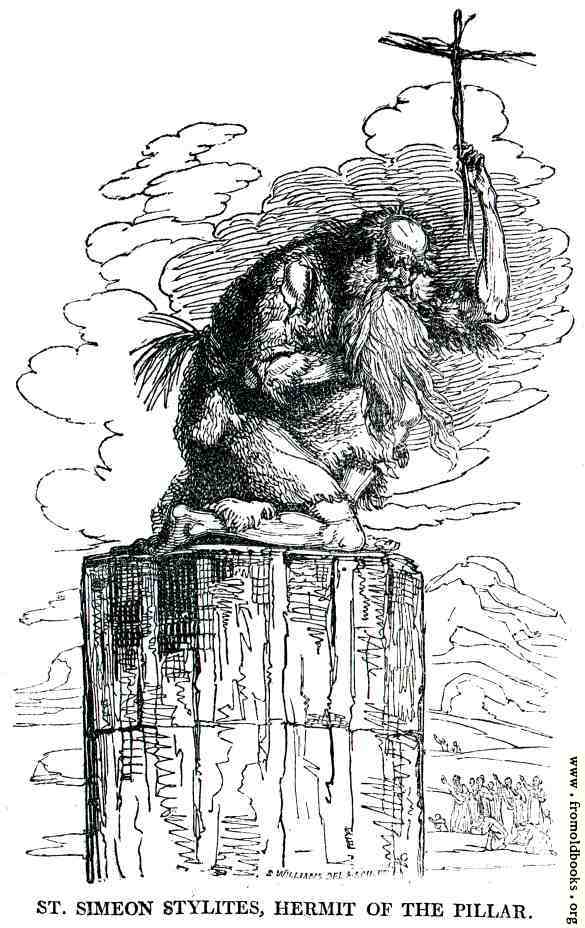
The Nader family comes from a part of the world where Christians consider Simeon Stylites to have been a great saint. Stylites spent 37 years very publicly perched on top of a pillar, as a manifestation of his saintliness. Stylites lived at a time when the Manichaean word view was fashionable. Manichaeans divided the world into good and evil, and sought to avoid the latter. Although Stylites was not a Manichaean , perching on his pillar might have appeared a good way to avoid evil. Of course, if you spend 37 years on you of a pillar, you have to be crazy. It probably never occurred to Stylites that the truely horrible way he treated himself was evil and that drawing attention to what he was doing was a sin. Tempting others to follow his example was also a sin. Ralph Nader did not perch on a pillar, but he did claim residence in that single room for many years.

Yet despite his public image Nader is no saint. He is a businessman who shrewdly uses his public image as part of his business plan, and Nader does have a very unusual and interesting business plan.

It all started with Nader's expose of the American Motor Industy, "Unsafe at any Speed." Nader was a lawyer, and "Unsafe at any Speed" was a trial lawyers brief against the auto manufactures. There were serious flaws in Nader's case. Nader argued, in effect, that auto manufacturers were responsible for the safety defects of American cars, and this certainly seems plausible. There is a problem however, with Nader's arguments. First Ford Motors had during the 1950's attempted to sell cars on the basis of superior safety. They had offered optional safety features to the public. But Ford quickly discovered that the public was more interested in bigger engines and flashier tail finsb than in safety. The Ford effort to sell cars on the basis of safety fell flat. Thus the auto manufactures shared responsibility for poor auto safety with the American public which was not interested in safety features or a safer design.

Secondly, Nader picked out the Chevrolet Corvair as his center peice of unsafe cars. In fact the Corvair was not conspicuously unsafe. Indeed Nader himself does not appear to have believed that the Corvair was so unsafe that he would not ride in one. Nader was once riding in a Corvair when the driver was tickets for speeding. Nader worried that the ticket along with Nader's presence in the car would become public knowledge.

Chevrolet had introduced the Corvair as an economy car in 1960. It was powered by rear air cooled engine. There were many attractive features to the Corvair design but the choice of a rear swing axil was questionable. The swing axil had been used in popular and widely admired German cars like the VW Beetle, the sporty Porsche and the luxurious Marcedes. Marcedes had found problems with the swing axil, and had first modified it, and eventually scrapped it. In the hands of most drivers the swing axel posed little danger. But when driven hard, a rear tire on a swing axil car could suddenly loose its grips, with a sudden loss of control. During the early 1960's most American cars had handling problems. Motorest were more interested in highway acceleration than rapid maneuverability. In fact, sophisticated drivers actually liked the nimbleness of the Corvair, and were aware that it should not be pushed to hard. General Motors, already had modified the design of the Corvair rear suspension in 1965, giving the Corvair the safest and most sophisticated rear suspension built on any American car. Thus by the time "Unsafe at any Speed" Nader's argument was no longer on target. This did not matter to Nader, who basked in the glow of the resulting publicity.

Although Nader's tactics were questionable, his results were unquestionable. In 1966 Congress past new auto safety legislation. Thus Nader had accomplished what neither auto manufactures nor consumers had not been able to accomplish, making cars safer. In the process he had become a recognized and admired public figure. Few of his admirers noted that Nader had simplifed complex issues, and had focused far to much blame on the auto companies for problems that were ingerant in the market. Nader supporters also failed to notice that the improvements in auto safety were incrimental, rather than revolutionary.

It was part of Nader's genius, that he next moved to franchise reform. Past reformers had picked out one reform issue, and attacked it, working for change. Nader next picked out the meat packing industry for attack. Meet packing is an easy target. Consumers don't want to know what happened to their Sunday beer roast on its way from being in the body of a live cow to its arrival on the dinner table. But from time to time reformers such as Upton Sinclair pull back the curtain and everyone agrees that the picture is awful. Laws and ruls are past. Meet packers agree to do better, and then as soon as the reformers back is turned, the meet packing industry.

Nader briefly targeted the meat packing industry, but to dwell to much on the problems of the meet packers would have inevitably invited comparison to the Still Living Upton Sinclair, the author of the famous 1907 reformist novel, "The Jungle." Sinclair had created so much horror and shock, that the prostrate meat packing industry begged Congress to be regulated as a means of getting America to stop eating vegetables.

General Motors tried to smear Nader, and Nader responded by suing GM and winning. He used the money to start the first Public Interest Research Group in Washington. The now famous Nader received speaking invitations from all over the country, and he made guest appearance on numerous TV programs.

At this point numerous people flocked to Washing to help Nader and his crusade. At this point Nader the reformer and Nader the business man began to diverge. Although Nader portaryed himself as an enemy of the excess of capitalism, as soon as Nader controlled organizations began to acquire employees, Nader began to exploit them. The pay was pitiful, the hours long. Nader's organizations were raking in money, but where was it going? Certainly not for wages. Nader reportedly only received a pittance, $5,000, then $10,000 and even later $15,000 a year was all that Nader received for his unrelenting toil for the American people. Why he only rented a single room and did not own a car. Nader appeared to have no life. He reportedly worked 20 hours a day, 7 days a weel. He did not go on dates or to parties. One has to wonder if he ever bothered to eat. In that regard Nader did Simeon Stylites one better, because Stylites' life was so public, he was was always observed eating.

There was of course the matter of the house. Nader had speaking fees. Perhaps he had used some of his speaking fees to purchase a house for his poor, under achieving, and under educated brother. When asked to perform services for others, like public speaking engagements, Nader expects limousines, expense account tabs, and nothing but the best hotels. Now I am not saying that Nader is not entitled to this, but it flies in the face of his carefully cultivated public image.

There was the matter of money and stocks. 99% of non profit organizations are strapped for cash. Most pay workers decent but not excessive wages. Nader had absolute and secret control of the finances of each of his growing organizations. What was he doing with the money? In 1970 some unusual financial transactions by one of Nader's organizations, the Public Safety Research Institute, got some equally unusual attention. Nader's Public Safety Research Institute was audited by the IRS and fined. The IRS discovered that the PSRI was wheeling and deeling on the stock market. With $150,000 in assets PSRI had engaged in 67 trades involving $750,000. Many of these traids were highly risky. Some lost money. The IRS determined that Nader had been churning PSRI money. That is making such frequent trades that brokerage fees were diminishing the organizations resources. Nader was playing the market with money donated for the improvement of consumer safety.

Nader was not above using the influence of his consumer interest activities to influance the value of stocks he speculated on.

There are a number of inconstancies between the business practices which Nader advocates for other businesses, and his own business practices. For example, Nader advocates transparency for other business and government agencies. But Nader operated his own NPO's without the slightest transparency. Nader advocates business accountability enforced by government regulations, but ignored his own accountability standards in the business practices of non-profit organizations he controled. Nader denounced the governance of numerous international trade organizations. "The fundamental issue we face is the autocratic systems of governance that undermine democracy," Nader stated. Yet the governance of Nader's organizations was completely autocratic, with absolutely no democratic mechanism of control. Nader advocates "the rights of people for decent standards of living," but pays his workers a pittance.

Nader denounced
"giant global corporations who dominate and seek to dominate everything in their path" including "the workplace." Yet Nader sought to dominate the workplace of his own organizations. There are what by now have become legendary of stories about Nader's autocratic relationships with his workers. For example in 1984 Nader fired Multinational Monitor editor Tim Shorrock claiming that Shorrock had run a story about an alleged Bechtel's bribery of South Korean officials. Shorrock's crime was a failure to seek a prior Nader approval for the story. Shorrock's firing participated a very ugly fight. Nader's aides filed a $1.2 million civil suit against Shorrock and a couple of his supporters. Nader's aides accused Shorrock of stealing files and filled charges with the Washington, D.C., police.

John Maggs tried to organize a union of Nader workers. Maggs told the Left Business Observer, "Nader's campaign against me was incredibly vicious. His top aides spread all kinds of rumors about me in Washington and managed to get me pretty well blacklisted from the public interest crowd (which actually was a good thing). They even tried to convince people I was a communist (!!!) out to subvert Nader's organizations. " That is right, Nader was an underhanded, totally unethical union buster. John Cavanagh, director of the Institute for Policy Studies, attempted to mediate Nader's union problems and stated "He seemed unable to see how this conflicted with his ideals." Cavanagh described Nader's anti-union activities as shocking.

Nader supported affirmative action, but Charles Pekow alleges that when he worked for Nader in the early 1980's the Nader staff was all white, predominately young, male and from affluant social backgrounds. During a prolonged pre-employment period, Pekow was asked illegal questions about his religion, his family background, and his medical history.

Many employees describe Nader's vindictiveness. According to Pekow, "Once, after a magazine editor printed a few lines he did not like, Nader punished him by demanding he travel from Washington, D.C., to Baltimore to change the copy, knowing the editor had been up all night meeting his deadline."

Nader's tyrannical ways, his miserly pay, and his demand that employees work unreasonable hours lead to rapid staff turnover. Nader raged against leaving staff. According to Pekow, when asked to provide recommendations for former employees, Nader would describe the former staffer in negative terms.

Many of Nader's former employees, despite their mistreatment at Nader's hands are still full of admiration for his accomplishments.

John Maggs accurately describes Ralph Nader as a businessman:

Ralph Nader isn't anti-business -- he is himself a businessman, a successful entrepreneur who over the decades built an empire of nonprofit corporations that sell things, earn money, pay their bills, and grow. Like many founders, Nader has a great talent for marketing, and he's helped create some well-regarded brands -- Public Citizen and Congress Watch, for example. Likewise, Nader isn't an enemy of capitalism, but of what he sees as one of capitalism's regrettable byproducts -- the mega-corporation. His campaign for president, like his 40-year career in public life, is based on a belief that big and ever-bigger corporations are destroying what should be a natural balance in our capitalistic society -- the balance between consumer and producer, between citizen and government, and between labor and management.
Maggs observed:

"Ralph Nader may look like a democrat, smell like a populist, and sound like a socialist - but deep down he's a frightened, petit bourgeois moralizer without a political compass, more concerned with his image than the movement he claims to lead: in short, an opportunist, a liberal hack. And a scab."

Nader is something else. Let's pretend we have Nader on the couch and are trying to make a psychiatric diagnosis. We observe that Nader has a very grand sense of his own importance, a sense which he has very successfully transmitted to his society. Nader believes in his own infalability, and the unquestionable justice of his causes. Nader very often places himself in the possition of being the little guy taking on much bigger opponents. He views himself on the side of good against evil. He has this Manichean consciousness. This strict division of the world, into good and evil;, right and wrong. Nader believes that he is special and that he does not have to follow the rules he expects others to follow. Nader actively and constantly courts admiration from others. He manipulates his own public image in order to gain greater admiration. He denied his own ordinariness, by pretending to live in a single room, and denied that he owned a home. Nader demonstrated a strong sense of entitlement by exercising total control over what were claimed to be public service organizations. He also exhibited a sense of entitlement by engaging in speculative investments of the finds of none profit organizations. Nader has a long standing pattern of taking advantage of his employees. The exploits them financially, and violates their bondry between work time and personal time. Nader demonstrates a lack of empathy for his employees. And in the face of criticism, Nader is inevitably arrogant. In short, Nader exhibits almost all of the classic symptoms of Narcissistic Personality Disorder.

I have noted that Ralph Nader launched his career by an attack on the safety of the Corvair. In his discussion Nader failed to note that highly prestigious autos like the Marcedes and Porsche used the same suspention design found in the Corvair. He failed to note that there was no empirical evidence that there was a greater accident risk with Corvairs than with other American cars. Finally Nader failed to note that General Motors had already altered the Corvair suspension design. Thus Nader cherry picked facts, to build his case. Nader functioned as an an advocate, rather than an objective reporter of facts. Thus Nader's use of facts, was not fair, balanced, and unbiassed. Nader's manipulation of facts was also a manipulation of his own public image, since the subtext was that he, Ralph Nader was a little David, fighting an evil Goliath. This is totally consistent with Nader's Narcissism.

Nader's ultimate goal is public adulation. In seeking that goal, he engages in no small anount of deception. Nader frequently employes dishonest means and outright dishonesty as part of his strategy. Thus Nader ignores the distinction between advocacy and objectivity, and further is Nader is ready to violate the truth is the interest of a Nader cause. Even worse, critics charge that Nader has been willing to sell his voice in legal issues and for political causes. David Sanford. who worked during the early 70's as Nader's personal editor, reports in his expose, Me & Ralph. that Nader had assigned Lowell Dodge to a study of Volkswagen safety, "Small on Safety: The Designed-in Dangers of the Volkswagen." Nader was dissatisfied with Dodge's conclusion, and demanded that Dodge begin his conclusion with the words, "The Volkswagen is the most hazardous car in use in significant numbers in the U.S. today." Dodge responded, "the conclusion is not reflected in the data," and detatched himself from further work on the project, which was completed as Nader directed. Later dodge was to say, . "I have always carried around considerable guilt about what I regard as the extreme intellectual dishonesty of that conclusion."

Most of Nader's former associates who criticize him, also express great admiration for him. They are wiling to see Nader in gray, not just black and white. We should balance the many good causes he has espoused, and the many victories he has won, with the evil he has contributed too. Nader does, after all, have some responsibility for bringing George W. Bush to the White House. Nader should not be lauded for his attacks on nuclear power. My interest here is to raise questions about Nader's credibility as a critic of nuclear power. My contention is that Nader's standard for personal integrity would have been far lower than that which people like my father and Alvin Weinberg sat for themselves. It is the advocates of nuclear power, and not its critics, who should be lauded for their honesty, integrity and devotion to human well being.

I will next examine Nader's assertions about nuclear power, and the numerous errors and coginitive flaws which Nader exhibited in his anti-nuclear attacks.

Followers

Blog Archive

Some neat videos

Nuclear Advocacy Webring
Ring Owner: Nuclear is Our Future Site: Nuclear is Our Future
Free Site Ring from Bravenet Free Site Ring from Bravenet Free Site Ring from Bravenet Free Site Ring from Bravenet Free Site Ring from Bravenet
Get Your Free Web Ring
by Bravenet.com
Dr. Joe Bonometti speaking on thorium/LFTR technology at Georgia Tech David LeBlanc on LFTR/MSR technology Robert Hargraves on AIM High