Showing posts with label The Club of Rome. Show all posts

Thursday, March 11, 2010

Children of the Club of Rome

Sarah Palin's story that Obama's health care legislation called for death panels to determine who would receive medical care, and who would simply be allowed to die in the new medical order, has rightly been described as the lie of the year for 2009. However, a recent post on the Oil Drum by Megan Quinn Bachman tells us that a form of death panels is emerging among people who believe that the Ehrlich/Forrester/Meadows/Club of Rome theory of global collapse of industrial civilization/resources/population . The post, titled "Leading the Way to a Low-Energy Future" describes what Bachman calls lifestyle leaders. Lifestyle leaders are people who are
building gardens, weatherizing their homes, getting rid of their cars, moving off-grid, bartering with neighbors and joining Community Supported Agriculture (CSA)
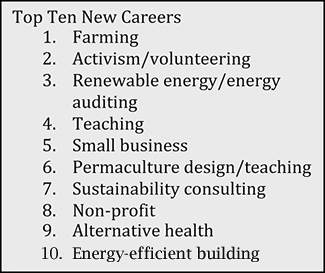
According to Bachman these lifestyle leaders are pioneering the new order by forging a new set of careers appropriate to the new post civilization order:

I would argue that these people, the Children of the Club of Rome, are the death panels for hundreds of millions if not billions of people. Yet the Club of Rome model predicts a mass human die off:

<span class=

Thus Bachman's lifestyle leaders are preparing for a Club of Rome apocalypse, which features mass human die off.
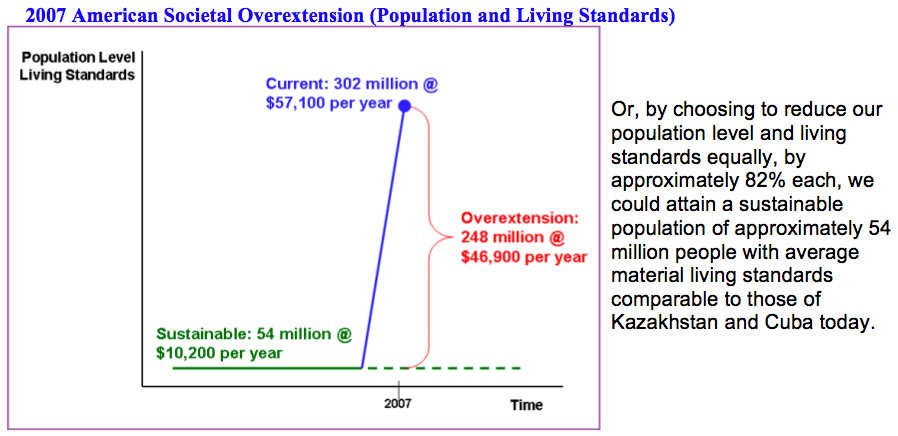
I am fond of Gail the Actuary (Gail E. Tverberg), an Oil Drum Editor who is associated with the "we are headed for collapse" point of view. i see Gail's work as having a positive aspect in that she and her guest posters repeatedly point to problems which are otherwise unvoiced. i do disagree with some assumptions and with the chain of argument which inevitably leads to negative conclusions about the future of a high population, materially wealthy civilization. I disagree with the view that the collapse of material civilization is inevitable. In addition I view the projected collapse of material civilization as an unmitigated catastrophe. This is what Chris Clugston suggests:

i disagree with this perspective because it assumes a far more limited future resource picture than I do. My viewpoint can be stated simply, we are not running out of energy, material resources, or food. A combination of two technologies, Hydraulic Fracturing (fracking), and in-situ leaching, offers the potential for high material resource recovery with favorable EROEI, from what was previously considered low grade ore. It is inevitable that the use of such recovery technologies will be applied to resource recovery, and the recovery of Uranium and thorium as part of the process will assure a favorable EROEI. Both fracking and in-situ leaching are highly tested technologies and thus appear to offer a path to a continuation of high energy/high material output civilization. Through the use of efficient and safe technologies like the Liquid Fluoride Thorium Reactor, the population of earth can be assured of a high level of material prosperity for as long as there is likely to be people around.

Thus the future resource picture may not be nearly as bleak as Gail the Actuary and her associates would have us believe. Nor is the supposed mega-famine, which Paul Ehrlich, Jay Forrester and the Club of Rome have predicted, nearly as likely to occur, as they suggest. Ehrlich's famine predictions were thwarted by the so called "Green Revolution," which dramatically increased agricultural yields in countries like India.

A recent review of global agricultural resources, published in Science, titled "Food Security: The Challenge of Feeding 9 Billion People." argues,
the world can produce more food and can ensure that it is used more efficiently and equitably. A multifaceted and linked global strategy is needed to ensure sustainable and equitable food security, . . ..
Thus in a high energy uranium/thorium based economy, the food supply is likely to be continue to be assured. The argument for the inevitable collapse of civilization can be falsified with some certainty, the impending image of mass death through the starvation of most people can be written off as a fantasy. Bachman's "lifestyle leaders"can be seen for what they are, a misanthropic death panel for the human race, whose lifestyle will turn against them as the population of earth continues to survive and increasingly prosper.

Tuesday, March 9, 2010

The Club of Rome Faces the Yellow Reril

The Limits To Growth was just the first of many Club or Rome Reports, but on other CoR created the sensation that LtG did. In away the success of the LtG made the Club of Rome Famous, but it also tied the Club to the Neo-malthuesian vision of Jay Forrester, and that vision created both problems and opportunities for the club. We have seen that Forrester's model was seriously flawed, both in ints design and in its execution. Fundamental assumptions of the the original Forrester model became the conclusions of the LtG. Forrester reached the hasty conclusion that all resources were being consumed at an unsustainable rate by industrial civilization, without sufficient evidence. In fact, the resource situation is far more complex than Forrester assumed and some earth resources are sufficiently abundant to be sustainable over a very long period of time. Uranium and thorium are sustainable with positive energy return on energy invested even at average crustal concentrations. If uranium and/or thorium were to be mined from "low grade concentrations"sources such as shale or granite, valuable minerals like phosphate could be recovered at little extra cost. Hence a uranium or thorium based economy would offer a sustainable source of the very resources that Forrester and the LtG assumed were about to exhausted.

The potentials of a uranium and thorium based economy were not unknown at the time of the publication of the LtG, so why was the resource potential of uranium or thorium acknowledged by the LtG and the Club of Rome? I have no definitive answer, but I would like to point to the anti-nuclear moral panic which gripped Western Civilization beginning in the late 1960's. There is little reason to doubt that the anti-nuclear moral panic influenced the Club of Rome's judgement about the desirability of a nuclear future. We have some evidence for this from the Source Watch entry on Carl Johan Friedrich Böttche, a Club of Rome co-founder.
Frits Böttcher is in his country a well known skeptic about the greenhouse effect. Böttcher stated during a discussion on televion about the greenhouse effect that there was no carbon dioxide problem. Another member of that discussion asked him after the broadcast was over, "You do know that's incorrect, don't you?" to which Böttcher replied "Yes, but I am against nuclear power energy."
The LtG became poplar because it neatly packaged several moral panics. Population and pollution were already the subject of major moral panics by the time thew LtG was published. Moral panics all follow a simple formula, X is a worsening problem that is “getting out of hand” and threatens public wellbeing. We need to do something about X now. Moral panics are ideological and political tools. And indeed we often see the public being manipulated by competing moral panics in the media. For example, there is a moral panic about Anthropogenic Global Warming, and a conflicting moral panic that insists that AGW is a hoax.

Some moral panics are derived from valid concerns, while some are baseless. Thus, as formulated in the late 1960's and early 1970's the moral panic about pollution was greatly overstated. Pollution problems were being addressed al over the Industrial world as a result of the killer London Smog of 1952. Pollution is in 2010 still a problem, but far less of a problem than it was in 1970. Forrester's model wrongly predicted increasing "pollution" would increase between 1970 and 2010. But what about CO2, hasn't CO2 atmospheric concentrations increased since 1970? Yes it has, but CO2 was not what Forrester or the Club of Rome understood by pollution in 1960's and 1970.

A second Moral Panic that effucted Forrester and the LtG was the overpopulation panic which was triggered by the 1968 publication of the Population Bomb, by Paul Ehrlich. Indeed, Forrester's World Dynamics appears to have a most unfortunate affinity for Ehrlich population theories. Now there is little doubt that Ehrlich's theory was absurdly mistake. Ehrlich had predicted,
“In the 1970’s, the world will undergo famines hundreds of millions of people are going to starve to death … At this late date, nothing can prevent a substantial increase in the world death rate …”
Of course the huge wave of famine with hundreds of millions of deaths never happened. But facts are such little trivial things, At least Jay Forrester had the good sense die before his great famine had been forecasted by the computer. Perhaps the reason Ehrlich was in such a hurry was that he was being spurred on by David Brower.

Ehrlich introduced the concept that
I = P × A × T (where I = Environmental Impact, P = Population, A = Affluence, T = Technology)
This formula lacks empirical foundation and there is ample evidence that a relatively small number of nomadic sheep and goat herders,can cause enormous environmental damage. The controversial theory that Mayan Civilization collapsed for ecological reasons, actually entails a collapse with what amounted to stone age technology, since the Mayans lacked metal tools and had draft animals wheeled transportation, or simple mechanical devices like pulleys. Thus if the collapse of Mayan civilization can be attributed to an environmental collapse due to exceeding the carrying capacity of the land, advance technology would not have played a big role in that disaster. Finally, demographers have demonstrated that affluence appears to bring, if anything, population stabilization, and even long term population declines, not from starvation, disease and war, but from decreased reproduction. Despite a population growth rate that has tripled the number of people in India since 1960's Ehrlich's projected famines and population collapse shows no sign of appearing. Thus it would appear that Ehrlich has greatly underestimated the carrying capacity of India soil.

Indian economist Amartya Sen noted something that Ehrlich ignored, namely
90 percent of which is taking place in the developing countries.
Yet the moral panic about population growth occurred in
the richer countries of the world and has much to do with the current anxiety in the West about the "world population problem."
What is the black box called "the population explosion hiding? According to Sen, it is
belief that destitution caused by fast population growth in the third world is responsible for the severe pressure to emigrate to the developed countries of Europe and North America. In this view, people impoverished by overpopulation in the "South" flee to the "North." Some have claimed to find empirical support for this thesis in the fact that pressure to emigrate from the South has accelerated in recent decades, along with a rapid increase in the population there.
Sen points to the source of the Western anxiety,
Fears of Being Ungulfed
A closely related issue concerns what is perceived as a growing "imbalance" in the division of the world population, with a rapidly rising share belonging to the third world. That fear translates into worries of various kinds in the North, especially the sense of being overrun by the South. Many Northerners fear being engulfed by people from Asia and Africa, whose share of the world population increased from 63.7 percent in 1950 to 71.2 percent by 1990, and is expected, according to the estimates of the United Nations, to rise to 78.5 percent by 2050 AD.

It is easy to understand the fears of relatively well-off people at the thought of being surrounded by a fast growing and increasingly impoverished Southern population. As I shall argue, the thesis of growing impoverishment does not stand up to much scrutiny; but it is important to address first the psychologically tense issue of racial balance in the world (even though racial composition as a consideration has only as much importance as we choose to give it). Here it is worth recollecting that the third world is right now going through the same kind of demo-graphic shift—a rapid expansion of population for a temporary but long stretch—that Europe and North America experienced during their industrial revolution. In 1650 the share of Asia and Africa in the world population is estimated to have been 78.4 percent, and it stayed around there even in 1750.7 With the industrial revolution, the share of Asia and Africa diminished because of the rapid rise of population in Europe and North America; for example, during the nineteenth century while the inhabitants of Asia and Africa grew by about 4 percent per decade or less, the population of "the area of European settlement" grew by around 10 percent every decade.

Even now the combined share of Asia and Africa (71.2 percent) is considerably below what its share was in 1650 or 1750. If the United Nations' prediction that this share will rise to 78.5 percent by 2050 comes true, then the Asians and the Africans would return to being proportionately almost exactly as numerous as they were before the European industrial revolution. There is, of course, nothing sacrosanct about the distributions of population in the past; but the sense of a growing "imbalance" in the world, based only on recent trends, ignores history and implicitly presumes that the expansion of Europeans earlier on was natural, whereas the same process happening now to other populations unnaturally disturbs the "balance."
Thus behind Ehrlich's Population Bomb, behind Forrester's World Dynamic Model, and behind the Club of Rome's fear of uncontrolled global economic development is the Western fear of loss of control to the Asian other, fear of the Yellow Peril.

Sunday, March 7, 2010

Aurelio Peccei's Flawed Vision and The Club or Rome

The Limits of Growth was the first report to the Club of Rome, and it appears to have established an enduring slant to beliefs about the future subsequently. The current Club of Rome internet site states:
It is clear that the present path of world development is not sustainable in the longer term, even if we recognise the enormous potentials of the market and of technological innovation. New ideas and strategies will be needed to ensure that improved living conditions and opportunities for a growing population across the world can be reconciled with the conservation of a viable climate and of the fragile ecosystems on which all life depends. A new vision and path for world development must be conceived and adopted if humanity is to surmount the challenges ahead.

At this point I I would like to point out who the Club of Rome is, and who they are not. The Club of Rome is composed of a small circler of wealthy, powerful and influential people. Its self conceived mission is
"to act as a global catalyst for change through the identification and analysis of the crucial problems facing humanity and the communication of such problems to the most important public and private decision makers as well as to the general public." Its activities should: "adopt a global perspective with awareness of the increasing interdependence of nations. They should, through holistic thinking, achieve a deeper understanding of the complexity of contemporary problems and adopt a trans-disciplinary and long-term perspective focusing on the choices and policies determining the destiny of future generations."
Leadership of the Club of Rome appears to be Eurocentric.
At present the Club has two Co-Presidents, Dr. Ashok Khosla of India and Dr. Eberhard von Koerber of Germany, and two Vice-Presidents, Professor Heitor Gurgulino de Souza of Brazil and Dr. Anders Wijkman of Sweden. The work of the International Club is supported by a small secretariat in Winterthur, Canton Zurich, Switzerland under the leadership of Martin Lees of the United Kingdom.
In case you are wondering about Ashok Khosla, his biography states,
Ashok Khosla is one of world's leading experts on the environment and sustainable development. A former director of the United Nations Environment Programme, he was awarded the 2002 Sasakawa Environment Prize - "the Nobel Prize of the environment world" - and has been named in the UNEP's Global 500 Roll of Honour.
Born in Kashmir in 1940, the son of a university professor and a college lecturer, Khosla gained a masters degree in natural sciences from Cambridge University before going on to do a PhD in experimental physics at Harvard.
After a period teaching in the United States - he was part of the team that designed and taught Harvard's inaugural undergraduate course on the environment - he returned to his native India where he became the founding director of the Indian government's Office of Environmental Planning and Co-Ordination, the first such agency in a developing country.
In 1976 he was appointed director of the UNEP, where he designed and launched Infoterra, the global environmental information exchange. He remained with the UNEP until 1982 when he left to found Development Alternatives, a Delhi-based Non-Governmental Organization devoted to promoting commercially viable, environmentally friendly technologies.
He has been a board member of numerous global environmental organizations - including the Club of Rome, the World Conservation Union and the International Institute for Sustainable Development - and served as an adviser to, among others, the World Bank, the United Nations Development Programme and the Indian government.
In his presentation speech for the Sasakawa Award Klaus Toepfler, Executive Director of the UNEP, described Khosla as "a legend in the realm of sustainable development, and an individual who personifies the hopes and dreams of billions trapped in the indignity of acute deprivation."
He lives in Delhi.
Heitor Gurgulino de Souza is a former Rector of the United Nations University, a think tank in Japan., as well as a Special Advisor to the Director-General of UNESCO,.

I do not subscribe to conspiratorial interpretations of the Club of Rome, but its limitations are obvious. Women are underrepresented as are Asians and arguably scientists. The Club of Rome claims to be
"a group of world citizens, sharing a common concern for the future of humanity and acting as a catalyst to stimulate public debate, to sponsor investigations and analyses of the problematique and to bring these to the attention of decision makers".
Infact there is scant evidence that the Club of Rome even attempsts to foster debate. For example, the Club of Rome still maintaining that the findings of the Limits of Growth were valid despite the currently accept view that the Forrester/Meadows model was deeply flawed and used an unsatisfactory quality data set. The actual quality of the model was unimportant to the Club of Rome however, what was important was the argument that humanity needs to re-evaluate its exploitative attitude towards humans and the earth. The fundamental vision of the Club of Rome appears to have been Peccei's vision.

The Club of Rome's view of its mission was clearly outlined in a 1979 speech by Club founder Aurelio Peccei:
The purpose of this project is to bring to the forefront two intertwined questions which are fundamental for the survival and development of humankind.
One is whether what we call progress is perhaps so hectic and haphazard that world populations are utterly confused and out of step with the waves of change it causes for better or for worse. The idea implicit in this question is that, though highly advanced in other ways, modem men and women are as yet unable to grasp fully the meaning and consequences of what they are doing. Failing to understand the mutations they bring about in the natural environment and their own condition, they come to be increasingly at odds with the real world. This is the human gap - already large and dangerous, and yet destined almost inevitably to get much wider.
The second question, then, is whether present trends can be controlled and the gap bridged before a tragic and grotesque fate overtakes homo sapiens. To give a positive answer to this question, one must assume that the human being possesses still untapped resources of vision and creativity as well as moral energies which can be mobilized to bail humankind out of its predicament. This may indeed seem a far- fetched assumption, but many of us consider it perfectly valid. The average person, even when living in deprivation and obscurity, is endowed with an innate brain capacity, and hence a learning ability, which can be stimulated and enhanced far beyond the current relatively modest levels.
First, Peccei assumes that he understands the grand sweep of human history, and that he possess the insight required to identify mistakes in human thought and action. In other words Peccei is making grandiose assertions. Secondly, Peccei asks if human beings possess "untapped resources of vision and creativity as well as moral energies"needed to solve the problems he envisions. While there is little doubt that improving education world wide, and greatly increasing human access to educational opportunities is highly desirable, improving the the education of world's population might not produce the sort of agreement about the "human situation" which Peccei seemingly anticipates. Indeed as Peccie unfolds his vision it becomes increasingly open to question.
For quite a while, humanity thought that in this way it had discovered an optimal pattern of steady, self-propelling development. We were all proud of a civilization highlighted by unprecedented scientific achievement, wonderful technology and a flood of mass-production which brought in their stride higher standards of life, the conquest of disease, undreamed-of travel opportunities and instant audiovisual communications.
But it eventually began to dawn on us that by the indiscriminate adoption of this pattern we were all too often paying exorbitant social or ecological costs for improvements obtained, and were even induced to neglect the virtues and values which are the foundations of a healthy society and at the same time the very salt for the quality of life. Then came the creeping doubt that for all its greatness humanity lacked wisdom.
First, we must ask if Peccei over rates the human ability to foresee the consequences of its haphazard decisions and underrate the human ability to successfully adapt to those consequences as they emerge. We have to ask what Peccei envisions as the human and ecological consequence of modernity. First, premodern human economies were also capable of producing significant environmental feedback as a 2000 report by the state of Israel on the On the Implementation Of the United Nations Convention to Combat Desertification noted,
The arid regions of Israel suffered natural soil erosion due to climate change during early historical times, and ancient Negev populations invested commendable terracing efforts to halt this erosion and to develop run-off agriculture there. From the dawn of history nearly all parts of the country have been under intensive land use by humans, including pastoralism and cropping, though evidence for desertification or the lack of it during historical times is not conclusive. During the turn of the 19th century and the beginning of the 20th century exploitation of woody and herbaceous vegetation especially in the dry subhumid areas, for firewood and due to grazing, caused severe soil erosion and significant degradation of vegetation. Many lowland regions have become waterlogged and salinized. It is not known whether or not semi-arid drylands suffered desertification at that time.
The report does not elaborate on the relationship of grazing practices to desertification, but these are well documented elsewhere. "Wildlife", and Internet site states.
In the Near East, the plains between the Tigris and Euphrates rivers formed the ancient region of Mesopotamia. This area was known for its agricultural wealth, but it became an early victim of desertification brought about by humans.

Ancient farmers knew that periodically leaving land fallow or unplanted, helped to renew the soil’s fertility. But they stopped this practice so that they could grow more crops.

After 3000 B.C. irrigation be-came more widespread, proba-bly in response to a population increase. As a result, the soil be-came exhausted. Its fertility was also decreased by a buildup of salts left behind by evaporated irrigation water. Eventually the once lush plains became a des-ert, and the ancient Mesopo-tamian civilization collapsed.
____________________________________________________________________

At one time the lands north of Africa’s Sahara Desert supported a wide range of wildlife. Ancient rock paintings, murals in tombs, and Roman mosaics all depict deer and gazelle in grasslands, with predators such as leopards and lions hunting them.

Under Roman rule, North Africa produced vast quantities of cereal grains such as barley and wheat. However, centuries of overgrazing by cattle, as well as harm to shrubs and trees by goats, have combined with climatic shifts to erode the land and destroy wildlife. Tunisia, for example, has lost approximately half its arable land.

Some scientists believe desertification reintorce itself intensifying the changes in the climate. Whenever vegetation is destroyed on a large, long-term scale, ground temperature rise and rainfall decreases. In 1969 the Israelis built a fence across the Sinai-Negev Desert between Israel and Egypt. On one side the Egyptians continued grazing camels, sheep, and goats. On the other side the Israelis left the land uncultivated, and wild plants began to take hold. Satellite photographs re-veal dark patches of vegetation under hazy cloud cover on the Israeli side but a clear sky and a desert in the making on the Egyptian side.
Thus the ecological damage caused by modern agricultural practices must be measured against the ecological damage caused by traditional practices of agriculture. Neither is desirable, but the superior resources available to modern agriculturalists, would appear to make mitigation more likely. A recent Chinese report of the mitigation of agriculture related desertification states,
Transforming the traditional resource-consuming agriculture into modern agriculture is the only choice and fundamental way to improve agricultural and ecological conditions in the Northwest.
Modern agriculture is a resource-saving and technology-intensive industry run by intensive management with the combination of planting, breeding, processing, trading, manufacturing and farming. The traditional way of extensive cultivation and management as well as the divorce of agriculture from animal husbandry must be replaced by the concept of modern agriculture. Only in this way, can the course of industrial management and adjustment of the agricultural structure be advanced, and a technology-industry system will come out of the combination of animal husbandry, cultivation of herbage, farming of fine breeds of livestock, water conservancy, processing of agricultural products, and management of agricultural energy.

Both irrigation- and rainfall-dependent agriculture can form an expanding agro-pastoral circle centered on villages or oases, which is the outcome of harmonized relations between human and nature, and an optimized man-made ecosystem suitable for natural and cultural environments in the Northwest.

If switching from grazing to rearing sheep in folds is to tackle the problems of desertification and degeneration of the grassland at the root on a large scale, speeding up the construction of modern agriculture is to resolve the issues of ecological improvement and agricultural development in the Northwest at a higher level. As fundamental measures to combat desertification, raising sheep in pens, stopping cultivating and grazing, and promoting the course of modern agriculture are emphases for the investment of capital and technology and deserve favorable policies.
Thus not only may traditional agriculture cause far more ecological damage than modern agricultural practices, but modern agricultural practices offer routes to mitigation of the damages caused by traditional practices.

I call attention to the desertification issue because it suggests modernity itself may not be a cause of all or even most human ecological problems. Furthermore attempts to fight pollution go back to the Middle ages. in 1271 King Edward I, of England banned the burning of coal on penalty of torture and death. Yet despite repeated royal efforts, coal use was not controled in the United Kingdom until the infamous London smog of 1952 killed 3000 people in London. Similar conditions exist in contemporary China, which appears to be the pollution problems earlier experienced in Europe and North America, during their earlier periods of industrialization.

Several observations suggest that Peccei's thought was in many respects conventional. For example, Peccei claimed,
Tangles of mutually reinforcing old and new problems, too complex to be apprehended by the current analytical methods and too tough to be attacked by traditional policies and strate- gies, were clustering together, heedless of boundaries and plaguing all nations, whether developed or developing, and whatever their political regime and societal structure.
But while it is true, that Peccei have to offer? He offered a dump of bad data into a Jay Forrester's poorly conceived and untested World Dynamics model. Peccei appears totaly unaware of the 1960's critic of unsophisticated use of computer tools, >garbage in, garbage out." Peccei himself acknowledged the problem, stating that it was
well-nigh impossible to draw a map of this complicated web of problems or to perceive the most virulent knots, . . .
Peccei suggested,
even ordinary people feel just how formidable the threat is becoming. They realize that increasing world disorder and real or feared scarcities of natural resources exacerbate political tensions and trigger military build-ups of dementia1 proportions, stifling peaceful development;
Peccei's statement is flawed in multiple ways. Were people more concerned about progress than in the past? How did Peccei know this? Peccei delivered this speech in 1979 as the arms race was winding down. and the cold war was beginning to loose its edge, yet Peccei chose to focus on Cold War issues. Today some 30 years later, material scarcities are still with us, but they do not seem to be propelling an arms race. Complaints about international conflict have been replaced by complaints about "globalization," a form of peaceful international economic development.

Thus we must ask, "on what grounds did Pecceie articulate his 1979 claim that
In overall terms, while apparently still advancing, humankind is now actually losing ground, and is going through a phase of cultural, spiritual and ethical, if not also existential, ecline - thus turning the gap into a chasm.
It would appear that Peccei great intellectual gift was to boil down complex problems to to overly simple general statements, that is Peccei was given to hasty generalizations. These generations glar at us in Peccei's list of global problems,
might is right the myth of national sovereignty but aggravates the inequalities among states, while social injustice coupled with inefficient, often corrupt institutions breeds civil violence, which readily expands internationally; that polluted and impoverished environments, besides vitiating our life, also drag the economy downwards at a time when recession and inflation already conflow into stagflation, spawning unemployment, frustration and still more tension and disorder - and so on and so forth.
Peccei is clearly a "glass is half empty" sort of guy. It is clear that the first decade of the 21st century has witnessed the very sort of progress

And conspicuously absent from Peccei's list are the condition of women in traditionally societies - an issue avoided by the male dominated Club of Rome. Also absent is the issue of religious persecution and religious inspired conflict and violence. Rather than loosing ground, the economies of India and china, and the well being of their people appear to have rapidly gained rather than lost ground during the last decade.

Thus it is clearly open to question whether Peccei's vision could have been said to be true in 1979, and even more questionable today.

Friday, March 5, 2010

Elites and World Future: The Club of Rome

There is little doubt that the Club of Rome is an organization of elites. The original founders included Fiat executive, Aurelio Peccei. whose 1965 speech to a group of international Bankers, who were meeting to consider measures to help Latin American economies. Peccei's speech caught the attention of a number of people who could be characterized as possessing elite status, including American secretary of State Dean Rusk. Jermen Gvishiani, Soviet leader Alexey Kosygin's son-in-law and vice-chairman of the State Committee on Science and Technology of the Soviet Union, and Alexander King, by then Director General for Scientific Affairs for the Organization for Economic Co-operation and Development. The Club of Rome movement quickly attracted many individuals about whom worlds like distinguished, famous, wealthy and powerful applied: An early Club of Rome Executive Committee included:
Belisario Betancur ex-President of Colombia

Umberto Colombo ex Minister of Research and Universities of Italy

Orio Giarini Secretary General of the Geneva Association

Bohdan Hawrylyshyn Chairman,Council of Advisers of the Parliament of Ukraine

Alexander King co-founder of the Club of Rome

Yotaro Kobayashi President of Fuji Xerox

Eberhard von Koerber President of ABB Europe

Ruud Lubbers ex-Prime Minister of the Netherlands

Manfred Max-Neef Rector, Universidad Australe de Chile

Samuel Nana Sinkam FAO Director for Congo

Ilya Prigogine Nobel Laureate
Right from the start participants in the Club of Rome viewed themselves as epistemologically privileged. There was an assumption to knowledge that greatly exceeded the groups intellectual capital. This claim to knowledge clearly appears in the group's charter document, "The Predicament of Mankind".

That statement begins:
As in every epoch of its existence, mankind today finds itself in a particular "situation".
Of course, but as a statement of fact, this is both pompous and trivial. The statement added
In some deep sense our situation compels us to animate and perpetuate it almost blindly, and thus to move toward a future whose shape or quality we do not comprehend, whose surprises we have not succeeded in reducing to a rational frame of ideas, whose complexities we are not in the least sure of being able to control.
This is of course nothing that the Philosopher Hegel had not already said one hundred and fifty years before, but Hegel would have added, people are not going to figure out what their situation is until after they are out of it. Hegel lived in a period when the limitations of knowledge was an important intellectual issue. The founders of the Club of Rome were not nearly as circumspect. they stated,
In some deep sense our situation compels us to animate and perpetuate it almost blindly, and thus to move toward a future whose shape or quality we do not comprehend, whose surprises we have not succeeded in reducing to a rational frame of ideas, whose complexities we are not in the least sure of being able to control.
Here we have a complaint about Hegel's dilemma, but not Hegel's acknowledgement that a way of life has to be dying before it can be understood or controlled.

The statement tells us,
There are, however, a few basic perceptions that possess both wide currency and increasing persuasiveness, by means of which people in many different walks of life have begun to apprehend the nature of this situation. It is thanks to such perceptions that we have come to recognize the forces that hold us in their grip as arising from what we have long recognized as being the very source of our power and achievement --at least in those countries where the industrial mode of life has flourished and broken the back of age-old scarcities.

The source of our power lies in the extraordinary techno- logical capital we have succeeded in accumulating and in propagating, and the all-pervasive analytic or positivistic methodologies which by shaping our minds as well as our sensibilities, have enabled us to do what we have done.
In other words, we have gotten where we are by science and rationality, but
our achievement has, in some unforeseen (perhaps unforseeable) manner, failed to satisfy those other requirements that would have permitted us to evolve in ways that, for want of a better word, we shall henceforth call "balanced." It has failed to provide us with an ethos, a morality, ideals, institutions, a vision of man and of mankind and a politics which are in consonance with the way of life that has evolved as the expression of our success. Worse, it has failed to give us a global view from which we could begin to conceive the ethos, morality, ideals, institutions, and policies requisite to an inter-dependent world --this, despite the fact that the dynamics of our technologies and of our positivistic outlooks are global in their impacts, their consequences, their endless profusion and, more importantly, in the promises they proclaim and in the promises they imply.
Well so the statement is that we are far from perfect. Well of course, but here we slip into danger. And we see exactly what that danger is going to be,
It is the aim of this particular project of the Club of Rome to turn the above assumption into a positive statement, by trying to cognize and investigate the all-pervasive problematique which is built into our situation, through some new leap of inventiveness.
At this point we see the emergence of the Club of Rome's epistemologically privileged. The Club of Rome limited itself to 100 members at first, but while it had grand pretentions it did not have a real intellectual orientation until Jay Forrester entered the picture. Forrester was a pioneer in the system dynamics research, and had at a younger age engineered feed back mechanisms. The idea of systems was not exactly new in science, and in fact scientists were already involved in system and feedback research, including carbon cycle research. Perhaps someone who was wiser than Forrester would have known better than to attempt to undertake a modeling of the dynamics of human society, but after applying system dymanics to the life of industries and cities, Forrester decided that he was ready to take on the world.

We know a good deal more about systems and modeling now than we did in 1970's. By that time Forrester was a big name, and an MIT professor, but he was about to over reach himself. As Paul Klugman later pointed out,
The essential story there was one of hard-science arrogance: Forrester, an eminent professor of engineering, decided to try his hand at economics, and basically said, “I’m going to do economics with equations! And run them on a computer! I’m sure those stupid economists have never thought of that!” And he didn’t walk over to the east side of campus to ask whether, in fact, any economists ever had thought of that, and what they had learned. (Economists tend to do the same thing to sociologists and political scientists. The general rule to remember is that if some discipline seems less developed than your own, it’s probably not because the researchers aren’t as smart as you are, it’s because the subject is harder.)

As a result, the study was a classic case of garbage-in-garbage-out: Forrester didn’t know anything about the empirical evidence on economic growth or the history of past modeling efforts, and it showed. The insistence of his acolytes that the work must be scientific, because it came out of a computer, only made things worse.
Forrester's model was in fact focused on problems that were on the popular agenda in 1970. As it happened I was involved in an attempt to develop a computerized environmental model in 1970-71 so I had some down and dirty insights into the problems of modeling. When I finally got a copy of World Dynamics, I immediately spotted some big flaws. First the world was not treated as a multi-dimensional entity. The only dimension the Forrester model recognized was time. Thus transportation played no role in the Forrester model. The Forrester model focused on four variables which the black box of Forrester's equations related. Those variables were:
* Population
* Quality of Life
* Natural Resources
* Pollution
* Agriculture
* Industrialization
Forrester's conclusions were as sweeping as those of Parson Malthus:
It is certain that resource shortage, pollution, crowding, disease, food failure, war, or some other equally powerful force will limit population and industrialization if persuasion and psychological factors do not. Exponential growth cannot continue forever.
Those topics were all in the air in 1970, and this makes World Dynamics interesting from the viewpoint of the spirit of the time. The problem is, however that Forrester has little insight into the dynamics of his variables. If you ask demographers, they would scoff at the notion that population dynamics can be explained without refercnce to where people live. This allowed Forrester to ignore population trends in the advanced industrial and post industrial economies, and the implication of those trends in a global economy.

Forrester's was also guilty of ignoring pollution trends. Already in 1970 pollution problems in industrialized countries were subject to increasing regulation. Of the major pollutants only CO2 was not subject to pollution regulations, and Forrester and indeed the movement he spawned largely ignored CO2. This was most unfortunate, because the Forrester/Club of Rome movement largely ignored the CO2 problem for a long time.

Forrester appears to have based his resource depletion model on M. King Hubbard's study of oil depletion. Forrester failed to note that in the same paper in which Hubbard announced his oil depletion findings, he also analyzed uranium reserves and found,
From these evidences it appears that there exist within minable depths in the United States rocks with uranium contents equivalent to 1000 barrels or more of oil per metric ton, whose total energy content is probably several hundred times that of all the fossil fuels combined. The same appears to be true of many other parts of the world. Consequently, the world appears to be on the threshold of an era which in terms of energy consumption will be at least an order of magnitude greater than that made possible by the fossil fuels.
It should be noted that rock with uranium recovery potential of equivalent of 1000 barrels of oil per ton by no means represented the downward limit of uranium ore recovery with favorable energy returns. Further, Hubbard failed to note the further availability of even larger quantise of thorium, which was also recoverable with favorable rates of energy return.

The availability of such large amounts of recoverable energy resources the future resource picture might well be effected. For example mining of low concentration mineral resources such as shale rock or granite for uranium and thorium would probably yield large amounts of mineral and metal byproducts. These byproducts could be recovered with little added energy costs. Wast heat from nuclear reactors could be used to desalinate sea water, and valuable mineral resources extracted from the rejected brine. Finally, the so called waste from a large scale nuclear energy economy could be "mined" for stable and valuable fission products. In addition to these nuclear economy based resources, other minerals and metals exist in basically inexhaustible supply in the earths crust, Forrester simply assumed that all resource supplies were similar to oil, when in fact they are not. When one resource becomes scarce, another may be substituted in its place. Substitution thus becomes a major factor for sustaining civilization, but there is no evidence that Forrester recognized the importance of substitution in maintaining a long term economy. Thus Forrester's account of resource sustainability was extremely flawed.

Unfortunately, Forrester's extremely flawed non spacial World Dynamics model caught the attention of the Club of Rome, and became the Club of Rome model. Peccei managed to obtain Volkswagen Foundation money for further research on Forrester's World Dynamics model by a Forrester associate at MIT, Dennis Meadows. The result was the famous study The Limits of Growth. Not only did the limits of growth fail to correct Forrester's flaws, it projected a Neo-Malthuesian future of a resource starved civilization. In doing so, Meadows and his associates over looked the true nature of the earths' material resources. Further, it appears likely that in preference to mining ever larger stocks of minerals, future human economies will take more and more to recycling as a basic source of resources. A further source of economic growth would be more efficient use of existing resources, for example through miniaturization Through recovery of resources through the operation of a nuclear economy, the recycling of resources, more efficient use of resources, and resource substitution a high material lifestyle would be available for the entire world's population. Further through increased efficiency, the world's economy could continue to grow as long as technological advances continued. Finally more efficient use of resources and shifting to low pollution technologies would control pollution problems. Finally with economic development, world population would peak and then gradually decline. This population decline would not be caused by poverty and scarcity, but by demographic factors linked to improved quality of life already present in materially advanced nations. The tong term decline in population would lead to a gradually increasing level of per capita wealth, and with greater wealth would come improved quality of life.

Thus we have seen that a largely self appointed organization of world elites, The Club of Rome, assigned to itself and to its agents a special capacity for knowledge. In addition to Jay Forrester's World Dynamics findings, one other aspect of Forrester's work probably drew the Club of Rome's attention, that is Forrester's contention that systems dynamic computer modeling lead to counterintuitive conclusions. Forrester never appears to have considered that some of his conclusions might have been counter intuitive because they were wrong. Forrester's system dynamic world model was what Bruno Larour called a black box. This black box has become a corner stone of the Club of Rome's claims to special knowledge.

We are now confronted with a paradox. The Club of Rome was founded as a consequence of a speech given in a meeting of international bankers intended to to aid in the economic development of Latin America. The Club of Rome however, quickly adopts a position that says in effect, developmental efforts directed toward Latin America are doomed to lead to disastrous consequence and mass death. We should rightly ask, "what is going on here?"

This question will require further exploration.

Followers

Blog Archive

Some neat videos

Nuclear Advocacy Webring
Ring Owner: Nuclear is Our Future Site: Nuclear is Our Future
Free Site Ring from Bravenet Free Site Ring from Bravenet Free Site Ring from Bravenet Free Site Ring from Bravenet Free Site Ring from Bravenet
Get Your Free Web Ring
by Bravenet.com
Dr. Joe Bonometti speaking on thorium/LFTR technology at Georgia Tech David LeBlanc on LFTR/MSR technology Robert Hargraves on AIM High