Friday, April 30, 2010

The Case for the LFTR

Fast reactors can either be designed to be actinide burners, or they can be designed to be breeders, if breeding is required to produce nuclear fuel. With breeding, the continued manufacture of LWRs will no longer be required, if fast reactors can be manufactured more cheaply. Also, Fast Breeder Reactors produce produce plutonium and plutonium is not particularly compatible with Light Water Reactors. Only about two thirds of Pu-239 gets burned in a Light Water Reactor, in addition the reactor grade plutonium produced by FBRs includes a significant percentage of non-fissionable plutonium isotopes. In Light Water Reactors this means a very poor neutron economy. So the excess plutonium produced in FBRs makes excellent nuclear fuel for fast breeders but relatively poor fuel for LWRs. If Fast Breeders can be built more cheaply than LWRs, then LWRs will be obsolete.

The fast breeder is not the only Generation IV reactor design that could compete with the LWR. Molten Salt Reactors are characterized a simplified design was well as an extremely compact core. Molten Salt Reactors could be mass produced in factories, have significant inherent safety features, and could dramatically lower reactor construction costs. A number of attractive breeding options are available with molten salt technology, including Liquid Chloride Fast Reactor a reactor that would combine fast breeding with the superior safety of the molten salt reactor. Liquid-fluoride reactors can operate as thorium fuel cycle breeders in the thermal neutron spectrum. The Liquid Fluoride Thorium Reactor (LFTR) would be simple, easy to operate, compact, and could eliminate the safety problems of LWRs and Liquid Sodium Fast Breeders, and would be in expensive to operate. in addition they would almost completely eliminate the problem of nuclear waste. LFTRs potentially can convert 98% of the Thorium used in breeding into fission products. Most of the fission products have short half lives, and many of the long half lived Fission products are relatively benign. The fission product mass would be no more radioactive than unprocessed uranium metal after only 300 years. Although safe sequestration of the fission product mass is possible after 300 years, the fission product mass would includes significant amounts of valuable and rare minerals, and mineral recovery is quite possible.

LFTRs could be started with plutonium from nuclear waste, and in fact the LFTR like the fast reactor have been proposed for use as actinide burners. LFTRs can be built rapidly, at low cost and with a lot of actinides around in the form of LWR waste, LFTRs capable of producing hundreds of GWs of electricity can be brought online almost as quickly as they roll off assembly lines.

LFTRs have some interesting properties. The Molten Salt Reactor was originally designed to provide energy to jet engines, and MSRs can automatically respond to throttle driven energy demands. Thus LFTRs can operate in a load balancing capacities, something that is currently being done on the grid by carbon emitting natural gas turbines. Because they are expected to be inexpensive to build and operate LFTRs could be used as peak and back up reserve power units. LFTRs have a negative temperature coefficient of reactivity, and designed to shut down at a predetermined peak temperature. This means that a LFTR using closed cycle helium or carbon dioxide turbines can be brought on line to peak power as fast as its turbines can be spun up.

In addition, with materials development, LFTRs are potentially capable of producing up to 1200 C heat safely. That means that LFtTRs could be used to produce industrial process heat, something that neither fast reactors nor renewables can be expected to do,

If the use of fossil fuels is to be limited during the next 40 years, due to supply and climate concerns, then their most likely energy replacement will take the form nuclear power. Arguably Light Water Reactors would not be the best option for a nuclear transformation of the energy economy. They are relatively expensive to build. They pose significant construction challenges, and arguably may lack scalability required to quickly transform the energy economy. The global energy economy could not be powered by uranium from conventional sources, and new uranium production technologies would have to be developed quickly. Running the global energy economy with once through LWRs would create an enormous amount of nuclear waste. They are too expensive to operate in an electrical backup, and lack the rapid spin up capacity of natural gas powered reserve turbines. They cannot provide industrial process heat.

Finally, Molten Salt Nuclear technology, and thorium breeding have both been successfully tested. Developmental challenges still remain, but there is no reason to anticipate that such challenges cannot be overcome with sufficient commitment. The Manhattan Project demonstrated that dramatic technological breakthroughs are possible in a short period of time with enough commitment. The development of the LFTR would be a far less significant challenge than that faced by American Scientists between 1942 and 1945. Indeed the development of the LFTR might cost less than the appropriations now budgeted to NASA for a single year.

Thursday, April 29, 2010

Has Global Crude Oil Production Peaked?

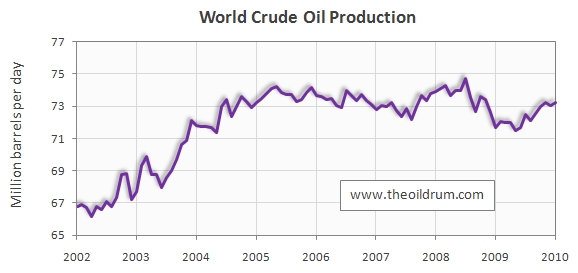
This chart comes from Oilwatch Monthly, via the Oil Drum. It appears that global oil production peaked about 2004. Since 2004 millions of cars have been sold in India and China. If global oil production does not increase, increased demand will drive gasoline prices ever higher. May observers believe that an increase in oil production is unlikely, and production declines will soon begin.

Wednesday, April 28, 2010

Is "Chernobyl: Consequences of the Catastrophe for People and the Environment" reliable?

Monday was the 24th anniversary of the Chernobyl disaster and the opponents of nuclear power have taken the opportunity to go on the attack. A previously obscure book, Chernobyl: Consequences of the Catastrophe for People and the Environment (Annals of the New York Academy of Sciences) has drawn significant attention. "Chernobyl Consequences" was written by Alexey V. Yablokov (Center for Russian Environmental Policy, Moscow, Russia), Vassily B. Nesterenko, and Alexey V. Nesterenko (Institute of Radiation Safety, Minsk, Belarus). The study is in fact inaccessible to most people. It was published in an edition of the Annals of the New York Academy of Sciences, although copies can be obtained by forking over considerably more that one hundred dollars to Amazon.com. No scholarly reviews of this study have yet been published,

Yablokov has for some time argued what other researchers take to be extreme views on Chernobyl casualties, for example arguing that
Chernobyl is associated with the worst technical catastrophe in human history.
Yablokov has accepted without question, the debated linear no threshold (LNT) radiation safety hypothesis. He argued in 1999 that such theories are
tragically confirmed in the territories affected by small doses of radioactive emissions from Chernobyl. Official forecasts of merely a few additional cases of cancer by the end of this century have been disproved by a hundredfold increase in the incidence of thyroid cancer.
Thus one potential problem objective reviewers need to be alert for is that Yablokov and his associates may have a bias toward the confirmation of hypotheses that he believes to be true. A second danger is that of circular arguments. That is that Yablokov simply assumes what they were trying to prove, namely that the LNT hypothesis.

Now in order to test the LNT hypothesis given Chernobyl data, researchers must eliminate test illness and death data for non radiation causal sources. Only after all other potential causes are eliminated, can cause be attributed to Chernobyl related radiation. Yablokov seems to jump to conclusions, for example in 1999 he stated
Another unexpected consequence of human exposure to small radiation doses was a significant increase in the number of spontaneous miscarriages. Establishing the exact number is extremely difficult because of incomplete medical statistics, but individual observations seem to tell the story. Consider, for instance, that in Sweden the number of successful conceptions decreased by 600 in June and July of 1986. In Greece, the number of live births from January through March of 1987 was 2,500 lower than expected.6 The same decline was observed in Italy, Germany, Belorussia, and even in the United States.
This argument is an example of the post hoc proper hoc fallacy. A drop in the number of live birth occurred in a number of countries after the Chernobyl accident, but that drop might have been due to other causes, not related to Chernobyl. We would have to subject the birth rate data to a number of tests before we can decide if Chernobyl had any relationship at all to the decline. It is troubling for the argument that the decline of the American birth rate is mentioned, even though the United States received very little Chernobyl related fallout. Unless Yablokov applies far more rigorous tests to his argument, it would not appear to be sound.

Other Yablokok arguments seem to be equally problematic. in his 1999 essay he argued, he argues,
Another terrible consequence of Chernobyl’s low-dose pollution is the sharp increase in the number of retarded children. A comparison of 2,213 newborns in the polluted territories of Belorussia, Russia, and the Ukraine with 2,120 children born in nearby unpolluted territories has shown that more than half of the children born in the former regions display signs of retarded mental development.
Such tests should have been performed with children who were demographically matched to children in the polluted area, and further tests to children from the polluted area who were born prior to the Chernobyl accident. Thus test conditions as stated in 1999 by Yablokov would not have yielded valid conclusions.

From these appearantly invalid arguments in 1999 Yablokov concluded
These data confirm observations on fetal development made in Hiroshima and Nagasaki in the years following detonation of atomic bombs. Clearly, small radiation doses do disturb the normal formation of the central nervous system of the fetus in certain sensitive stages of development.
in fact the rules of science and of logic have been violated in the arguments, so nothing has been demonstrated about the health effects of Chernobyl related radiation. Yabolkov adds,
During the decade following Chernobyl, the danger that small doses of radiation can harm humans has turned from an assumption to a scientific fact backed by dozens—or even hundreds—of scientific studies. These results also highlight the narrow focus of past research, which was mainly oriented toward increased incidence of leukemia. While leukemia is one untoward consequence of radiation exposure, other illnesses and abnormalities are equally as telling and should be emphasized in future studies.
Acceptance of the LNT hypothesis by the scientific community is har from unamous, and Health Physicists, the scientist who by training and experience are best qualified to judge the issue, have stated professionally, that
In accordance with the current knowledge of radiation health risks, the Health Physics Society recommends against quantitative estimation of health risks below an individual dose of 5 rem in one year or a lifetime dose of 10 rem in addition to background radiation. Risk estimation in this dose range should be strictly qualitative accentuating a range of hypothetical health outcomes with an emphasis on the likely possibility of zero adverse health effects. The current philosophy of radiation protection is based on the assumption that any radiation dose, no matter how small, may result in human effects, such as cancer and hereditary genetic damage. There is substantial and convincing scientific evidence for health risks at high dose. Below 10 rem (which includes occupational and environmental exposures) risks of health effects are either too small to be observed or are non-existent.
Health Physicist, Bernard Cohen who studied the health consequences of exposure to high levels of natural background radiation concluded that even scientifically and logically valid studies of the health effects of radiation yielded at best circumstantial evidence, and that conclusions drawn from such studies are not true with mathematical certainty. Cohen included a discussion of common errors found in radiation related epidemiological studies.

Yablokov was also a general editor of the 2006 Greenpeace report, The Chernobyl Catastrophe Consequences on Human Health.

Thus Yablokov is certainly in the orbit if not also the pay of Greenpeace and perhaps other like minded anti-nuclear organizations. This does not mean that what he says is untrue, but it does mean that before his arguments are credited, they should be be carefully vetted. And as I have noted Yablokov has in the past used argument which are on their face invalid and unscientific.

A New York State University professor Karl Grossman has published an account of some of the books findings in Counterpunch. How well Grossman is qualified to write anything like an objective review of a book on Chernocyl causalities is open to question. Mr. Grossman has written two previous books, both of which focused on some nuclear related threat. In Wrong Stuff: The Space Program's Nuclear Threat to Our Planet, Grossman charged that a nuclear related conspiracy lay at the heart of the space program. Amazon reviews were decidedly mixed. One described "wrong stuff" as "Ignorance At Its Utmost." The reviewer added,
The Wrong Stuff clearly shows that uninformed Americans are apt to believe a gross distortion of the truth, so long as it sounds scary and apocalyptic. This book sounds good for a science fiction, conspiracy theory. The book definitely is a thriller, fictitious all the way, designed to scare and outrage the reader. Sadly, the book is poorly researched and has a very faulty logic
Another reviewer titled his review "Dumb," and added,
If you like raving paranoid conspiracy theories, this one might be for you. It seemed poorly researched with big gaps in logic to me. Not enough plot to be science fiction, not enough facts to be journalism.
Anothe Grossman book, "Cover Up: What You Are Not Supposed to Know About Nuclear Power," also received decidedly mixed Amazon reviews. One reviewer wrote,
I can't remember the last time I read a book with so little content.
While another reviewer added,
This book does not make any reasonable arguements. Nor does it support it claims.
Quite obviously the writings of Mr. Groosman belong on Counterpunch. But given the comments of the Amazon readers, it is not clear that we can count of him to offer us an accurate representation of any book on Chernobyl, or to offer an objective review of any book that cast nuclear power in a negative light.

Mr. Grossman makes the following statements:

* The book is solidly based—on health data, radiological surveys and scientific reports—some 5,000 in all.

* It concludes that based on records now available, some 985,000 people died of cancer caused by the Chernobyl accident. That’s between when the accident occurred in 1986 and 2004.

* the International Atomic Energy Agency . . . the new book shows, is under-estimating, to the extreme, the casualties of Chernobyl.

* That the IAEA is corrupt

* That an agreement between the IAEA and the World Health Agency "has muzzled the WHO, providing for the “hiding” from the “public of any information…unwanted” by the nuclear industry."

* that “hundreds of millions of curies, a quantity hundreds of times larger than the fallout from the atomic bombs dropped on Hiroshima and Nagasaki” were released by the chernobyl accident.

* That before the accident, more than 80% of the children in the territories of Ukraine, Belarus and Russia extensively contaminated by Chernobyl “were healthy,” the book reports, based on health data. But “today fewer than 20% are well.”

And so on.

If Mr. Grossman's arguments accurately reflect both the book and the facts, they offer a shocking picture of the consequences of the Chernobyl accident. But even given this picture, these facts do not enhance an objective case against nuclear power. The Chernobyl reactor used a core design that was know to be unsafe right from the dawn of the nuclear era. No current reactor project uses this unsafe design, and it is very unlikely, given the Chernobyl accident that any reactor using a similar design will ever be built again. Secondly, in addition to the dangerous core design, soviet reactor designers omitted two important levels of containment from the Chernobyl reactor. Had those levels been present, it is doubtful that the Chernobyl accident would have had such serious consequences. All reactors built today include these added containment levels. Thus given the safer core design of modern reactors, the addition of numerous additional safety features in new reactor designs, and the presence of the added levels of containment, the likelihood of an accident that would cause a single radiation related casualty would be a once in the life of the universe event. Thus even if the worse case argument about Chernobyl consequences proves true, it does not in the slightest support the case against nuclear power.

In addition to Grossman, an account of the Chernobyl book was recently published by The Environmental News Service. Groosman's account was largely detaile free, but the It added more details about the Environmental News Service account is more detailed. Among the claims reported was the claim that between 1986 and 2005 of the 830,000 people who had participated in the Chernobyl clean up. between 112,000 and 125,000 had died. Although this seems like quite a lot, it should be noted that between 1986 and 2005 the life expectancy of men in the former Soviet Union dropped dramatically. The life expectancy of all Ukrainian men was 62.6 years, while the life expectancy of Russian men, most of whom had not been heavily exposed to Chernobyl related fallout, was 58.8 years.

A United Nations Development Program report stated that the reason for the increased deaths included
rise in self-destructive behaviour, especially among men.
Among self destructive behaviors listed were alcoholism which basically doubled after the Soviet collapse, drug misuse and suicides. In addition the transition to a market economy in the former Soviet Union had produced a great deal of economic displacement, an a significant increase increase in poverty, lowering even further the already low standard of living in the former Soviet Union. Thus the reported deaths of people, mainly men, who died alleged consequence of the Chernobyl accident must be view within the context of the actual death rate of men in the former Soviet Union between 1986 and 2005. Thus a report that by 2005 15% of any group of men working in the former Soviet Union were dead, would probably be considered typical, and perhaps unexpectedly low.

I do not regard this post as a comprehensive review of the study Chernobyl: Consequences of the Catastrophe for People and the Environment, But I am suggesting, that before its arguments and conclusions can be relied on, they need to vetted by well informed, critical reviewers, who are not inclined to accept invalid and unscientific arguments.

Friday, April 23, 2010

coal2nuclear Conversions: Steam turbines or Brayton cycle gas turbines.

Jim Holm has made an important contribution to the discussion of the future of nuclear power in the United States. I believe that Jim was the first person to publicly advocate the recycling of coal fired power plant sites, as nuclear sites. Holm correctly noted advantages for doing so. Practically everyone who is interested in building small reactors, likes Jim's idea, but there is less than total agreement on how best to implement it. First let me note what some of the advantages recycling coal fired power plants sites would give the nuclear power plant constructor. These sites are accessible by railroad. Almost all American coal fired power plants have their coal transported to them by rail. This means that large manufactured parts for a reactor can be transported to the reactor set up site by an existing rail line.

Every one who has looked at the small modular reactor idea has noted that one of their advantage would be the ability to transport major components, for example the reactor core, from the manufacturing factory to the set up site, by truck, rail or barge. The existing rail lines to coal fired steam plants, thus would provide an ideal transportation route, that would require no construction, hence no added expense.

A second advantage would be access to coolant water. Existing coal fired power plants already require access to large amounts of coolant water. Reactors could be simply plugged in to the old plant's existing water coolant system, including the already existing cooling towers. if the new facility is rated at or above the generating capacity of the old plant, more water coolant capacity might have to be argued, but the plant would not start from scratch. In addition it might be possible to simply transfer the water use permit from the old facility to the new facility, eliminating one paper work obstacle to plant construction.

One of the major cost considerations for nuclear plant construction is the overall cost of site development. A coal powered site will already have developed features that can be reused during a conversion to a nuclear power plant in addition to its rail access, and coolant water system One example is its grid access system, which includes a transformer farm, and high tension power lines that connect the plant to the grid. The existing plant grid hookup could cost as much as $100 million to to duplicate.

Other facilities of the old power pant could also be reusable. These would include some of the existing buildings, parking lots, access roads and so on.

Jim Holm has also suggested the reuse of the coal power steam plant's turbines. At one point I floated Jim's turbine reuse suggestion on Nuclear Green and Energy from Thorium. There was a considerable discussion of this idea in the EfT discussion forum. There were a number of critiques. These included questions about cost savings, and the cost of adaptive technologies. Steam turbines have limited lifetimes, and periodically have to be replaced. The operational life of a steam turbine may exceed 50 years, but many coal powered steam plants are over 50 years old. The cost of steam turbine installations can be expected to run from between $400 to $1,500 per MW of generating capacity. Which represents a levelized cost from 2.50 to 6.50 per kWh if operated in a base load (8000 hours per year) plant, or from 4.00 to 12.00 per kWh if operated to meet daytime demand (4000 hours per year). daytime support. To give some idea of the relative cost of the installed steam turbine system, the Energy Information afency estimates that in 2016 the levelized cost of a nuclear power plant will be 119.1. Since all conventional nuclear plants can be expected to operate as base load electrical producers the cost of the installed steam generator would run from 2% to 5% of conventional nuclear plant costs.

Thus even before we examine cost related to the adaption of old steam turbines to new nuclear heat sources, questions about the economic benefits of pairing a new reactor with an old steam turbine should be reviewed.

First if a turbine is near the end of its useful life, it may at the very least need to be refurbished. If the turbine is refurbished, it would also be wise to refurbish the entire system including steam lines and generators as well. But before we do that we would also need to compare the cost of an entirely new turbine system with the cost of the old system.

There might well be other costs of the adaption of old coal pant steam turbines to new small reactors. There are two coal plants located near me in East Tennessee. They are the Kingston Steam plant, and the Bull Run Steam plant. There are considerable differences between the two facilities. The Bull Run plant, completed in 1967 uses a single boiler to heat super critical steam that drives a set of compound turbines that produce a rated 950 MWe. The Kingston plant has 9 separate generation units that use less hot sub critical steam, four unites produce 175 MWe each, while the other five produce 200 MWe each, for a total of 1700 MWe generating capacity. Lets consider using Jim Halm's coal 2 nuclear scheme on the Bull Run plant. Jim at present touts two sodium cooled Generation IV reactors, the Russian B-800 and the GE-Hitatchi S PRISM. The B-800 would be a little small to power the Bull Run turbines to 100% of their rated output. But 3 S PEISMs would do the trick nicely. Furthermore they would be reasonably well matched to the supercritical steam temperature requirements of the Bull Run power plant. But neither the the B-800 nor the S PRISM would be at all well matched to the Kingston steam plant.

Let us now consider the use of the LFTR. The reference concept factory manufactured LFTR is a 100 MWe unit, although unites as large as 400 MWs could probably be factory produced, with cores and other major components being rail transportable. But we would run into major problems matching the LFTRs heating capacity with either the Bull Run or the Kingsport Steam plants. First the heat output from the LFTR would be around 600 C, or perhaps a little less. But we do not need super critical steam heated to 600 C at the Bull Run plant, so some of the potential energy efficiency of the LFTR would be lost. If the LFTRs were run with a Brayton cycle gas turbine they would produce electricity more efficiently using heat from the LFTR to produce super critical steam for a super critical steam turbine would. In time the added value of the extra electricity produced by a Brayton cycle gas turbine system would more than make up for the added cost of replacing the Bull Run supercritical steam turbines, even if those turbines were brand new.

And of course it would be extremely inefficient to use heat from LFTRs to produce steam for the Kingston Power plants, although it would be easily possible to match each steam unit's output to a LFTR's output. Thus for the Kingston Steam plant the LFTR replacement would clearly offer significant efficiency advantages if Brayton cycle gas turbines were included with the replacement units. The Bull Run plant could be powered by sodium cooled reactors, but it has not been established that three S Prism reactors producing super critical steam for the existing turbines would offer levelized cost advantages offer over four 250 MW LFTRs powering Brayton turbines.

Jim has argued that the existing turbine systems of coal fired steam plants, would offer the greatest value for the coal to nuclear conversion. I disagree. Far from rejecting Jim's suggestion, LFTR advocates have elaborated on it, while offering substantial efficiency improvements by the suggested replacement of old and worn out steam units, with advanced Brayton cycle gas turbine technology.

Thursday, April 22, 2010

Per Peterson on Nuclear Energy Future Directions

Per Peterson offered this lecture on October 9, 2009. Per discusses technological developments that are almost certainly sure to push nuclear costs lower, and his discussion is directly applicable to the case for the LFTR.

Earth day

Earth Day:
The Human future with Solar & Wind

Tuesday, April 20, 2010

One Bottle is Enough to Blow up Iceland

Nuclear power is clearly dangerous!

Below the consequence of just one drop of Nuclear Hell hot sauce falling on a glacier in Iceland. Think what this stuff will do to your community.

Nuclear Power in the future of Cement Manufacture

Cement manufacture is a significant source of Global CO2 emissions. About 3.4% to 5% of anthropogenic CO2 is emitted from the Cement manufacturing process. The process of manufacturing portland cement requires the burning of large amounts of fossil fuels. In addition the cement manufacturing process triggers the emission of even larger amounts of CO2 as a byproduct of heating raw materials. Lisa J. Hanle, Kamala R. Jayaraman and Joshua S. Smith point out,
Cement is often considered a key industry for a number of reasons. To begin with, cement is an essential input into the production of concrete, a primary building material for the construction industry. Due to the importance of cement for various construction-related activities such as highways, residential and commercial buildings, tunnels and dams, production trends tend to reflect general economic activity.
In addition to the emission of CO2 by burning fossil fuels during the production of cement and the the discharge of CO2 from raw materials during cement processing, the burning of fossil fuels to produce electricity used while grinding cement clinkers also contributes to the atmospheric CO2 burden. Burning fossil fuels in cement manufacturing also releases a significant amount of NOX and SO2 gases, creating further environmental problems. There has as of yet been no environmentally satisfactory solution to the cement manufacturing issues, involving the substitution of renewable energy for fossil fuels.

If the international economic industrialization process is to continue during the 21st century, and continue to spread to under industrialized countries, the global demand for cement will skyrocket. Given the current rate of global CO2 emissions by the cement industry, the elimination of CO2 emissions associate with cement manufacture, will play a significant role in the decarbonation of human society.

The relation between cement and CO2 is actually complex. Cement in concrete actually goes through prolonged chemical curing processes, during which over half of the CO2 emitted during the manufacturing process is reabsorbed. Thus the CO2 produced by burning fossil fuels during cement manufacture constitutes a separate issue from the CO2 emitted by raw materials, because much of the latter CO2 will later be recaptured later on.

CO2 emissions from materials can be controlled by using a low carbon emissions cement manufacturing process, that might begin with different materials, or inclusion of alternative materials in the raw materials mix. Alternatively carbon recapture could be facilitated during the curing process.

Carbon emissions from burning fossil fuels while processing cement materials, can be eliminated use of nuclear power in the heat production process. One approach would be the production a carbon neutral flsmable gas using process heat from a reactor. The gas would then be burned to provide sufficient heat to process cement raw materials. There are decarbonization objections to this approach, Even if the gas manufacturing process is carbon neutral, we may not be assured of carbon neutrality during all stages of handling and use. For example methane has a far more serious greenhouse implications than CO2 does. Methane lossed inadvertantly to leaks is not carbon neutral, as is methane loses due to imperfect combustion. Thus the introduction of carbon based gases into the cement manufacturing process, presents significant challenges if carbon neutrality is the goal.

There would be no such problem if the gas were hydrogen. My well informed readers will recognize that there are problems with the handling and storage of hydrogen, but those probles relate more to the storage of hydrogen than its production. The hydrogen problems can be minimalized if hydrogen is burned immediately after its production.

Nuclear power can contribute to cement manufacture, both by serving as the indirect source of the required heat input, and as a carbon free source of electricity.

Both gas cooled and liquid salt cooled reactors could be useful in cement manufacturer, but LFTRs have the potential to perform the heat production role with the lowest potential cost. The LIFT would be the energy source that is most compatible with high energy post-carbon future. It has the greatest potential to produce industrial heat and electricity at a low cost, while for all practical purposes, energy produced by LFTRs would not be limited by natural forces or supply problems.

If decarbonization is imagined to be adressed on a sector by sector basis. In terms of electrical generation decarbonization can take place by substituting nuclear power for fossel fuel generating systems. In surface transportation, decarbonization can be accomplished by electrification. Space heating can also be electrified, especially through use of heat pumps. Finally energy for the industrial sector can be provided by greater electrification or by nuclear heat inputs.

This vision would assign to nuclear power a predominate role in the production of post carbon energy. It is quite evident that this role could not be fulfilled by conventional light water nuclear technology. First because of the limited avaliability of U-235. By a switich to Generation IV nuclear technology, energy avaliability of current supplies of nuclear fuel would be increased by a factor of 500 or more.

The program endorced by Nuclear Green is highly ambitious. I advocate the use of nuclear powered energy sources in the creation of a globalized high energy industrialized economy. My view is that this program is not incompatible with environmental values, infact it is more consistent with environmental protection than a low energy renewables powered post-carbon future. In addition, a post carbon high energy future would be less likely to produce the political and economic conditions that would lead to war.

Sunday, April 18, 2010

Progress Toward an American Gas Cooled Reactor and Beyond

I am no longer a big fan of pebble bed reactors. At one time, I was excited about there more advanced features, but then I got a better understanding of their draw backs. The Chinese have a project to build PBRs, quite a lot of them. But as it turns out they are not going to be any cheaper than Chinese built light water reactors. The only advantage of the PBR then would be its ability to operate at a far higher temperature than light water reactors. That heat potentially makes PBRs useful as a source of industrial heat.

Industrial heat is important because there are no renewable post-carbon energy sources that are particularly good at producing the sort of heat that is required by many industrial processes. Very high temperature nuclear reactors turn out to be about the only source of industrial process heat that does not produce CO2. If any nation wants a chemical industry, or even manufacture cement in the post carbon era, it will need access to a very high temperature nuclear technology.

Somewhere in the bowels of the United States Department of Energy there are people who know this. They have reviewed the Generation IV options, and in their somewhat less than great wisdom, have determined that the United States should spend $4,000,000,000 between now and 2021 to produce an American gas cooled pebble bed reactor. Now four billion is not a lot to spend to build a new reactor prototype, but then pebble bed technology has had and continues to have a lot of money spent on its research. So the design of the very high temperature reactor will not exactly start from scratch. There will still be some questions to be asked and answered, however, before the prototype goes critical.

Among the attractive features of the pebble bed reactor design are some nifty passive or natural safety features. Some of the very bad things that might happen with a conventional water cooled reactor just are not going to happen to a pebble bed reactor, because PBR design does not introduce water into its core. Furthermore, as the core of the PBR heats up, the chain reaction will slow down. Make the core hot enough, and the chain reaction will slow down. The core of a well designed PBR is also meltdown proof. In fact you an heat the PBR, turn its heat up, and then turn off the fans that circulate its coolant gas. In a conventional reactor turning off the coolant pump is a sure formula for disaster. Reactor operators at Chernobyl did that, just before their famous reactor disaster. But PBR researchers have already tried turning the coolant gas circulation fans off, and the reactor shut down and cooled off on its own, without operator intervention. So a PBR has some impressively safety features.

Never-the-less, Rainer Moormann has argued that the PBR is not without safety problems and reports that
the primary circuit of the [experimental] AVR is heavily contaminated with dust-bound metallic fission products (strontium-90, caesium-137), which create major problems in the current dismantling effort.
Moormann claims,
If temperature limits for specific metallic fission products are exceeded, they diffuse through fuel kernels, coatings and graphite over the long term.
Not good! Not good at all. Even worse,
Had AVR core temperatures been known from the beginning of its operation, the AVR hot gas temperatures would have been limited to values far below 950°C. Its main advantage, its apparent capability for process heat generation, would not have been available.
Steve Thomas argues that Moormann was wrong,
the high temperatures experienced at AVR were known about 20 years ago.
Dr Albert Koster, responded to the allegations by Moorman and Thomas,
of hiding facts and supposed safety problems in pebble bed reactor . . . that PBMR knew about safety problems all the time and opted to keep quiet about it.
Koster suggests
Moormann makes a few statements on the closure of both the AVR and THTR that are not supported by the literature and personal recollections of the people involved. In effect, the AVR had come to a natural end of life for a research reactor. . . . If safety problems existed at the AVR, continued operation would not have been allowed, nor would significant experiments be approved by a regulator. There is no known document that cites safety reasons for the shutdown, . . .
Koster quotes Prof. Theenhaus, a member of the FZJ board
In more than 20 years of operation the advantages and positive characteristics of this type of reactor have convincingly been demonstrated. Many experiments have been performed, with particular emphasis on safety research…This demonstration reactor and in a certain sense research reactor completely fulfilled its mission.
Koster also pointed to a statement by Dr. Marnett, technical director of the AVR GmbH,
he AVR-Experimental Power Station has operated for 21 years...and was taken out of operation in 1988 for reasons unrelated to the plant itself.
Koster notes,
the technical problems experienced by the THTR were teething troubles that had been anticipated and budgeted for in the risk-sharing agreement between the utilities and the government. The unplanned increased cost in 1989 was due to the updated estimates of the decommissioning costs and the potential delays caused by having to re-license the fuel plant or have no fuel for more than two years
He also points to a paper by Prof. Knizia, the then chairman of the board of VEW (whose subsidiary HKG operated the THTR) and Dr. Baumer, who at the time was station manager for the THTR:
…It was not technical and especially not safety related technical problems in the plant, but external economical factors that caused risks that were outside the influence of the operator, together with a lack of commitment from the political sides to further support the project that caused the eventual early closure of the project THTR...
Koster complained that Moormann
unfortunately . . . has chosen to include so many unsubstantiated (by references) statements
In other words Moormann offered no proof for his charges. Brian Wang has previously covered the controversy, and is due a word of appreciation.

So basically the Very high temperature reactor prototype that Idaho National Laboratory intends to build during the next ten years, will be based on a previous German design, that has been worked over by South African and Chinese researchers. It might be added that the South Africans recently decided against further development of their PBMR design, and reportedly the Chinese have found that their PBR design has no cost advantage over conventional reactors.

We have to ask if the Department of Energy knows what it is doing, by choosing to concentrate on what amounts to a third hand pass me down German reactor design, that has previously rejected by both Germany and South Africa. Is Pebble Bed Technology the best possible use of the $4 billion the DoE is considering spending on advanced nuclear technology over the next 10 years. Several other potential claimants for that money are waiting in the wings. These include, The Pebble Bed Advanced High Temperature Reactor (PB-AHTR), the IFR and the thorium fuel cycle Molten Salt Reactor, the LFTR. In addition a chloride-salt cooled fast reactor is possible, and has attractive features, when compared to sodium-cooled fast reactors. The Pebble Bed Advanced High Temperature Reactor is a hybrid cross between a gas cooled Pebble Bed Reactor and a Molten Salt Reactor.
The most significant advantage of this hybrid is its small core. The use of gas coolants in PBMRs requires large cores proportional to power outputs. The large cores have a negative impact of PBMR costs. In fact the Chinese are expecting that their PBMRs will be at least as expensive as their LWRs. A molten salt cooled Pebble Bed Reactor would have a much smaller core. This would in turn lower construction costs. A Pebble Bed Advanced High Temperature Reactor would take advantage of both research and development histories of both the Pebble Bed Reactor and the Molten Salt Reactor, allowing the rapid development of a new type of very useful, safe and practical reactors. The hybrid reactor would be inexpensive to build in factories, easily transportable at power outputs that would be useful to industries, could be designed to operate in cogeneration modes, with the further use of residual heat for district heat, and fresh water production through desalinization.

The major down sides of the hybrid would be its limitations as a breeder, and the difficulty reprocessing fuel imbedded in pebble bed pebbles. For Molten Salt Reactor advocates, the hybrid offers a route to full MSR development. The Hybrid is in effect a MSR that does not carry fuel and fission products in its liquid salts. It would be a more than half way step to full MSR development.

The hybrid might be more attractive to regulators than a MSR. It looks more like a conventional reactor, and it relies on pebble bed technology, which most have read about in their textbooks. In addition, the use of liquid salt as a core coolant is something that regulators might feel comfortable with. Liquid salts in the hybrid core would function like water in a LWR core, but without the safety problems of LWRs. It would certainly be a safer coolant than liquid sodium. At he same time the liquid salt coolant is compatible with the very high temperature operations required to produce industrial heat. Again once regulators became familiar with the role of liquid salt in hybrid technology, convincing them of the viability and safety of MSR technology would be easier.

For anyone who is interested in learning more about hybrid reactor technology, ORNL is offering a workshop on Fluoride Salt-Cooled High-Temperature Reactor technology on September 20–21, 2010. A meeting of The GIF MSR Provisional Steering Committee will follow on September 22.

The hybrid technology thus offers a very attractive alternative to the gas cooled pebble bed concept, with a potential of producing up to 1200 C heat directly, and even higher heat indirectly through hydrogen production.

The readers of Nuclear Green are aware of the case I have laid out for the potential value of a thorium breeding Molten Salt Reactor - the LFTR. I have argued the LFTR could potentially supply all human energy demands for a billion years without running out of fuel, that it would be safe, potentially could be built at a low cost, and would largely and perhaps completely solve the problem of nuclear waste.

The Integral Fast Reactor (IFR) is a sodium cooled breeder reactor. Advocates claim that it offers a very high breeding ratio, but my review of IFR plans on the The United States Department of Energy information Website, the Energy Bridge, does not substantuate this claim. Statements by IFR designers indicate that the IFR is designed to be a burner of plutonium and other actinides, that can be operated at a low conversion ratio. Current IFR designs are not intended to be high ratio breeders, and in order to performe this role, the IFR would have to be substantually redesigned. Never-the-less, commercial sodium cooled breeders are expected to come into commercial use during the next 10 years in India.

The IFR has considerable built in passive safety features, but the use of sodium coolant will always be a safety worry. Protection against a sodium related accident will probably add to IFR expenses, and it remains open to question whether the IFR with emerge with the sort of cost advantages, which currently seem plausible for the LFTR. In addition the IFR would not operate at a high enough temperature to provide industrial heat for many processes. This is not to say that the IFR reactor is a bad reactor but to say that it potential may be limited, and perhaps far more limited than the LFTR.

Thursday, April 15, 2010

HEU another shibboleth

A comment in response a new post by DV82XL from Bravenewclimate.
Turning the HEU issue into a shibboleth is not a good idea. The most likely way HEU is going to pass into the hands of terrorists is for a nuclear armed state to break down. In that case, HEU might be given or sold to terrorists. But what the terrorists would prefer in those circumstances would be nuclear weapons drawn from existing stockpiles. An existing nuclear weapon is just going to ne so much more reliable, than a made from scratch, untested, crude nuclear weapon, made by terrorists in some jungle lab. It would be far better, in the eyes of our terrorists, to acquire say, a warhead made in Pakistan, and built by following a detailed design and manufacturing instructions to a pre-tested warhead, acquired by Pakistan from China. Not that China would ever sell or give Pakistan details on how to build a nuclear weapon, of course. And not that any member of the Pakistani military would ever have the slightest sympathy with the goals and methods of terrorists, of if such a person did exist, would have access to the Pakistani stockpile of nuclear weapons.

The HEU shibboleth is likely to bite the future of nuclear power. The preferred fuel for LFTRs is pure U-233. It is possible to denature the core U-233 with U-238, but this would have some undesirable consequences, including the production of plutonium.

Would building LFTRs in nuclear armed nations lead to the acquisition of nuclear weapons by terrorists? I would argue that LFTR construction in the United States, the United Kingdom, France, Russia, China, India, Brazil. Mexico, Canada, Poland, etc., would not increase the likelihood that terrorists will acquire nuclear weapons. But if we don’t have anything to worry about, a whole class of academic experts would be out of their jobs.

Wednesday, April 14, 2010

Indian Light Water Reactor Costs


Business Daily of THE HINDU group of publications in a recent article, titled $1600/kW is benchmark cost for light water reactor imports sheds new light on Indian present and future LWR costs and plans. The article that the two Russian VVER-1000 reactors nearing completion at Koodankulam have a
total construction cost was estimated at $2.6 billion.

At current exchange rates, it translates to around Rs 6.5 crore per MW.

The Russian Government had provided India with long-term credit, which covers almost half of the cost of the first two units.
Indian sources rarely provide much information on financing or credit costs for nuclear capital financing. I suspect that the other 50% for the Koodankulam reactors come directly or indirectly from the Indian government. According to the story,
NPCIL expects the first Koodankulam unit, when operational, to be able to sell power at less than Rs 2.50 a unit (kilowatt hour).
When completed, the two VVER-1000 will increase Indian rated nuclear capacity by 50%. Most locally designed Indian reactors are small and have a rated power output of about 1/5th that of the Russian designed WWERs. Reactor manufactures often see reactor sales as loss leaders, and plan to recoup discounts by long term contracts for nuclear fuel. This fits in well with long term Indian nuclear plans. The Indians intend to use the "spent nuclear fuel" often wrongly called "nuclear waste," to fuel their future fast breeder reactors. The prototype Indian Fast Breeder reactor is expected to come on line next year, and the Indians plan to build 4 more by 2020. By 2050, the Indians would like to have more than 300 fast breeders online. Thus the Russian interest in selling uranium motivates their willingness to sell the Indians reactors on favorable terms, while the Indian desire to recycle used nuclear fuel in fast reactors, motivates their desire to obtain Russian uranium.
Russia has offered a sweetener in the form of a 30 per cent discount on the $2-billion price tag for each of its new nuclear reactors under discussions for sale to India. The Russians have offered the discount based on plans to start serial production of reactors for the Indian nuclear industry, with much of the equipment and components proposed to be manufactured in India, thereby bringing down costs.

After factoring in the discount, the cost of construction for a mega watt (MW) for each new reactor comes to roughly Rs 7 crore (at current exchange rates, without including decommissioning costs).
The Indians appear to be making the Russian deal the standard for negotiating costs with other reactor manufacturers. Indian industries have announced plans for the construction of $50 billion in industrial infrastructure.
The costing aspect gains significance as the Government's plans to scale up India's nuclear capacity nearly ten-fold over the next decade is underway, with the Centre according ‘in principle' approval to over 38,000 MWe (mega watt electrical) of new reactor capacity.

Imported LWR units ranging from 1,000 MWe to 1,650 MWe from Russia, France and the US would make for over 80 per cent of the envisaged capacity, with indigenous Pressurised Heavy Water Reactors of 700 MWe accounting for the rest.
The Indian preference for foreign LWRs, does not reflect negatively on the local nuclear technology. Rather the Indians are interested in access to the uranium that is part of the Light Water Reactor business plan.

The planned new Russian reactor will be a slightly larger version of the Russian WWER-1000s now under construction in India.

Tuesday, April 13, 2010

Human Labor as Renewable Energy

Ugo Bardi has an interesting essay on the Oil Drum titled The dark side of coal - some historical insights on energy and the economy. included in this essay is part of an 1864 picture by the Italian artistTelemaco Signorini titled "L'alzaia" or the River Bank. The painting depicts men pulling a barge loaded with coal up the River Arno from the sea port of Liverno to Florence, to the port city of Livorno. Bardi's essay indirectly calls attention to the role of energy in improving the lot of laborers.

Although the Signorini painting dates from 1864, it is the mode of labor is actually pre-industrial. In Italy of 1864 men pulled barges, but even in the 17th century England, barges well pulled by animals. By 1864 in Great Britain coal was transported by train, or on sailing and steam ships, far more than by barge.

Signorini painting is echoed by a then contemporary Russian artist, Ilya Repin, Barge haulers on the Volga. The there are a number of differences between the two paintings. But one obvious difference is the presence of the man in the top hat and the little girl, in the Signorini painting.

The top hat does not distinguish between the two groups in the Signorini painting. One of the workers is also waring a top hat, and the Italian workers are better dressed than the Russian workers.

What distinguishes the figures to the left in the Signorini picture and the workers, is the leisure of the former and the strain of the latter. Neither group notices the other, but the workman in the top hat appears to be looking at the viewers. Signorini's picture is a stunning social commentary.

It is a commentary for our times as well, because Signorini's picture is one of renewable energy. The physical labor of people is a renewable form of energy. Not all sustainable energy is renewable, and nuclear power is quite sustainable. A nuclear powered future would be one in which human labor can direct energy produced under human control, rather than produce motive energy. A "renewable" future will be one of energy shortages, and increased demands for physical energy from the human bodies of workers.

Saturday, April 10, 2010

South Texas Nuclear Project Labor Hours

It has been the policy of Nuclear Green to keep track of factors which contribute to new energy costs. Yesterday an NRG Energy press release on a labor contract contained important information:
Nuclear Innovation North America LLC (NINA), the nuclear development company jointly owned by NRG Energy, Inc. (NYSE:NRG) and Toshiba Corporation, has announced an agreement for the Building and Construction Trades Department (BCTD) of the AFL-CIO to provide skilled union labor to construct the two new nuclear units at the South Texas Project (STP).
Approximately 6,000 people will work up to 25 million hours to build the new units, STP 3&4, which are located about 100 miles southwest of Houston in Matagorda County, Texas. Construction of the new units is expected to begin in 2012, once the expansion receives its Combined License from the Nuclear Regulatory Commission, and should last five years with unit 3 coming online in 2016 and unit 4 in 2017.
Each of the two reactors in the project will be rated at 1.35 GWe. for a total of 2.7 GWe output from the project. Every hour of labor is expected to produce at least 108 watts of generating capacity and an average gross output of 100 watts per hour of labor.

Hat tip to NEI Notes.

Thursday, April 8, 2010

Libertarians and the Mitigation of Anthropogenic Global Warming

Ryan Avent has offered a discussion of the Libertarian response to the dilemma posed for them by the "policy implications of a specific scientific conclusion." He argues that Libertarians have rejected the conclusions of the scientific community about AGW. Part of that dilemma faced by Libertarians can be attributed to a a conflict between property rights and other civil rights, and the mistaken notion that those rights should never effect the operation of free markets.

Libertarians offer us abstract concept of property rights which fails to identify the source of such rights in society. In practice property rights cannot exist apart from a social arrangement that acknowledges and protects them. Libertarians quote Milton Freedman in arguing that the sole duty of business is to make a profit. Yet theory of property must acknowledge that society must impose limitations on property right, regarding uses of property that inturde on the rights of others. In fact Freedman's view is that the obligations of business include obeying the law, and respecting the freedom of choice of others. In a society that honors and protects property rights, and the rights of businesses to make profits, do not accord to businesses the right of businesses the right to violate the rights of others, including the rights of others to make choices.

It is also the case that even in a libertarian social order the property rights and the right to make a profit, should not conflict with the survival of society. If a libertarian society cannot survive, then the fruits of that society including property rights, the rights to profit, and all other human rights are in danger. Thus libertarian societies have the right to defend, themselves, even though self defence involves limitation and restrictions on some rights. Criminal laws, for example, place restrictions on individual freedom of certain choices. The restriction placed on choices by laws protect the rights of other individual to make choices, and to be secure in their person and property.

Laws designed to control pollution are wholely consistant with a libertarian philosophy. Pollution is at least potentially a violation of the property rights of others, as well asthe rights of others to make choices. Hense the right to make a profit does not intail the right to pollute. To the extent that carbon dioxide and oher greenhouse gases pollute - that is cause direct or indirect damage to the property of others, to the physical well being of others, and restricts the right of others to make choices - society has the right to regulate polution.

Taxes collected for purposes that are consistent with the protection of rights are permitted in Libertarian schemes, as are taxes that are collected for national defense and the payment of public debts. Taxes collected to finance education, for social security schemes, and to pay for other forms of welfare, projects like the Tennessee Valley Authority are all justifiable within the context of a Libertarian philosophy. Even social engineering through the use of governmental authority may be justified in some instances by Libertarian principles. In other instances Libertarians may conclude for practical reasons, that fighting every big government measure may have more costs than benefits for Libertarians. Tyler Cowen writes,
We should embrace a world with growing wealth, growing positive liberty, and yes, growing government. We don’t have to favor the growth in government per se, but we do need to recognize that sometimes it is a package deal.

The old formulas were “big government is bad” and “liberty is good,” but these are not exactly equal in their implications. The second motto — “liberty is good” — is the more important. And the older story of “big government crushes liberty” is being superseded by “advances in liberty bring bigger government.”

. . . The major libertarian response to modernity is simply to wish that the package deal we face isn’t a package deal. But it is, and that is why libertarians are becoming intellectually less important compared to, say, the 1970s or 1980s. So much of libertarianism has become a series of complaints about voter ignorance, or against the motives of special interest groups. The complaints are largely true, but many of the battles are losing ones. No, we should not be extreme fatalists, but the welfare state is here to stay, whether we like it or not.

The bottom line is this: human beings have deeply rooted impulses to take newly acquired wealth and spend some of it on more government and especially on transfer payments. Let’s deal with that.
Cowen faces climate issues without illusions,
We need to recognize that some of the current threats to liberty are outside of the old categories. I worry about pandemics and natural disasters, as well as global warming and climate change more generally (it doesn’t have to be carbon-induced to be a problem). These developments are big threats to the liberty of many people in the world, although not necessarily Americans. The best answers to these problems don’t always lie on the old liberty/power spectrum in a simple way. Defining property rights in clean air, or in a regular climate, isn’t that easy and it probably cannot be done without significant state intervention of some kind or another.

Yes, I know some of you are climate skeptics. But if the chance of mainstream science being right is only 20% (and assuredly it is much higher than that), we still have, in expected value terms, a massive tort. We don’t let people play involuntary Russian roulette on others with a probability of 17% (one bullet, six chambers), so we do need to worry about man-made global warming.
But then what is the difference between between Cowen's Libertarianism and and my Liberalism? I would argue that Liberals like me are simply libertarians who have bought into Cowen's arguments. Other people who accord themselves a liberal label, are far less concerned about protecting human freedom, and the right to wealth. I would deny that such individuals are really Liberals, because they do not regard protection of human and civil rights as being important. Does this make me a liberal of a Libertarian? Does a label really matter?

Cowan diagnoses a problem of anti-big government Libertarians. Some of their beliefs may lead them down paths that contradict Libertarian principles.

Libertarians should be concerned about is the violation of the rights of others in the pursuit of partisan objectives, the violation of laws, and the distortion and manipulation of information in pursuit of partisan objectives. The behavior of many Libertarians as a consequence of the so called "climategate" scandal contradicts their profession to believe in Libertarian values.

"Climategate" involved a violation of the right of people to privacy, to be secure in their personal communications. The protection of privacy rights are very much a part of a Libertarian philosophy, hense the origin of the climategate furor ought to have been thought reprehensible by Conservatives and Libertarians. Yet in "climategate" emails obtained by hacking, that is without the permission of the parties to the communication, were used to attack those individuals. Secondly, subsequently commentators misinterpreted words and passage lifted out of the stolen emails, and used those misinterpreted words and passage, to argue that something untoward had happened. In fact, it had not. The British House of Commons’ Science and Technology Committee determined
The focus on Professor Jones and CRU has been largely misplaced. On the accusations relating to Professor Jones’s refusal to share raw data and computer codes, the Committee considers that his actions were in line with common practice in the climate science community but that those practices need to change.

On the much cited phrases in the leaked e-mails—“trick” and “hiding the decline”—the Committee considers that they were colloquial terms used in private e-mails and the balance of evidence is that they were not part of a systematic attempt to mislead. Insofar as the Committee was able to consider accusations of dishonesty against CRU, the Committee considers that there is no case to answer.”

Even if the data that CRU used were not publicly available—which they mostly are—or the methods not published—which they have been—its published results would still be credible: the results from CRU agree with those drawn from other international data sets; in other words, the analyses have been repeated and the conclusions have been verified.
Finally we have the oft repeated claim that those misinterpreted words and passages prove that AGW is a hoax and a fraud. This is not true and it is not even honest. I hope that the investigation by the Science and Technology Committee and other investigations will put this to rest, but unfortunately Steve McIntyre of Climate Audit, has totally discounted its findings already, ,as well as telegraphing his objections to the future findings of an independent investigation of the "climategate" controversy. McIntyre suffers from a huge case of the "I have my mind made up, don't confuse me with the facts" mentality. But as another investigation of allegations made by McIntyre against Michael Mann matters related to the "climategate affair. This investigation was conducted by an Inquiry Committee of Pennsylvania State University which concluded.
In media reports and blogs about Dr. Mann and other paleoclimatologists, those who are named in the CRU email files are purported to have been engaged in conspiratorial discussions indicative of a misuse of privileged or confidential information. Although it is not clear where the exact accusation lies in this with respect to Dr. Mann, it is inferred that the emails prove the case. Those who have formed this view feel that, in their capacity as reviewers, Dr. Mann and his colleagues had early access to manuscripts from other authors with whom they disagreed, and that they could somehow act on those to reject them for publication. Actually, when one does due diligence on this matter, and asks about what papers were involved, one finds that enormous confusion has been caused by interpretations of the emails and their content. In some cases, the discussion and related debate centered on papers that were about to emerge which members of the purported conspiracy had written, but which were simply under embargo. In other cases, the discussion and related debate centered on papers that have emerged in otherwise notable scientific journals, which they deemed to have been published with a lower standard of scholarly and scientific scrutiny. The committee found no research misconduct in this. Science often involves different groups who have very different points of view, arguing for the intellectual dominance of their viewpoint, so that that viewpoint becomes the canonical one. We point to Kuhn as an authority on how science is done, before it is accepted as “settled.”

As there is no substance to this allegation, there is no basis for further examination of this allegation in the context of an investigation . . .
In fact Mcintyre's contentions about climate science have for the most part been repeatedly rejected by independent investigators. (I know that some of my readers will disagree with this.) Even when McIntyre has correctly pointed out some errors, investigators have concluded that the existence of some errors do not proved that climate science is wrong, or that it is based on a conspiracy of deliberate lies. It is possible that Steve Mcintyre himself has made mistakes, if those mistakes have been demonstrated, are Climate Audit and the Libertarians who support its contentions engaged in an intellectual fraud?

There is a existential danger here that Libertarianism. As Cowen has pointed out, AGW skeptics have not eliminated the risk that climate scientists are right with apodectic certainty. As John Stewart Mill long ago pointed out
No judgment aiming at such truth can, however, ever attain apodictic certainty, and so we ought, as reasonable beings at least, to be satisfied with less than that.
Thus it is in the interests of Libertarians to not discount the possibility that climate scientists like Michael Mann are right, and to support climate mitigation efforts. I would also argue that some mitigation schemes are far more in keeping with Libertarian principles, and that I would expect Libertarians to prefer such schemes. I would also argue that being right on climate change is a whole lot less important that insuring that mitigation efforts lead to consequences favored by Libertarian principles. Furthermore, I would argue tat Libertarians should be practical enough to seek allies from beyond their ideological community, in furthering acceptable mitigation efforts, and that they be prepared to accept some compromise as an inevitable cost of those alliances. Such conduct is a part of the belief of Libertarians in individual responsibility for ones conduct.

Wednesday, April 7, 2010

KJELL ALEKLETT on Peak Oil

7Even if Conservatives and Libertarians were right about AGW, in many respects the same problem would still be with us in the form of peak oil. The Quixotic right wing crusade against climate science is futile and self defeating.

PROFESSOR KJELL ALEKLETT, UNIVERSITY OF UPPSALA

Bermuda high


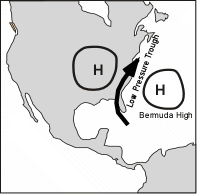
The American Meteorology Association defines a "Bermuda high" as
The semipermanent subtropical high of the North Atlantic Ocean, so named especially when it is located in the western part of the ocean. This same high, when displaced toward the eastern part of the Atlantic, is known as the Azores high. On mean charts of sea level pressure, this high is a principal center of action. Warm and humid conditions prevail over the eastern United States, particularly in summer, when the Bermuda high is well developed and extends westward.
Normally the high pressure area is located close to the Azore Islands during the winter and spring, but it shifts to an ocean area close to the Island of Bermuda during the Summer. Since late last week the Eastern United States has been experiencing an exceptional heat wave. In East Tennessee for the last week we have experienced temperatures more typical of June than early spring. Yesterday we hit a record temperature of 86. I look at the weather forecast yesterday, and noted an area of high presure off the Atlantic coast. "Bermuda high," I thought.

The Atlantic high determins the track of hurricanes, The further west the high, the further west the track of hurricanes.Bermuda high explains our heat wave, but what explains the early arrival of the Bermuda high?

Tuesday, April 6, 2010

Existential Choices: Mitigation Efforts and the Future of Conservatives


In the last post, I argued that Conservatives and Libertarians run a risk of being proven wrong on Anthropogenic Global Warming. A few really hot years could be prove to be politically disastrously for a climate a AGW right wing. Conservatives have place themselves in this situation by claiming to know that the AGW hypothesis is untrue with a far greater degree of certainty than is possible. Slogans like "AGW is a hoax" and "AGW is a fraud" can and probably will comeback to haunt the right wing.

The hoax argument is at best weak, and reprehensible. The latest attempt by the Climate Audit gang to turn some stolen emails into a scandal has been shown to be without merit by a report of the British The House of Commons’ Science and Technology Committee titled The disclosure of climate data from the Climatic Research Unit at the University of East Anglia, has discredited the hoax arguments based on the email disclosures. The Conclusion of that report stated in part,
The focus on Professor Jones and CRU has been largely misplaced. On the accusations relating to Professor Jones’s refusal to share raw data and computer codes, we consider that his actions were in line with common practice in the climate science community. We have suggested that the community consider becoming more transparent by publishing raw data and detailed methodologies. On accusations relating to Freedom of Information, we consider that much of the responsibility should lie with UEA, not CRU.

In addition, insofar as we have been able to consider accusations of dishonesty—for example, Professor Jones’s alleged attempt to “hide the decline”—we consider that there is no case to answer. Within our limited inquiry and the evidence we took, the scientific reputation of Professor Jones and CRU remains intact. We have found no reason in this unfortunate episode to challenge the scientific consensus as expressed by Professor Beddington, that “global warming is happening [and] that it is induced by human activity”. It was not our purpose to examine, nor did we seek evidence on, the science produced by CRU. It will be for the Scientific Appraisal Panel to look in detail into all the evidence to determine whether or not the consensus view remains valid.
The natural inclination of the right is to adopt a free market, business as usual approach, but given the magnitude of the crisis, a business as usual approach is likely to fail. I noted that the Peel government of the United Kingdom, relied on free market and local solutions to a lesser crisis, the 19th century, the Irish potato famine. This failure lead lead to the death of a million people, and the immigration of another million from Ireland. What would be required of human society to meet the AGW crisis would be an effort similar to the global warming crisis, similar to the effort that was expended by the belligerents during World War II. Global society must be mobilized as if it were going to war.

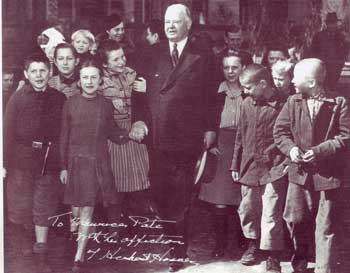
It should be noted that mobilization during war, is not an anathema for conservatives. Indeed a Conservative, Herbert Hoover, headed the American Food Administration during World War I. In a war time situation Hoover did not flinch at instructing American farmers what they should grow, and how much money they should be paid for their crops. He also exercised influence over food prices in stores, and told the American people what they should eat and when they should eat it. Through Hoover's efforts, the United States was able to feed a large Army and millions of people in Europe. In contrast to the Conservative Peel, whose administration allowed a million Irish die during the potato famine, conservative Hoover's efforts prevented mass death in Europe, due to wartime and post war famines.

It may not be necessary to go to the length that Hoover did during World War I, to fight climate change, but Conservatives and Libertarians should be prepared to do so if necessary to ensure success in the effort to fight climate change. Climate change threatens the national security of the United States, perhaps more than any war time enemy ever has.

The means of achieving success in the effort to prevent anthropogenic climate change should not be the real problem for the right. Rather the problem would lie in the outcome of the crisis sought by the romantic environmentalist. That projected outcome envisions a low energy, low materials future to be achieved by social engineering. My view is that Conservatives would very much wish to avoid such an outcome, if it were possible to do so.

It has been the contention of Nuclear Green that the outcomes typically advocated by romantic environmentalists, would likely turn into a demographic disaster similar to what occurred as a consequence of the Irish potato famine, but without an America to escape too. Further. I believe that such a consequence would be wholly unnecessary and that outcomes that would be deemed far more desirable by Conservatives and Libertarians would be possible. It is thus in the interest of Conservatives to not write themselves out of the mitigation game, and that interest is existential. Conservatives and Libertarians risk the survival of a world in which their ideologies are even possible if they ignore the possibility that AGW is real.

I have argued for much of the last three years that a nuclear powered future would be most consistent with Conservative goals, and would allow for the avoidance of the undesirable consequences that the solutions supported by romantic environmentalists would bring. There is a plausible case that global oil production is near peaking, and that at the very least, global oil production will not keep pace with increasing demand for oil by new car owners in India and China. As it is the costs of imported oil is a huge burden on the American economy, a burden that cannot be ignored. The huge cost of imported oil can only lead to the long term ruin of the American economy if the homaging is not stopped.

The cost of imported oil has been a major an increasing burden to the American economy for some time. the electrification of surface transportation in the United States makes economic sence, whether or not you acknowledge that climate change is an emanate reality. Of course, oil companies are never going to acknowledge any of the problems, despite what their own scientists tell them. But conservatives must realize that business executives often don't tell the truth if it is in the interests to tell lies. It is also in corporate interest to employ ideologically
motivated hacks to tell their lies for them. Unfortunately Conservatives and Libertarians have until now proven themselves all to willing dupes of the lies.

There large though largely hidden costs associated with the use of fossil fuels to generate electricity and produce heat. Coal fired power plants produce an enormous amount of pollutants in addition to CO2. Many of the pollutants effect the health of millions of Americans. The cost is not paid by electrical producers and consumers. Instead it is payed by employers, consumers and the federal government in the form of added insurance premiums, and by sick people and their families in the form of added medical costs, lost wages, suffering and heart ache. Conservatives and Libertarians have expressed concerns about the cost of health care, yet not so concerned that they are willing to stop environmental pollution from fossil fuel use, that contributes to health care cost.

Natural gas use must be included in this issue. Natural gas carries with it, radioactive radon that can cause cancer. There is a sort of tasit conspiracy by the left and the right to hide the problem of radon in natural gas from the public.

Thus the savings in health care costs that would be reaped from a successful AGW mitigation effort would go a long way to paying for the cost of the mitigation effort, and the increased strength of an American economy, no longer shackled by the cost of imported oil would increase the prosperity which Conservatives and Libertarians seek.

My argument for the last three years, has been that advanced nuclear power would offer a technological fix that would lead to the best possible outcome from Conservative and Libertarian perspective. That outcome would require the least amount of social engineering, and by relying on technological fixes. Thus Conservatives and Libertarians have a stake in AGW mitigation, whether or not they recognize it, and the future of the sort of society that they both would like to see, rests in no small measure in their participation in the social negations that will proceed the determination of the direction that the mitigation efforts take.

I must add that I consider myself a Liberal, but a Liberal who believe that the current generation of Conservatives and Libertarians have something to offer, if they would stop fighting the AGW concept, and sign on to the mitigation effort negations. Their failure to do so would only bring existential disaster to themselves, and to their society.

Followers

Blog Archive

Some neat videos

Nuclear Advocacy Webring
Ring Owner: Nuclear is Our Future Site: Nuclear is Our Future
Free Site Ring from Bravenet Free Site Ring from Bravenet Free Site Ring from Bravenet Free Site Ring from Bravenet Free Site Ring from Bravenet
Get Your Free Web Ring
by Bravenet.com
Dr. Joe Bonometti speaking on thorium/LFTR technology at Georgia Tech David LeBlanc on LFTR/MSR technology Robert Hargraves on AIM High