When Japanese technicians injected water into the reactor, it came in contact with the partially melted core, and a chemical reaction between Zirconium in the reactor fuel cladding and the oxygen in water molecules, had released hydrogen in the core. The Japanese technicians had vented the hydrogen from the core, and it vented along with hot steam, and then exploded when it recombined with oxygen in the air. This assumption indicated that the Dai-ichi crisis was at least as bad as Three Mile Island, if not worse. The Japanese, given my speculation, would have sacrificed parts of the reactor building, in order to protect the steel containment vessel from rupture caused by excessive gas pressure.
The reality of at least a partial core meltdown in Dai-ichi 1, 2, and 3 could explained by the release of radioactive gases from fuel pellets. When the core was subsequently vented, the release of the radioactive fission product gasses would explain why many spikes of radiation during the Dai-ichi event have occurred. The radioactive gasses, likely to be encountered during a core meltdown are not very dangerous in practice. They are noble gases, very radioactive but chemically inactive. They are dispersed by natural process in air, and very quickly become so diluted, that they pose no danger to human beings. Since noble gases do not form chemical bonds, they do not linger in the human body, thus do not pose health risks. When scientist looked at the human health consequences of the Three Mile Island accident, the realized that the radiation level of air down wind from Three Mile Island was simply not high enough to cause cancer and other radiation related illnesses.
In addition to radioactive gases, some easily vaporized radioisotopes were released by the Three Mile Island accident. Of these Iodine-131 is the most dangerous. Unlike the noble gases, Iodine-131 does form chemical bonds, is solid rather than gaseous at ordinary temperatures, and likely to enter the human body from the food chain. Iodine-131 forms volatile chemical compounds, that vaporize at high temperatures. Iodine-131 does stick around, but only for a short while. It has a half life of a little more than 8 days. Thus if people can be kept out of contact with Iodine-131 for a couple of months it ceases to be dangerous. In addition potassium iodine tablets offer some protection against iodine-131 forming chemical bonds with body tissues.
Three other potentially dangerous radioisotope are in danger of escaping a reactor core during a reactor accident. They are:
Sr-90We ar talking about some very nasty stuff here, the stuff that keeps people out of the Chernobyl exclusion zones for nearly 25 years. Fortunately not much of these undesirables escaped during the Three Mile Island accident, so the good citizens of Pennsylvania were able to return to their homes. The difference between TMI and Chernobyl was that inChernobyl the core exploded, destroying all containment, and then caught on fire, and quickly began discharging copious amounts of volatile fission products
Cs-137
Cs-134
What the Japanese tecnicians appear to be doing at Dai-ichi is struggling to prevent the sort of fire that would release large amounts of volatile fission products. There has bee some release. How do we know this? Because when an NBC news man came back from Dai-ichi, he had radioactive material on his shoes. Not a lot, but too much to be tracking around.
The New York Times has quoted a spokesman for Japan’s Nuclear and Industrial Safety Agency, Yoshitaka Nagayama, as saying, The same story suggests that maybe not a lot of volatile fission products have escaped yet, just enough to be picked up on the shoes, by newspeople walking on soil that has been lightly dusted with radio-iodine and other nasties., but not at a level yet to be really dangerous.
It is now fairly clear that that some level of meltdown has happened, but that we are not yet at the China Syndrome by any means, but yesterday Nuclear Regulatory Commission Chairman Gregory Jaczko said,
We believe that secondary containment has been destroyed and there is no water in the spent fuel pool and we believe that radiation levels are extremely high which could possibly impact the ability to take corrective measures.Is not clear that all of the water in the spent fuel pool is gone, but Jaczko's fears may not be entirely unjustified.
Because we have been unable to go the scene, we cannot confirm whether there is water left or not in the spent fuel pool at Reactor No. 4.If the Japanese don't know, how can Jaczko? The answer might be computer accident simulation. I don't know if such a simulation exists, but if Jaczko was not being irresponsible, he needed to be able to point to some back up to his assessment.
There are still dangers here, the crisis is my no means over, but the decay of fission products is already begin to slow down, and with it both the radiation and the heat that that decay produces. While it is too soon to imagine that the crisis is over, the fact that the first week of the crisis has passed is a signal that the hope that a disaster will be prevented is fully justified. We cannot be sure that the worst is over, but the odds are beginning to move in that direction.
Nuclear power will survive the events in Dai-ichi. This accident will be studied for some time to come for lessons about nuclear safety. The first lesson, and this is obvious, is to assume that the worst earthquake or tsunami ever recorded for an area is possible again, and build accordingly. The Dai-ichi reactor complex was not designed to withstand a 10 meter plus tsunami, while it probably should have been built to withstand at least a 10 meter tsunami. Earlem College Geologist Wesley Nutter found evidence in 2009 that 10 meter (or even higher) waves had repeatedly pounded the coast of northern Japan over the last 3000 years. The geological record suggests that the tsunami of 2011 was a once in every 500 year event. For most people, once in every 500 years is never. Americans have built the cities of Memphis and St. Louis in a zone in which evidence suggests episodes of multiple great earthquakes - up to magnitude 8 - occure every five hundred years or so. Should people live, let alone build reactors in such a dangerous area? Should people live, let alone build reactors in Japan, California, or anywhere eles along the 24,000 mile Pacific ring of fire?
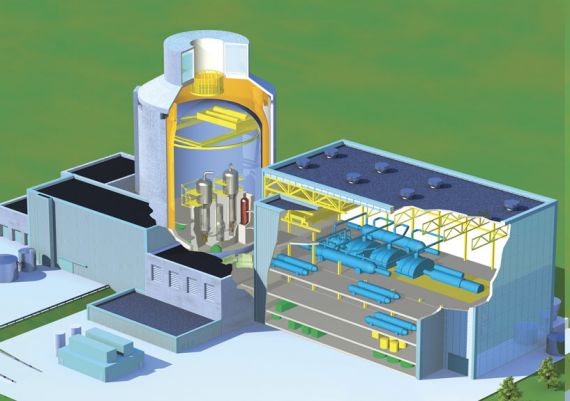
The second lesson has to do with reactor design. Some new reactors, most particularly the the Westinghouse AP-1000, and the GE ESBWR feature gravity powered emgency water tanks above the reactor core. In the future, reactors designs may be subject to the Dai-ichi test. Could the reactor design survive the Dai-ichi event without core melt down. In the case of the AP-1000 the answer is possibly yes, while in the case of the ESBWR he answer is very likely yes. The ESBWR design sets the new bar for reactor safety, and that bar his high.
A third lesson is that the Dai-ichi demonstrated an impressive seismic performance. They survive an earthquake of a far greater magnitude than they were designed too. No doubt this seismic performance will be the subject of further research.
A fourth lesson is that reactor safety design, should include a method of mitigating any China syndrome incident, in the event of a emergency coolant failure. Devices such as steam explosion proof core catchers will be researched,and perhaps modifications to existing reactor designs considered.
A fifth set of lessons, as of yet largely undefined, will come about as the result of studying what actually happened inside the cores of Dai-ichi reactors.
Finally, I would argue, that the day of the Light Water Reactor is drawing to a close. Several Generation IV reactor technologies would have survived the Dai-ichi incident without a serious incident. These include Pebble Bed Modular Reactors, and Molten Salt Reactors. In the case of Molten Salt Reactor Technology, the safety technology appears to be consistent with lowering nuclear costs. The PBMR can be shudown without core melting, while if a MSR begins to overheat, a plug will automatically melt and the reactor core will drain into a series of tanks that uses a well understood simple and natural technology, the chimny effect, to keep the fuel cool.
I have, in Nuclear Green, repeatedly pointed to the issue of nuclear safety, and the need to develop radical high safety nuclear technology. It is not that reactors are unsafe, but rather that safer reactors are possible without increasing nuclear costs, and we ought to build the safest reactors possible, within our financial limits. Not only are safer reactors possible, but they will be superior to Light Water Reactors in many other respects, including the long term sustainability of their fuel sources, and their scalability. If the Dai-ichi crisis fails to teach us the importance of moving forward on the implementation of a more advanced and safer nuclear technology, it would be a tragedy.
Nuclear power will survive the events in Dai-ichi. This accident will be studied for some time to come for lessons about nuclear safety. The first lesson, and this is obvious, is to assume that the worst earthquake or tsunami ever recorded for an area is possible again, and build accordingly. The Dai-ichi reactor complex was not designed to withstand a 10 meter plus tsunami, while it probably should have been built to withstand at least a 10 meter tsunami. Earlem College Geologist Wesley Nutter found evidence in 2009 that 10 meter (or even higher) waves had repeatedly pounded the coast of northern Japan over the last 3000 years. The geological record suggests that the tsunami of 2011 was a once in every 500 year event. For most people, once in every 500 years is never. Americans have built the cities of Memphis and St. Louis in a zone in which evidence suggests episodes of multiple great earthquakes - up to magnitude 8 - occure every five hundred years or so. Should people live, let alone build reactors in such a dangerous area? Should people live, let alone build reactors in Japan, California, or anywhere eles along the 24,000 mile Pacific ring of fire?
The second lesson has to do with reactor design. Some new reactors, most particularly the the Westinghouse AP-1000, and the GE ESBWR feature gravity powered emgency water tanks above the reactor core. In the future, reactors designs may be subject to the Dai-ichi test. Could the reactor design survive the Dai-ichi event without core melt down. In the case of the AP-1000 the answer is possibly yes, while in the case of the ESBWR he answer is very likely yes. The ESBWR design sets the new bar for reactor safety, and that bar his high.
A third lesson is that the Dai-ichi demonstrated an impressive seismic performance. They survive an earthquake of a far greater magnitude than they were designed too. No doubt this seismic performance will be the subject of further research.
A fourth lesson is that reactor safety design, should include a method of mitigating any China syndrome incident, in the event of a emergency coolant failure. Devices such as steam explosion proof core catchers will be researched,and perhaps modifications to existing reactor designs considered.
A fifth set of lessons, as of yet largely undefined, will come about as the result of studying what actually happened inside the cores of Dai-ichi reactors.
Finally, I would argue, that the day of the Light Water Reactor is drawing to a close. Several Generation IV reactor technologies would have survived the Dai-ichi incident without a serious incident. These include Pebble Bed Modular Reactors, and Molten Salt Reactors. In the case of Molten Salt Reactor Technology, the safety technology appears to be consistent with lowering nuclear costs. The PBMR can be shudown without core melting, while if a MSR begins to overheat, a plug will automatically melt and the reactor core will drain into a series of tanks that uses a well understood simple and natural technology, the chimny effect, to keep the fuel cool.
I have, in Nuclear Green, repeatedly pointed to the issue of nuclear safety, and the need to develop radical high safety nuclear technology. It is not that reactors are unsafe, but rather that safer reactors are possible without increasing nuclear costs, and we ought to build the safest reactors possible, within our financial limits. Not only are safer reactors possible, but they will be superior to Light Water Reactors in many other respects, including the long term sustainability of their fuel sources, and their scalability. If the Dai-ichi crisis fails to teach us the importance of moving forward on the implementation of a more advanced and safer nuclear technology, it would be a tragedy.



 Posts
Posts


