Showing posts with label Barry Brook. Show all posts

Wednesday, August 18, 2010

Barry Brook Charts the Path to the Future

Yesterday I presented what I consider to be Barry' Brook's most significant contribution to the current energy discussion, a very powerful critique of what could be called the Renewable Energy Paradigm. Barry has written a number of posts, but other posts by Peter Lang, Ted Trainer and others have fleshed out the picture. There critiques have received what can be called the open science treatment. That is anyone can comment, and commenter can and do present evidence both in support of and in opposition too the substance of the critique. Not every critical discussion is lead off by a formal paper. The first discussion of the Zero Carbon Australia 2020, a discussion that drew 560 comments. Comments included extensive quotations from the report as well as links to hundreds of sources. Many of the best comments focused on sources from which ZCA2020 drew its assumptions. The original ZCA2020 discussion was followed up a month later by a paper by ‘Zero Carbon Australia – Stationary Energy Plan’ – Critique, by Martin Nicholson and Peter Lang, This paper built on the earlier discussion, and has drawn another 200 comments.

Barry can be thought of as following Karl Popper's model of science in his blog. Barry's hypothesis is, that nuclear power offers the only satisfactory long term energy solution to the post fossil-fuel era. One null hypothesis, offered by renewable advocates is renewables advocates is that renewable energy (and efficiency) offer a long term energy solution to the post fossil fuel era. Brave New Climate has, I would contend, offered convincing evidence that the Null Hypothesis is not true. This in its self demonstrates that the implementation of the nuclear solution is required if our form of energy intense civilization is to survive, and expand to the rest of the people on earth. Nuclear Green has followed the same path to the same conclusions.

Critics of nuclear power have offered a second null hypothesis which Barry addresses. The limitations of nuclear power are so serious that nuclear power forms an unacceptable form of energy. Those alleged limitations include:
* Unacceptable safety risks due to the inhalant design flaws of nuclear reactors
* Unacceptably dangerous risks to the human and environmental future posed by nuclear waste
* Unacceptable limitation on available nuclear fuel
* Unacceptable risk to the human future posed by the increased risk of nuclear proliferation and subsequent nuclear war, posed by a link between civilian nuclear power and nuclear weapons manufacture.
* Unacceptable costs of power reactors
* Unacceptable scalability limitations of the nuclear solution.
Brave New Climate has certainly not ignored this null hypothesis. Like Nuclear Green, Brave New Climate relies heavily on the potential development of Generation IV nuclear power plants as a to correct defects in current NPP designs. Generation IV technology offers solutions enhanced nuclear safety, solve the problem of nuclear waste, assure the availability of nuclear fuel for millions of years to come, potentially lower nuclear costs, and offer solutions to the scalability limitations of current nuclear technology. Beyond the potential technological improvements, nuclear advocates including Barry Brooks and other Brave New Climate posters have point out evidence that suggest that the problems of the current generation of nuclear power plants are not nearly as bad as critics claim.

Barry's approach to nuclear technology is more as an educator, than as an explorer of possible nuclear futures. A review of Barry's 100+ posts related to nuclear energy will demonstrate how Barry organizes knowledge in a textbook type fashion, and lays it out in easy to understand language. It is not without reason that Barry has won an award for his contributions to science education.

I do have one major disagreement with Barry. Barry bought into Tom Blees view that the Integral Fast Reactor offered the best rout to the nuclear future. I support another Generation IV technology involving the use of Molten Salt Reactor technology, especially by realizing its potential to breed new nuclear fuel from thorium. Barry's liquid sodium cooled fast breeding, IFR, while offering many attractive features, would have some disadvantages when compared with the Liquid Fluoride (Salt) Thorium Reactor (LFTR). Kirk Sorensen has created a grass roots movement around his pro-LFTR blog, Energy from Thorium that has not been matched by IFR supporters. EfT along with BNC practice open science, but the open science of EfT focuses on problems that likely would be encountered during any implementation of the LFTR designed. BNS does not look at similar IFR technical issues.

EfT offers links to hundreds of research based documents, that chart the development of MSR technology in Oak Ridge. Some of those documents are reviewed on EfT while discussions often center around research findings reported in ORNL documents. Nothing like this level of technical specificity exists in IFR related discussions on BNC. I would not describe this as a BNC weakness, but it is a weakness of the IFR advocacy that nothing like EfT has come out of their advocacy efforts. EfT has very successfully controlled discussion of Molten Salt Reactor technology, by offering superior information resources, coupled to a very high level of technically oriented discussions. EfT has become a major resource to MSR/LFTR advocates in their very successful outreach campaign which has made their basic concepts known to a much wider audience. It would be very helpful to IFR advocates if they could reference a similar site.

This should not be taken as a criticism of Barry. He has created in Brave New Climate an outstanding and important web site, that deals with both climate and post-carbon energy issues. In addition to his important contribution to increasing understanding of the limitations of renewables, Barry has made an important contribution to increasing public understanding of nuclear energy. The importance of this contribution cannot be overestimated. Barry has done a first rate job of organizing educational materials that can aid the public in better understanding the nuclear option. This is a remarkable accomplishment in two years, and Barry dissevers public recognition and accolades for his accomplishments.

Monday, March 22, 2010

No Silver Bullets for the RAE

The last two posts on Brave New Climate concern the future 0f energy in the United Kingdom. The most recent post by Barry Brook and Martin Nicholson discussed a thoroughly unimaginative report by the Royal Academy of Engineers, on the energy future of the UK.

The report suggested a range of energy options, without the slightest consideration of cost. The report further compounded its errors by writing off the very possibility of an all nuclear solution, by use of the catch phrase.
There is no single ‘silver bullet’ that will achieve the required cuts in emissions,
How do we know this? The report des not provide us with the slightest clue. The report also calls for stringent demand reduction measures, a scheme that is likely to fail.

I write in response to Brooks and Nicholson:
Why is it that the Royal Academy Engineers was not able to figure out what I was able to figure out in one afternoon in 2007? i never took one college hour in engineering, yet I figured out a way to make turning nuclear power into the very sort of silver bullet that the RAE denies exists. In one afternoon I was able to figure out how to answer all of the objections to nuclear power, including the cost objection, and to produce all of the nuclear power plants we need by 2050 with out breaking the bank, while assuring inherent reactor safety, solving the nuclear waste problem, assuring sustainable nuclear power, and decreasing the likelihood of nuclear war. What is more, once I came to these conclusions I looked around the Internet and discovered that other people had come to the same or similar conclusions.

The solution was quite simple. If you want to build a lot of industrial objects, you build them in factories. If you want to build a lot of reactors, you build them in factories. But how do transport a huge 1000 MW reactor out of the factory? The answer is that you don’t, you make the reactor small enough to transport by rail, barge or truck, say 100 MW. You can do things t make the reactor lighter too and if you make it less complex, it will cost less to build. I knew of such a reactor, an advanced reactor design that my father had spent 20 years working in developing at Oak Ridge National Laboratory. That was the Molten Salt Reactor.

i quickly realized that the MSR had the potential to answer all of the classic objections to nuclear power, and that it could be built in factories is sufficient numbers by 2050, to provide all of the worlds energy needs. Furthermore, the MSR could run on a thorium fuel cycle, in fact would run better on a thorium fuel cycle than on a uranium fuel cycle, and could be made to breed thorium until we ran out of thorium several billion years from now, thus rendering the “uranium is not sustainable” objection absurd.

Furthermore, the thorium breeding molten salt reactor, the Liquid Fluoride Thorium Reactor (LF’tR), could be operated at temperatures as high as 1200 C, hot enough to for many industrial process uses, hot enough to produce hydrogen.
I became convinced that mall LFTRs could be built in factories at low price, set up rapidly and could revolutionized the energy economy with a time frame of as little as ten years after the completion of LFTR development and the completion of a LFTR factory. I grew up in the shadow of the Manhattan Project. I knew and know what people are capable of accomplishing within a short time, if they set aside the business as usual model, and commit to an all out effort to develop new technology, Far more was accomplished in Oak Ridge between 1942 and 1945 than would be required to see hundreds of LFTRs rolling off assembly lines. But the will has to be there to accomplish it.

What the RAE lacks is a vision, and a willingness to commit to it.

Sunday, October 18, 2009

Barry Brooks is a World Class Energy Thinker

Not long ago in a fit of honesty, I realized my own deficiencies as an energy writer. My assets are that I am intelligent, nuclear literate, and connected to very most important figures in the future of energy. I am speaking of my father, who made outstanding contributions to the fields of reactor chemistry and nuclear safety, and Alvin Weinberg who was the father of my childhood friend, David Weinberg. Both my Father and Alvin Weinberg had a great deal of foresight, and it was Alvin Weinberg's vision of a nuclear future that the youthful Amory Lovins attacked.

I have the enormous advantage as an energy writer that I have read Alvin Weinberg's writings on Energy, and have some idea of the extent of Weinberg's vision. In the world of the blind, a one eyed man is king. And as an energy writer, I am at best a one-eyed man. My education is not in science, and we clearly need a scientist to think the problems through that clearly go beyond my conceptual skills. Such a person is Barry Brook, who is rapidly emerging as a first rate energy thinker. Barry is a climatologist, and got into the energy field because he realized that it was not enough to talk about the climate problems, they had to be fixed. Barry has the intelligence, and the conceptual skills to move very rapidly once he reached that point, and he has reached the point where he is beginning to educate the rest of us, who a few months ago thought of ourselves as the most advanced energy thinkers in the world.

Barry has begun a series of Brave New Climate posts on energy fundamentals which should be required reading for anyone who wishes to claim expertise in energy issues, at least in the near future. They include

1. Thinking critically about sustainable energy (TCASE) 1: Prologue

2. TCASE 2: Energy primer

3. TCASE 3: The energy demand equation to 2050
Bottom line: 2050 power demand will be ~10 TWe of electrical generating power — a 5-fold increase on today’s levels, requiring the construction of ~680 MWe per day from 2010 to 2050. . . .

So, now, let’s say that by 2050 we have managed to achieve the following:

a) Transition to an all-electric society with nuclear power meeting the greater fraction of our demand;

b) Use nuclear power and renewables to create our energy carriers (e.g. batteries, hydrogen, ammonia, boron, whatever), and also use waste heat from thermal reactors for desalination; and

c) Increased technological development means that we get 30% more efficient at using energy to do work (e.g. cumulative improvements in electrical appliances, but excluding transport, see below) — that’s an 8% improvement per decade (one imagines that in reality, the biggest efficiency gains will come in the next two decades, with diminishing returns thereafter).

4 TCASE 4: Energy system build rates and material inputs

Given the large uncertainties associated with this forecast, the actual value could easily be as high as 15 TWe, which would up the daily built-out rate to a little over 1 GWe per day. But let’s stick with 680 MWe rate for this post.
That would requireL

1. Wind turbines. Wind power collects ~2 W/m2 (or 2 MWe per km2), and this figure is not really dependent on the turbine size. (If you have larger turbines, you need to space them further apart. If you build large turbines with tall towers, the increased hub height does access stronger winds, increasing the yield by ~30%). The 2008 US capacity factor for wind was 23.5%. For our unit, let’s choose a widely deployed turbine, the 2.5 MWe (peak), the GE 2.5xl (rotor diameter = 100 m, hub height = 75 – 100 m, cut-in windspeed of 3.5 m/s, peak at 12.5 m/s, cut-out at 25 m/s).

To get 680 MWe average power, 680/0.235 = 2900/2.5 = 1,160 GE 2.5xl turbines per day, worldwide, spread over 340 km2 of land area (a square 18.4 x 18.4 km). Based on Per Peterson’s figures, this will consume ~590,000 tonnes of concrete and 310,000 tonnes of steel per day. Every day, from 2010 to 2050.

or
2. Solar thermal. In good desert locations such as the Sahara or central Australia, concentrating solar power would access ~15 W/m2 (or 15 MWe per km2). In Spain, it is closer to 10 W/m2. These figure are derived after taking account of mirror/heliostat spacing required to avoid shading. It agrees with current experience with solar thermal. . . .

To get 680 MWe average power, 680/0.4 = 1700/100 = 17 Andasol-3 plants per day, worldwide, requiring (in an ideal desert location) 45 km2 of land (a square 6.7 x 6.7 km). Or, to put it another way, this means rolling out 520 m2 of mirrors/heliostats per second, every second, from 1 Jan 2010 to 31 Dec 2050.

It’s difficult to get decent material estimates for this — the best I could come up with are these figures from David Mills, which give 220 tonnes of steel, 27 tonnes of glass and 320 tonnes of concrete for a 5 MWe peak plant (these quoted figures were for a system without thermal storage, so we need to about double the above number to get the equivalent sized mirror field for Andasol-3 and ignore material components of the storage system). This would equate to 215,000 tonnes of concrete, 150,00 tonnes of steel, and 18,000 tonnes of glass per day — shipped out to a remote desert site, each and every day, from 2010 to 2050.

Or
3. Nuclear fission. The AP1000 reactor, a Generation III+ design by Westinghouse that is now being heavily deployed in China, has a small concrete/steel footprint compared to other designs (see figure) — about 100,000 m3 of reinforced concrete incorporating 12,000 tonnes of steel rebar. The AP1000 unit’s island buildings would cover about 40 ha (0.4 km2) and generate 1,154 MWe (peak) at a capacity factor of 91.5% (based on US 2008 operations).

To get 680 MWe average power, 680/0.915 = 743/1154 = 0.64 (close to 2/3) AP1000 plants per day, worldwide, or roughly 2 x AP1000 reactors every 3 days, from 2010 to 2050. (This would require ~90,000 tonnes of concrete [based on 1.4 tonnes per cubic metre] and 7,700 tonnes of steel per day). Compare this to the figures for wind and solar thermal given above!

Conclusion:
The main point of this post, TCASE 4, is to take a one step in quashing the absurd ‘bait-and-switch’ meme that some disingenuous anti-nuclear folk repeat: That because the energy replacement challenge facing nuclear energy is huge (a 25-fold expansion on today’s levels), it couldn’t possibly do it, so renewables are our only sensible option. On the basis of this post alone, any objective reader can see that this is pure, quantitatively unsupportable, nonsense. It’s going to be really tough, no matter what — and believe me, I’ve not even warmed up on the problems with renewables taking the lion’s share of the work.
AP1000 footprint

Wednesday, October 7, 2009

Barry brook on 4th generation nuclear power


Barry Brook was recently interviewed by Radio Adelaide’s 101.5 Backstory Recently. Barry talked about Generation IV nuclear power. Barry's broadcast is being discussed on his blog, Brave New Climate.

Thursday, September 10, 2009

Barry Brook and Company Destroy the Case for Renewables


When I first got interested in energy related issues I encountered what amounted to the "Green" party line. That was that Renewables would soon be so cheap, and our energy use would be so efficient that electricity would be virtually given away. I began however, to find reliable sources of information. Sometimes that reliable source was a press release for a "renewables" project, a wind farm or solar array. Reliable information could include the cost of the project, although this almost never included transmission lines. The press release often included the rated output of the project. If it was a solar project, the press release might refer to the area the project covered. The press release got really interesting when it talked about the projects cost. I should say estimated cost, because I suspect that some of those projects I read about ended up costing more than the reported cost in the press release.

I began to analyze this information. I was interested in the answer to the question, how much would it cost to replace CO2 emitting fossil fuel in electrical generation with a post-carbon energy source. That is where I ran into the reliability problem. You cannot replace coal powered electrical plants with wind generated electricity if the coal mainly produces electricity in the day time, and the wind blows at night. It was explained to me by some renewable advocates that the day time coal could be replaced by solar generated electricity, while night time power would be supplied by wind. This sounded good, but that meant that you had to pay for at least two generation facilities in order to be assured round the clock energy production. That got to be a little expensive, but then I discovered that even with solar and wind generation facilities you might not always have electricity when you wanted or need it. So you needed electricity from other sources.

Surprisingly renewables advocates told me that those other sources would burn fossil fuels. But that did not satisfy me, because the point of my exercise was to discover how much it would cost to replace fossil fuels., not how much burning fossil fuels would cost as a crutch for the limitations of renewables.

Some renewabes advocates told me that energy from renewables could be put into storage, and drawn out when there was demand for electricity. How much would that cost, I wondered. So I checked on the cost of various storage plans, pumped storage, Large batteries and compressed air. it turned out that there were inefficiencies and sources of energy lost coupled with all of these, ad none of them came cheep. When I started calculating the cost, an interesting pattern emerged. In every case, renewables plus storage was more expensive than the highest estimated nuclear cost. Even when I made assumptions that were favorable to renewables, for example assuming that the cost of nuclear power would be subject to inflation, while the cost of renewables would not be, the cost always turned out to be higher for renewabes. When I assumed a level playing field, the cost of reliable renewables would strikingly higher than nuclear, so much so that no one in his or her right mind would support renewables.

Someone suggested to me that I look at Mark Z, Jacobson's base wind scheme. I read Jacobson's papers and realized that his promised base load output, was about 20% of the name tage output of his wind facilities. Thus in order to produce a promised base load capacity of 1 GW 80% of the time, wind producers would have to put up 5 GWs of wind generation capacity. But 5 GWs of wind capacity was more expensive than a 1 GW nuclear power plant. Once more a favored renewables scheme proved more expensive than nuclear. The problem was much worse than this, however. None of the renewables schemes was as reliable as nuclear was. Jacobson's base load wind delivered 79% of the time, while the average nuke delivered 92% of the time. What is more, at least part of the nukes down time would be for maintenance, and could be scheduled in advance. The Nuke clearly offered superior flexibility over renewables, the nuk would almost always deliver electricity on demand.

I recently discovered that Australian Climate Scientist Barry Brook was posting information on his blog Brave New Climate that resembled my studies and which came to similar conclusions. These studies, many of which were preformed in part or completely by people who had far more expertise than i have came to the same conclusions that I came too.

i regard Barry as a major figure in the carbon mitigation debate. Perhaps there is a little vanity in this assessment, In many respects Barry's thinking is similar to mine, however, we party company in one significant respect. Our views on preferred nuclear technology differ, and the clash has at times been rancorous. I will deal with the issues on another occasion. At present I want to focus on Barry's month long attack on renewables. On August 8, Barry posted on brave New Climate a discussion of a paper by Peter Lang. Barry describes Peter:
(Peter is a retired geologist and engineer with 40 years experience on a wide range of energy projects throughout the world, including managing energy R&D and providing policy advice for government and opposition. His experience includes: coal, oil, gas, hydro, geothermal, nuclear power plants, nuclear waste disposal, and a wide range of energy end use management projects)
The post was titled "Does wind power reduce carbon emissions?" The Lang paper offered the following statement:
A single 1000 MW nuclear plant (normally we would have four to eight reactors together in a single power station) would avoid 6.9 million tonnes of CO2 equivalent per year. Five hundred 2 MW wind turbines (total 1000 MW) would avoid 0.15 to 1.3 million tonnes per year – just 2 to 20% as much as the same amount of nuclear capacity. When we take into account that we could have up to 80% of our electricity supplied by nuclear (as France has), but only a few percent can be supplied by wind, we can see that nuclear can make a major contribution to cutting greenhouse emissions, but wind a negligible contribution and at much higher cost.“
The discussion which followed contained over 150 comments. This post was followed by an august 13 post titled, Wind and carbon emissions – Peter Lang responds. Lang's second essay offered the following statement: I would argue that average capacity factor is not valid for determining the amount of back-
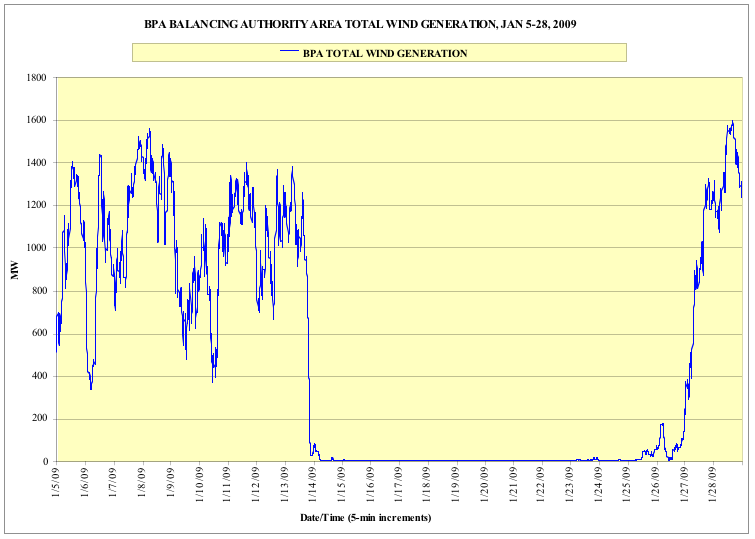
up generation capacity required. The total generation system must be able to provide peak power when there is no output from the wind turbines. When wind power is zero, or near zero, at the time of peak demand, we need sufficient conventional generator capacity to provide the peak demand. This is because electricity demand must be matched by supply at all times. In other words, wind power cannot displace much, if any, conventional generator capacity.
If wind doesn't reduce CO2 as much as nuclear does and cannot be counted on in periods of peak electrical demand, what good is it? One hundred eighty four comments followed.

This was followed by an August 16 Lang based post, Solar power realities – supply-demand, storage and costs. This time a Lang paper goes after solar power.

This paper provides a simple analysis of the capital cost of solar power and energy storage sufficient to meet the demand of Australia’s National Electricity Market. It also considers some of the environmental effects. It puts the figures in perspective. By looking at the limit position, the paper highlights the very high costs imposed by mandating and subsidising solar power. The minimum power output, not the peak or average, is the main factor governing solar power’s economic viability. The capital cost would be 25 times more than nuclear power. The least-cost solar option would require 400 times more land area and emit 20 times more CO2 than nuclear power.

Conclusions: solar power is uneconomic. Government mandates and subsidies hide the true cost of renewable energy but these additional costs must be carried by others.

Four hundred thirty six comments followed this post. The Lang paper on solar power was followed by an August 31 post,Solar thermal questions, this time based on a paper by University of NSW academic, Ted Trainer. The Trainer essay is an all out, no holds barred, take no prisoners assault on solar, and what sort of intellectual respectability is left to solar advocates after their thrashing at Trainer's hands is open to question. Trainer writes:

The heat storage capacity of solar thermal systems overcomes some of the intermittency problems that trouble wind and PV systems, such as the occurrence of night time. The standard provision will be 12 hour storage enabling continuous 24 hour electricity delivery. However examination of climate data reveals that even at the best sites sequences of 4 or more days without sunshine are not unusual. The best US sites often have 2 runs of 4 consecutive days of cloud in a winter month. (Davenport, 2008)

If 1000 MW(e) output was to be provided for four cloudy day from stored heat, some 290,000MWh of heat would have to be stored. Storage cost has been estimated at $(A)10/kWh(th) meaning that the required storage plant would cost more than $8 billion, or around twice the cost of a coal-fired plant plus fuel. However this refers to trough technology and it is likely that for the ammonia process costs would be higher.

Again we would be faced with the prospect of very high capital costs for a large amount of plant that would not be used most of the time, and would still be insufficient occasionally. There would also be the question of whether there would be enough solar radiation in winter to meet daily demand and also recharge a large storage sufficiently to cope with the next run off 4 cloudy days.

The Trainer essay and Barry's discussion drew 98 more comments. Finally on the 10th Barry followed up Lang's first solar essay, with Solar realities and transmission costs – addendum.
Basically Lang compares the cost of providing reliable power for Australia with Nuclear and solar power. Trainer had observed,
examination of climate data reveals that even at the best sites sequences of 4 or more days without sunshine are not unusual. The best US sites often have 2 runs of 4 consecutive days of cloud in a winter month. (Davenport, 2008).
Lang noted,
A loop through the midday images for each day of June, July and August 2009, shows that much of south east South Australia, Victoria, NSW and southern Queensland were cloud covered on June 1, 2, 21 and 25 to 28. July 3 to 6, 10, 11, 14. 16, 22 to 31 also had widespread cloud cover (26th was the worst), as did August 4, 9, 10, 21, 22.. This was not a a rigorous study.
Thus Lang was thus responding to this data by asking how much would it cost to provide electricity during cloudy winter days in Australia..

It is assumed that South East Australia would need a power reserve capable of providing electricity during the cloudy winter days. That reserve can be either provided by nuclear power plants or by solar systems with three days energy storage, that is capable of being transformed into electricity. Lang's conclusions can be summarized with the following table:
Discussion of the latest Lang post continues, but it is clear that Lang, Trainer and Brook have destroyed the case for renewables beyond redemption.

Wednesday, August 12, 2009

Wind on Brave New Climate

Barry Brook's blog "Brave New Climate" is one of the best climate/energy blogs. Barry is an Australian climate scientist who is generally clear thinking about climate/energy issues. Barry is a fan of the Integral Fast Reactor. I believe that the LFTR represents a safer, more flexible, lower cost technology that possesses enormous potential. Other than our sometimes raucous disagreement on most favored nuclear technology we seem to agree on most issues.

During the last few days Barry has conducted a debate on wind issues under the title "Does Wind Power Reduce Carbon Emissions?" Barry's position is derived from a study titled, "Cost and Quantity of Greenhouse Gas Emissions Avoided by Wind Generation," by Peter Lang. Lang is a retired engineer who has over 40 years experience on a wide range energy projects and issues, including managing energy R&D and providing policy
advice for government and opposition. The money quote from Lang states:
“These calculations suggest that wind generation saves little greenhouse gas emissions when the emissions from the back-up are taken into account.

Wind power, with emissions and cost of back-up generation properly attributed, avoids 0.058 to 0.09 t CO2-e/MWh compared with about 0.88 t CO2-e/MWh avoided by nuclear. The cost to avoid 1 tonne of CO2-e per MWh is $830 to $1149 with wind power compared with $22 with nuclear power. If the emissions and cost of back up generation are ignored then wind power avoids about 0.5 t CO2-e/MWh at a cost of about $134/t CO2-e avoided. Even if the costs of and emissions from back up generation are ignored, wind is still over six times more costly that nuclear as a way to avoid emissions.

A single 1000 MW nuclear plant (normally we would have four to eight reactors together in a single power station) would avoid 6.9 million tonnes of CO2 equivalent per year. Five hundred 2 MW wind turbines (total 1000 MW) would avoid 0.15 to 1.3 million tonnes per year – just 2 to 20% as much as the same amount of nuclear capacity. When we take into account that we could have up to 80% of our electricity supplied by nuclear (as France has), but only a few percent can be supplied by wind, we can see that nuclear can make a major contribution to cutting greenhouse emissions, but wind a negligible contribution and at much higher cost.“
Lang's conclusions are truly devistating to the argument that wind electrical generation represents a major solution to the problem of global warming.

In the course of the debate on Barry's blog, Mark Jacobson's work on base wind was touted. Barry responded:
Jacobson’s work on distributed wind and vehicle-to-grid backup have been savaged by Charles Barton at Nuclear Green. . . .

I’d be interested (sincerely!) in knowing where Barton is wrong.

Barry thus challenges wind defenders to answer my criticisms of the Archer-Jacobson wind system. There were a few feble attempts to answer my challenge, which mainly offered alteration to the Archer-Jsaconson rules. For example Fran Barlow suggested
Whatever Jacobson proposes it seems to me that the overbuild for wind need be no higher than the CF would imply for 100% of nameplate.

So assuming a CF of, say 35% (the starting point for feasibility IMO) the overbuild should be no more than 2.84 so that taken together the farm’s reticulated components produce the output almost all the time. Only on those occasions wherea) there was a: decline in output below the anticipated output

AND

b) demand implied the anticipated output

would redundant capacity be brought online. Ideally the sites in question would be highly predictable on 2 hours notice.

Order of call would be

a)demand management measures

and/or

b)pumped hydro/V2G

and/or

c)NG

Note that NG need not be a fossil fuel — waste biomass from ADs or syngas from CSP usaage are options
Barlow's analysis simply assumes that average wind speed over the entire 17 site array would be constant, and simply by multiplying the generating capacity by the inverse of the capacity factor would give you a reliable supply of electricity. The rub is of course that the average wind speed over the entire array is not constant. Thus more wind capacity replication than Barlow calculates is required to create the base load level of reliability.

My reading of Archer-Jacobson is of course influenced by the fact that their analysis was conducted for Southern Great Planes wind resources. The most likely time for there to be a wind problem would be during Summer days, during periods of peek power demand by Texas electrical consumers. Supplying these demands is very much a quality of life issue, and on very hot summer days, when wind generation can drop to an absolute minimum, a significant public health issue. Demand management would be an extreme measure in these situations. My critique of Jacobson on the rationality of a V2G system was part Brook's challenge, and Barlow cited the use of V2G technology without defending that technology against my critique. She also advocates pumped hydro, but fails to offer a convincing analysis of how pumped hydro would provide a low cost solution to the problem of summer winds on the Southern Great Planes. Finally Barlow falls back on hydro-carbon solution including natural gas. The Natural gas solution of course does what we are trying to avoid, that is adds to the atmospheric CO2 levels. The other Barlow solutions, "waste biomass from ADs or syngas from CSP usage," involve further replications and added expenses. Needless to say Barlow does not stop to ponder the questions that her solutions raise.

Barry Brook has generated a necessary conversation on the limitation of wind, a conversation that will need to be repeated over and over again during the next few years.

Monday, May 25, 2009

The IFR, The LCFR and the the LFTR

Barry Brook at BraveNewClimate.com is beating the drums for the Integral Fast Reactor (IFR). I am ambivalent for a number of reasons, and will at least point to some. The IFR is not the only potential fast neutron reactor, and one fast neutron concept, the Liquid Chloride Fast Reactor belongs to the Molten Salt Reactor class. The LCFR offers significant safety, fuel processing and other technological advantages over the IFR, even though it has never been the subject of a serious R&D effort.

I represent the old ORNL tradition about nuclear technology. Oak Ridge scientists quickly rejected the idea of a sodium cooled reactor (1947 to 1950). Indeed Eugene Wigner who was the first post War research director at ORNL and who held the original patent on the Liquid Sodium Cooled Reactor, did not like his own invention. The original Oak Ridge air craft reactor was sodium cooled, but it was developed at K-25 rather than ORNL and the K-25 engineers who were developing the K-25 reactor project, quickly realized that the sodium cooled air craft reactor design had deep safety flaws including a positive coefficient of reactivity, and of course the insidious dangers of a liquid sodium coolant. Ed Bettis and his associates quickly bailed out on the liquid sodium cooled reactor design, and developed the Molten Salt Reactor concept. it was not by accident that the original K-25 MSR concept featured liquid fluoride salts, If K-25 chemists and engineers knew anything, they knew fluoride chemistry. Fluoride salts are, of course, quite safe compared to liquid sodium. The original MSR concept featured a negative coefficient of reactivity. Indeed if American Reactor development policy had been guided by strictly rational considerations from 1950 onward there would have been no more money spent on liquid sodium cooled reactors. As it is over 20 billion 2009 dollars has been spent on Sodium cooled fast breeder research without the development of a single American commercial Fast Breeder prototype.

By the early 1950's my father, C.J. Barton, Sr., was exploring the chemistry for a Liquid Chloride Fast Breeder that would have been safer, and far more practical than any LMFBR design concept. Had the LCFR rather than the LMFBR been chosen as the major direction for United States Breeder fast breeder research, and been supported at the level that the Liquid Sodium Fast Breeder was to receive, I have little doubt that an American Fast Breeder Reactor would have been developed during the 1960's. Unfortunately that was not the case, and instead over 20 billion 2009 US dollars were tossed by the United States Government down a rat hole marked Liquid Sodium Fast Breeder Reactors.

In addition to ORNL studies of the LCFR concept, a 1974 British study reached favorable conclusions about the LCFR concept, and a 1978 Swiss report indicated that the LCFB was a promising design.

In his 1982 UCLA dissertation by E. H. Ottewitte, who had participated in the Swiss study stated:
Molten salts compete favorably with liquid metals: they exhibit thermal conductivities intermediate to water and the poorer of the liquid-metal. Their specific heat capacities parallel water's. Furthermore, an intermediate coolant of molten salt should more closely match the primary salt in physical proper-
ties, thereby reducing freezing and thermal stress problems. They will cost far less then liquid metals.
Ottewitte concluded
Fast molten chloride reactors have been cursorily considered before but mainly for the U/Pu fuel cycle. The ORNL MSR program showed the feasibility of fuel salt circulation. The combination of that experience and MCFR research (out-of-pile experiments and theoretical studies, so far) provide a basis for believing the
concept will work.

Chemical stability and corrosion of molten salts are fairly predictable. Low vapor pressure of the salts enhances safety and permits low pressure structural components.

Molten fuel state and cooling out-of-core simplify component design in a radiation environment. They forego complicated refueling mechanism, close tolerances associated with solid fuel, and mechanical control devices. Molten state and low vapor pressure of the salts also offer inherent safety advantages.
In 1992 Ottewitte listed some of the advantages of the LCFR:
Some salient advantages of the MCFR concept are :
1. Simplicity : no control rods, fuel handling mechanisms, fuel elements or associated structures . Very uncluttered: should maximize test space and facilitate access thereto . Fluid fuel can be transferred remotely by pumping through pipes connecting storage and reactor .
2. MSRs don't refuel or reprocess, just add fuel and process out wastes . Continuous
processing and refueling would minimize reactor downtime . Can usefully consume all fuel forms, simplifying fuel supply while simultaneously solving other people's
problems.
3. MSR is the safest concept of all due to very strong negative temperature coefficient. No gaseous hydrogen can possibly evolve from fuel or primary coolant . Fuel already molten and handled by system . Simple design technique makes boiling impossible. Continuous removal of fission products reduces their heat source by two orders of magnitude: consequently, natural circulation suffices for emergency cooling, thereby greatly reducing the designated evacuation area . Also, under any off-normal conditions, the liquid fuel can be channeled to a continuously cooled drain tank, in a short time.
4. Very fast neutron spectrum in an annular core engenders high neutron fluxes, driving inner and outer thermal neutron flux traps, each variable in size and neutron energy spectrum by means of molten salt composition. Elimination of fuel cladding and structural material significantly improves the neutron economy of the reactor: more neutrons are available for applications.
5 .Elimination of pressurized and pressure-evolving components inside the containment, reducing risk of containment failure.
The American energy establishment, never looked seriously at the LCFR as a viable alternative to the liquid sodium fast breeder. If it had there is a likelihood that the LCFR would fave compared favorably to all LMFBR concepts including the IFR. The question would have been if a fast breeder reactor was needed at all. The LFTR offers sustainable breeding with the advantage of operating in the thermal/epithermal neutron range. The availability of a slow neutron breeding process potentially offers an enormous scalability advantage. A limited nuclear fuel supply would pose a far more serious challenge to the scalability of the IFR or a LCFR than it would to a two fluid LFTR with or without graphite.

IFR concepts during the 1990's included the notion of factory constructed modular reactors. But no assessment has been yet offered on possible interaction between IFR size and safety. Safety is a far more critical issue for the IFR than for a MSR for obvious reasons. The NRC has not yet developed safety concepts for either the LFTR or the IFR, but given the implications of major safety problems such as a coolant leak or a core rupture, IFR safety requirements are likely to be far more stringent, and costly to meet. NRC safety requirements will probably include the sort of massive safety related site construction requirements that favor economies of scale.

Compared to both the LFTR and its chloride salt cousin the LCFR, the IFR would pose significant safety hazards, and would be larger and probably more expensive to build in a factory setting. It would also pose significantly more control issues, and a system of defense in depth against sodium related safety concerns is likely to add to reactor complexity and cost. The IFR would require over 10 times as much fissionable materials as a graphite moderated LFTR making the LFTR a far more attractive candidate for the role as a mass produced, widely deployed global warming fighting technology. Indeed, factor produced small LFTRs may offer significant cost advantages over all other post-carbon energy technologies.

Politicians and scientists often feed each other's insecurities. Since the 1972 firing of Alvin Weinberg for political reasons that included his MSR advocacy and criticism of the safety of LMFBRs the American scientific community has been cowed by the orthodox dogmas of the US Department of Energy. The US government did supply limited support to the concept of a thorium fuel cycle thermal molten salt breeder from the 1950's to 1970's, and although that reactor concept received no more than 4% of the money wasted is such a profligate fashion by on the liquid sodium breeder reactor concept, that project proceed in an outstandingly successful fashion, and would have become the crowning success of the United States nuclear program if Washington had been willing to back it with even 25% of the money it wasted on the LMFBR concept.

Followers

Blog Archive

Some neat videos

Nuclear Advocacy Webring
Ring Owner: Nuclear is Our Future Site: Nuclear is Our Future
Free Site Ring from Bravenet Free Site Ring from Bravenet Free Site Ring from Bravenet Free Site Ring from Bravenet Free Site Ring from Bravenet
Get Your Free Web Ring
by Bravenet.com
Dr. Joe Bonometti speaking on thorium/LFTR technology at Georgia Tech David LeBlanc on LFTR/MSR technology Robert Hargraves on AIM High