
Showing posts with label Peter Lang. Show all posts

Friday, February 11, 2011

A response to Peter Lang on Coal and Nuclear Costs

In a discussion of Integral Fast Reactor costs on Brave New Climate, Australian Engineer Peter Lang, a frequent poster/commenter on Brave New Climate has posted a challenge to nuclear power supporters. Lang, who is a AGW skeptic, argues, argues,
If we cannot have nuclear cheaper than coal we should wait until we can. We should not embark on unilateral action to stop climate change. We should not impose a carbon price in Australia.
In response, I argued:
Both IFRs and MSRs are possible with 10 years, provided we are willing to leave out all the bells and whistles and go with existing and proven technology. The resulting reactors will not be breeders, and the number of IFRs (ARC-100) possible is likely to be limited, although the sky is the limit as far as the number of MSRs is concerned.

Is it possible to build these reactors cheaper than coal? There is not enough evidence for ARC-100 type reactors to even hazard a guess, but there is probable cause to believe that SMR MSRs can be produced in factories at a cost that is at least competitive with coal. How is that possible? MSRs can be built with very compact cores, and operate at one atmosphere pressure. That means that they require less material in core and building construction. Secondly MSRs do not require
explosive or flammable materials in their core, thus they also require fewer safety features. MSRs are simpler than LWRs and IFrs, and require fewer parts. MSRs can be air cooled and located entirely underground. Hence many factors which contribute to reactor expenses, cost significantly less with MSRs.

MSRs operate at higher thermal efficiency than either LWRs or IFRs, and greater efficiency plus compact core size are factors in lower reactor costs. MSRs are capable of performing multiple missions, and for some electrical generation missions including load following and electrical back up, lower cost materials can be substituted, for the more expensive materials required by base load MSR power plants.

MSRs are simpler and require fewer parts than IFRs and LWRs. MSRs can be rapidly built in large numbers in factories. Labor saving machines can be employed in factory based MSR construction. Factory workers employed in MSR construction require fewer skills that construction workers who build LWRs. Factory employed workers compute to work from their homes, while LWR construction workers live in temporary housing close to their work site. These factors raise LWR labor costs as well as labor cost associated with coal fired power plants.

In addition, traditional coal fired power have hidden social and environmental costs, including the environmental consequences of acid rain, and the health consequences of breathing polluted coal smoke. The cost of health care related too coal smoke caused illnesses, and the cost to agriculture caused by acid rain caused crop damage is added to the cost of coal generated electricity, that cost rises significantly, and the cost of pollution control equipment adds significantly to the cost of electrical generation from coal fired plants.

All of these considerations support the argument that MSRs are potentially cost competitive with coal fired power plants. This evidence, although not yet conclusive, is sufficiently strong to require further investigation.
Peter's comment are no doubt troubling to IFR backers such as BNC's Barry Brook, and Lang's views on AGW are no doubt wrong headed. Even if Lang were right about AGW, two recent report from Synapse Energy Economics, inc., for the Civil Society Institute document hidden cost associated with coal fired power plants. The Reports are titled Beyond Business as Usual: Investigating a Future Without Coal Power, – Focusing on the Midwestern U.S., and Benefits of Beyond BAU - Human, Social, and Environmental Damages Avoided through the Retirement of the US Coal Fleet. These reports are not without flaws, especially with respect to their attitude toward nuclear power. There comments on water use by thermal power plants also appear to draw highly exaggerated implications. But their observation on the impact of coal fired power plants on human and environmental health appears appears to be sound. Benefits Beyond BAU states,
The external costs of burning coal are real and substantial. The extraordinary social cost of the annual 8,000 – 34,000 premature deaths, when valued by federal standards, imparts a cost on society of $64 to $272 billion; this cost is up to four times as expensive as the cost of electricity from coal.
These estimates are supported by numerous sources, and only refers to coal related fatalities in the United States, the cost of coal related deaths in China runs from a third to a half million a year. Benefits Beyond BAU adds,
It is likely that the cost of investments to adequately address all of the damages from coal combustion would greatly exceed the marginal costs of transitioning to a clean energy economy. A comprehensive re-engineering of the way we use and generate electricity may very well be the most economically prudent choice. For every unit of coal which is phased from the US electricity economy, we avoid both extensive social damages as well as the requirement to remediate those damages through high-cost patchwork environmental controls.
"Benefits Beyond BAU" takes a highly exaggerated view of the social and environmental problems associated with nuclear power, and fails to compare the cost of renewables with the cost of conventional nuclear and alternative nuclear generated power. Were the costs of conventional and alternative nuclear generating sources to receive fair treatment, the cost advantages of reactors, especially MSRs would be obvious. I plan to offer a further review and assessment of the treatment accorded nuclear power by Civil Society Institute documents.

Update:

Peter Lang Responded to me on BNC:
Thank you for your thoughts on what Gen IV might cost and when they could be commercially available.

I have to admit I am very sceptical about what you say.

Firstly, I have asked before on BNC for links to some cost estimates that have been done properly by properly qualified estimators. It appears they have not been done. They cannot be done without proper detailed, final designs.

Secondly, It takes decades to progress a technology from R&D to commercially viable. It took five decades to progress nuclear to where it is now. It takes many years to make slight improvements to gas turbine generators and coal power technologies. It takes decades to make bigger ships.

So my smell test as Barry sometimes calls it, doesn’t accept the times scale or the cost for Gen IV. I can be persuaded to change my mind, but only by properly prepared cost estimates by engineering organisations nd estimators that I would trust to be doing the estimates impartially and competently.

About 5 years ago Ziggy Switkowski said “dont expect to see Gen IV commercially viable before about 2030″. I suspect he is correct.

So, I believe we need to focus on getting acceptance for Gen III (or Gen II if is will have lower LCOE). And we need to focus on the politics of how to win acceptance. For many (perhaps most) that means show us that nuclear can be cheaper than coal."
I responded to Peter,
There are numerous points upon which I would disagree with you. First, although we cannot say withe certainty what Generation UV costs would be, but we do have some evidence. We have identified factors that lead to building expenses for conventional reactors and can determine if those factors are likely to produce higher or lower costs in Generation IV reactors. In the case of the MSR, those factors all seem to point to lower costs. In addition ORNL researchers pointed out a number of MSR cost lowering options, and further cost lowering options have been identified during the last year. Clearly then while not conclusive, the weight of existing evidence seems to be on the side of cost lowering. Critics of the cost lowering argument offer little evidence against ir, thus given the state of evidence the cost lowering argument cannot be dismissed.

Your argument that "It takes decades to progress a technology from R&D to commercially viable." Does it really? First I should note that the Molten Salt Reactor, is mature technology that is past the R&D stage. It is possible to design and build commercial MSRs to day based on technology which ORNL developed, and tested during the successful ORNL MSRE.

Does the historic record require decades for commercial development to reach fruition? The first experimental gasoline powered auto was built in 1889. Between 1890 and 1903 around 2500 gasoline powered autos were built in the United States. By 1910 auto production in the United States had reached 100,000 cars a year, and by 1915 Ford was building 500,000 cars a year.

The first aircraft flight took place in 1903, The second decade of flight (1913 to 1923) saw the manufacture of over 200,000 aircraft.

The first long distance (34 miles) radio broadcast took place in 1897. By 1920 commercial radio broadcasting had begun in the United States, and by 1922 there were over 500 stations in the US making radio broadcasts.

In the case of conventional nuclear technology, the light water reactor was invented about 1945, and by 1950 Alvin Weinberg had proposed to Hyman Rickover that the Navy adopt light Water Reactor powered submarines. The first LWR sub went to sea in 1954, and by 1960 LWR powered subs were in serial production. The first experimental nuclear power plant emerged by 1960, and by 1970, nuclear power plants were in large scale production.

Finally let me address the issue of coal related generation costs. Dammages done by the coal fired electrical generation industry should not be ignored, and while you deny the damages due to AGW, there are other costs which you cannot deny. These are damages to human health in the United States alone coal related illnesses lead to billions of dollars of health insurance claims every year. Illnesses attributed to coal smoke include,

Respiratory Effects: Air pollutants produced by coal combustion act on the respiratory system, contributing to serious health effects including asthma, lung disease and lung cancer, and adversely affect normal lung development in children.

Cardiovascular Effects: Pollutants produced by coal combustion lead to cardiovascular disease, such as arterial occlusion (artery blockages, leading to heart attacks) and infarct formation (tissue death due to oxygen deprivation, leading to permanent heart damage), as well as cardiac arrhythmias and congestive heart failure. Exposure to chronic air pollution over many years increases cardiovascular mortality.

Nervous System Effects: Studies show a correlation between coal-related air pollutants and stroke. Coal pollutants also act on the nervous system to cause loss of intellectual capacity, primarily through mercury. Researchers estimate that between 317,000 and 631,000 children are born in the U.S. each year with blood mercury levels high enough to reduce IQ scores and cause lifelong loss of intelligence.

Coal smoke in China leads to some where between a third and a half million deaths every year. in the UK the number is estimated to be as high as 10,000 annual deaths, while American estimates run from 8000 to 34,000 coal related deaths a year.

in addition to the human health and mortality damage, coal smoke and coal related air pollution damages crops and forrest. The estimated social cost of coal related pollution in the united States is estimated to run between $64 to $272 billion a year.

Even excluding the economic benefits of AGW mitigation, the economic benefits of transitioning from coal to conventional nuclear power would probably outweigh the cost of the transition. In addition to the currently unpaid social cost of coal use in electrical generation, the cost of producing and transporting coal for generation use is quite significant, and is rising. Thus the economic case for transitioning from coal to nuclear is strong.

Thursday, September 10, 2009

Barry Brook and Company Destroy the Case for Renewables


When I first got interested in energy related issues I encountered what amounted to the "Green" party line. That was that Renewables would soon be so cheap, and our energy use would be so efficient that electricity would be virtually given away. I began however, to find reliable sources of information. Sometimes that reliable source was a press release for a "renewables" project, a wind farm or solar array. Reliable information could include the cost of the project, although this almost never included transmission lines. The press release often included the rated output of the project. If it was a solar project, the press release might refer to the area the project covered. The press release got really interesting when it talked about the projects cost. I should say estimated cost, because I suspect that some of those projects I read about ended up costing more than the reported cost in the press release.

I began to analyze this information. I was interested in the answer to the question, how much would it cost to replace CO2 emitting fossil fuel in electrical generation with a post-carbon energy source. That is where I ran into the reliability problem. You cannot replace coal powered electrical plants with wind generated electricity if the coal mainly produces electricity in the day time, and the wind blows at night. It was explained to me by some renewable advocates that the day time coal could be replaced by solar generated electricity, while night time power would be supplied by wind. This sounded good, but that meant that you had to pay for at least two generation facilities in order to be assured round the clock energy production. That got to be a little expensive, but then I discovered that even with solar and wind generation facilities you might not always have electricity when you wanted or need it. So you needed electricity from other sources.

Surprisingly renewables advocates told me that those other sources would burn fossil fuels. But that did not satisfy me, because the point of my exercise was to discover how much it would cost to replace fossil fuels., not how much burning fossil fuels would cost as a crutch for the limitations of renewables.

Some renewabes advocates told me that energy from renewables could be put into storage, and drawn out when there was demand for electricity. How much would that cost, I wondered. So I checked on the cost of various storage plans, pumped storage, Large batteries and compressed air. it turned out that there were inefficiencies and sources of energy lost coupled with all of these, ad none of them came cheep. When I started calculating the cost, an interesting pattern emerged. In every case, renewables plus storage was more expensive than the highest estimated nuclear cost. Even when I made assumptions that were favorable to renewables, for example assuming that the cost of nuclear power would be subject to inflation, while the cost of renewables would not be, the cost always turned out to be higher for renewabes. When I assumed a level playing field, the cost of reliable renewables would strikingly higher than nuclear, so much so that no one in his or her right mind would support renewables.

Someone suggested to me that I look at Mark Z, Jacobson's base wind scheme. I read Jacobson's papers and realized that his promised base load output, was about 20% of the name tage output of his wind facilities. Thus in order to produce a promised base load capacity of 1 GW 80% of the time, wind producers would have to put up 5 GWs of wind generation capacity. But 5 GWs of wind capacity was more expensive than a 1 GW nuclear power plant. Once more a favored renewables scheme proved more expensive than nuclear. The problem was much worse than this, however. None of the renewables schemes was as reliable as nuclear was. Jacobson's base load wind delivered 79% of the time, while the average nuke delivered 92% of the time. What is more, at least part of the nukes down time would be for maintenance, and could be scheduled in advance. The Nuke clearly offered superior flexibility over renewables, the nuk would almost always deliver electricity on demand.

I recently discovered that Australian Climate Scientist Barry Brook was posting information on his blog Brave New Climate that resembled my studies and which came to similar conclusions. These studies, many of which were preformed in part or completely by people who had far more expertise than i have came to the same conclusions that I came too.

i regard Barry as a major figure in the carbon mitigation debate. Perhaps there is a little vanity in this assessment, In many respects Barry's thinking is similar to mine, however, we party company in one significant respect. Our views on preferred nuclear technology differ, and the clash has at times been rancorous. I will deal with the issues on another occasion. At present I want to focus on Barry's month long attack on renewables. On August 8, Barry posted on brave New Climate a discussion of a paper by Peter Lang. Barry describes Peter:
(Peter is a retired geologist and engineer with 40 years experience on a wide range of energy projects throughout the world, including managing energy R&D and providing policy advice for government and opposition. His experience includes: coal, oil, gas, hydro, geothermal, nuclear power plants, nuclear waste disposal, and a wide range of energy end use management projects)
The post was titled "Does wind power reduce carbon emissions?" The Lang paper offered the following statement:
A single 1000 MW nuclear plant (normally we would have four to eight reactors together in a single power station) would avoid 6.9 million tonnes of CO2 equivalent per year. Five hundred 2 MW wind turbines (total 1000 MW) would avoid 0.15 to 1.3 million tonnes per year – just 2 to 20% as much as the same amount of nuclear capacity. When we take into account that we could have up to 80% of our electricity supplied by nuclear (as France has), but only a few percent can be supplied by wind, we can see that nuclear can make a major contribution to cutting greenhouse emissions, but wind a negligible contribution and at much higher cost.
The discussion which followed contained over 150 comments. This post was followed by an august 13 post titled, Wind and carbon emissions – Peter Lang responds. Lang's second essay offered the following statement: I would argue that average capacity factor is not valid for determining the amount of back-
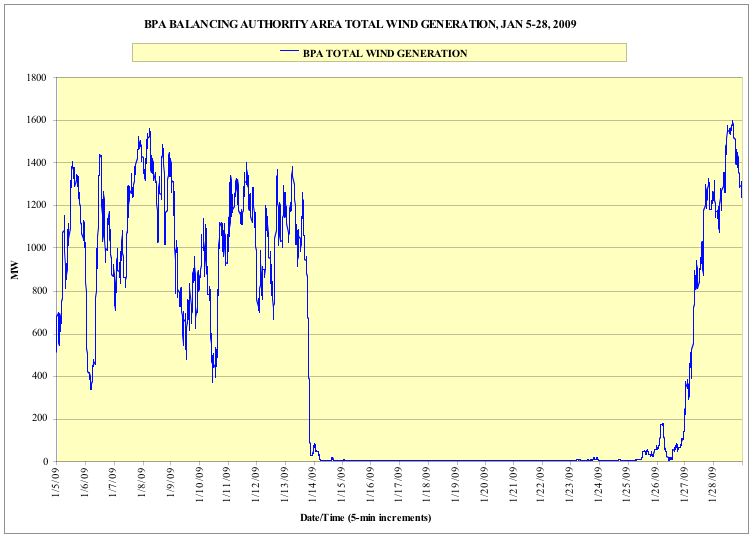
up generation capacity required. The total generation system must be able to provide peak power when there is no output from the wind turbines. When wind power is zero, or near zero, at the time of peak demand, we need sufficient conventional generator capacity to provide the peak demand. This is because electricity demand must be matched by supply at all times. In other words, wind power cannot displace much, if any, conventional generator capacity.
If wind doesn't reduce CO2 as much as nuclear does and cannot be counted on in periods of peak electrical demand, what good is it? One hundred eighty four comments followed.

This was followed by an August 16 Lang based post, Solar power realities – supply-demand, storage and costs. This time a Lang paper goes after solar power.

This paper provides a simple analysis of the capital cost of solar power and energy storage sufficient to meet the demand of Australia’s National Electricity Market. It also considers some of the environmental effects. It puts the figures in perspective. By looking at the limit position, the paper highlights the very high costs imposed by mandating and subsidising solar power. The minimum power output, not the peak or average, is the main factor governing solar power’s economic viability. The capital cost would be 25 times more than nuclear power. The least-cost solar option would require 400 times more land area and emit 20 times more CO2 than nuclear power.

Conclusions: solar power is uneconomic. Government mandates and subsidies hide the true cost of renewable energy but these additional costs must be carried by others.

Four hundred thirty six comments followed this post. The Lang paper on solar power was followed by an August 31 post,Solar thermal questions, this time based on a paper by University of NSW academic, Ted Trainer. The Trainer essay is an all out, no holds barred, take no prisoners assault on solar, and what sort of intellectual respectability is left to solar advocates after their thrashing at Trainer's hands is open to question. Trainer writes:

The heat storage capacity of solar thermal systems overcomes some of the intermittency problems that trouble wind and PV systems, such as the occurrence of night time. The standard provision will be 12 hour storage enabling continuous 24 hour electricity delivery. However examination of climate data reveals that even at the best sites sequences of 4 or more days without sunshine are not unusual. The best US sites often have 2 runs of 4 consecutive days of cloud in a winter month. (Davenport, 2008)

If 1000 MW(e) output was to be provided for four cloudy day from stored heat, some 290,000MWh of heat would have to be stored. Storage cost has been estimated at $(A)10/kWh(th) meaning that the required storage plant would cost more than $8 billion, or around twice the cost of a coal-fired plant plus fuel. However this refers to trough technology and it is likely that for the ammonia process costs would be higher.

Again we would be faced with the prospect of very high capital costs for a large amount of plant that would not be used most of the time, and would still be insufficient occasionally. There would also be the question of whether there would be enough solar radiation in winter to meet daily demand and also recharge a large storage sufficiently to cope with the next run off 4 cloudy days.

The Trainer essay and Barry's discussion drew 98 more comments. Finally on the 10th Barry followed up Lang's first solar essay, with Solar realities and transmission costs – addendum.
Basically Lang compares the cost of providing reliable power for Australia with Nuclear and solar power. Trainer had observed,
examination of climate data reveals that even at the best sites sequences of 4 or more days without sunshine are not unusual. The best US sites often have 2 runs of 4 consecutive days of cloud in a winter month. (Davenport, 2008).
Lang noted,
A loop through the midday images for each day of June, July and August 2009, shows that much of south east South Australia, Victoria, NSW and southern Queensland were cloud covered on June 1, 2, 21 and 25 to 28. July 3 to 6, 10, 11, 14. 16, 22 to 31 also had widespread cloud cover (26th was the worst), as did August 4, 9, 10, 21, 22.. This was not a a rigorous study.
Thus Lang was thus responding to this data by asking how much would it cost to provide electricity during cloudy winter days in Australia..

It is assumed that South East Australia would need a power reserve capable of providing electricity during the cloudy winter days. That reserve can be either provided by nuclear power plants or by solar systems with three days energy storage, that is capable of being transformed into electricity. Lang's conclusions can be summarized with the following table:
Discussion of the latest Lang post continues, but it is clear that Lang, Trainer and Brook have destroyed the case for renewables beyond redemption.

Followers

Blog Archive

Some neat videos

Nuclear Advocacy Webring
Ring Owner: Nuclear is Our Future Site: Nuclear is Our Future
Free Site Ring from Bravenet Free Site Ring from Bravenet Free Site Ring from Bravenet Free Site Ring from Bravenet Free Site Ring from Bravenet
Get Your Free Web Ring
by Bravenet.com
Dr. Joe Bonometti speaking on thorium/LFTR technology at Georgia Tech David LeBlanc on LFTR/MSR technology Robert Hargraves on AIM High